

The Southern Water Drought Order sitting on the Environment Secretary’s desk right now would do something that hasn’t happened in this country for twenty years: ban businesses across Hampshire and the Isle of Wight from using mains water for anything beyond the essentials. No car washes. No window cleaners. No topping up a hotel swimming pool. It’s a precautionary application, not a done deal yet, but if it goes through it will be the first order of its kind since 2006 — and only the third since 1996.
It comes as the River Test, the globally rare chalk stream Southampton and the Isle of Wight depend on, has fallen to roughly half its usual flow, at the same time as demand has climbed to more than 660 million litres a day against a normal supply of 550-560 million. That’s a genuine gap, not a rounding error, and it’s why Southern Water has gone further than the hosepipe ban already running across the region since July.
▶ New to all this? Watch: Why Is There a Hosepipe Ban? The Full UK Explainer
What Is the Southern Water Drought Order?
Southern Water applied to the Department for Environment, Food and Rural Affairs for a combined Drought Order and Non-Essential Use Ban covering the Southampton West supply area, affecting around 165,000 people in Hampshire and the Isle of Wight. The official statutory notice sets out exactly what’s being asked for: permission to keep abstracting water from the River Test even if flows drop below the usual sustainable threshold, paired with legal power to stop non-domestic customers using water for anything beyond core operations.
A public consultation ran from 4 to 11 August, giving businesses and residents the chance to formally object or comment. That window has now closed. Environment Secretary Angela Eagle has 28 days from the original application to approve or reject it — so a decision is expected by roughly the end of August. As of today, nothing has been decided. Applying for the order doesn’t mean it will be granted, and Southern Water itself has been careful to frame this as a precaution rather than an emergency.
How Would It Affect Businesses?
If approved, the ban would stop commercial premises across the affected area from:
- Running mechanical vehicle washers, including car washes
- Cleaning vehicles, boats, aircraft, or non-domestic premises with a hosepipe
- Filling or maintaining non-domestic swimming pools, paddling pools, or ponds
- Watering outdoor plants or gardens on commercial premises
- Cleaning industrial plant or suppressing dust with a hosepipe
That’s a real, direct hit for a specific set of livelihoods — car wash operators, window cleaners, pool maintenance firms, and any business whose day-to-day work depends on high water use. Ofwat’s own framing of the proposal is blunt about who it targets: firms, rather than families. There’s no published exemption list yet for businesses with a genuine operational dependency on water (a car valeting business with no other income stream, for instance) — if the order is granted, affected businesses would need to watch Southern Water’s own updates for guidance on hardship provisions, if any are added.

🦆 Keith
Don’t Be Keith
Keith spends a weekend anxiously guarding his Land Rover from imaginary drought-order inspectors, having completely missed that the whole thing is a business-only measure and was never going to stop him washing it in his own driveway with a bucket.
Does It Affect Households?
No — not directly, and not beyond what’s already in place. The existing hosepipe ban across Southern Water’s Hampshire and Isle of Wight area, running since 10 July, stays exactly as it is: no garden hosepipes, no filling paddling pools with a hose, no using a hose to wash the car. This new order sits on top of that, but it’s aimed at commercial water use specifically. A household that’s already following the hosepipe ban rules has nothing new to change if this order is approved.
Complete Guide
Hosepipe Ban Exemptions
Most people think a hosepipe ban means no hosepipes, full stop. It doesn’t. Not everything’s banned — livestock, ponds, food crops and stored rainwater are all still fair game. Our full guide breaks down exactly what you can and can’t do, water company by water company, so you’re not left guessing.
Read the Full Guide: Hosepipe Ban Exemptions →
That said, the fact that a business-only order is even being considered says something about how tight water supplies have become across the wider area — and it’s a reasonable moment for households in a drought-hit region to make sure their own basics are covered, mains supply isn’t something to take for granted this summer.
📋 Calm Clarissa
If the restrictions ever reach your taps, my printable water checklist covers how much to store, what to store it in, and what to do when the supply goes off. Free to download, obviously.
Download the Free Checklist →Why Now? The Numbers Behind the Application
Southern Water isn’t asking for this lightly. According to reporting on the application, average service reservoir capacity across the area could cover only a day or two of supply if conditions worsened further. The company says it has repaired more than 4,000 leaks since January, saving around 40 million litres of water across Hampshire and the Isle of Wight — a genuine mitigation effort, but not enough on its own to close a 100-million-litre daily gap between supply and demand.
More than half of England is currently in drought, and Southern Water isn’t the only company under pressure — but it’s the only one that’s gone as far as applying for a non-domestic use ban. According to the reported figures, that puts 165,000 people’s water security squarely in the balance while the decision plays out.
How Rare Is This?
Genuinely rare. The last non-essential use ban of this kind was granted in 2006. Before that, 1996. If Angela Eagle approves it, this becomes only the third order of its kind in thirty years — not a routine drought response, but a measure water companies reach for only when every other lever (hosepipe bans, leak repairs, demand messaging) hasn’t closed the gap on its own.
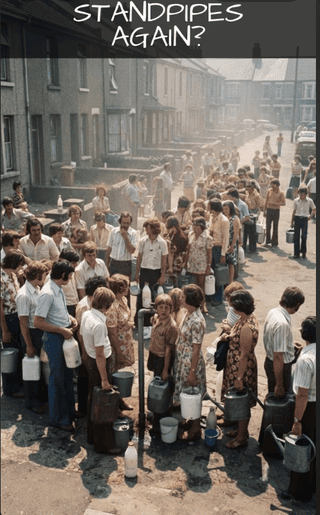
▶ Watch: Could the UK Be Heading for 1976-Style Standpipes?
What Happens Next?
The consultation has closed. The decision now sits with the Environment Secretary, expected within 28 days of the original application — realistically by the end of August. Two outcomes:
- Approved: the business restrictions above come into force, on top of the existing household hosepipe ban.
- Rejected: Southern Water continues managing the shortfall through the existing hosepipe ban, leak repairs, and demand messaging, with the same underlying supply risk unresolved if dry weather continues.
Either way, this is worth watching if you run a business in the Southampton West or Isle of Wight area, or if you simply want to see how far water companies are prepared to go as this drought continues. We’ll update this page once a decision is made.
Frequently Asked Questions
Does the Southern Water drought order affect households?
No. It’s a business-only measure. Households in the affected area remain under the existing hosepipe ban, which hasn’t changed.
When will a decision be made?
The Environment Secretary has 28 days from the application date to decide, putting a decision at roughly the end of August 2026.
Has this kind of order been used before?
Yes, but rarely. The last one was granted in 2006, and before that in 1996. If approved, this would be only the third in thirty years.
What happens if my business depends on high water use?
No exemption list has been published yet. Affected businesses should watch Southern Water’s official updates directly for any hardship provisions if the order is approved.
Build Your Resilience
The whole plan, in one book
Prepared, Not Panicked (2026 edition) pulls our guides together into one plan for UK households. PDF, £4.99.
See inside the book →Further Reading: Related Guides


📡 Find Us Everywhere
Daily briefings, prep guides, and real-time updates across every platform. Pick yours.
Free. No commitment. Stay anonymous on WhatsApp & Telegram.
Stay Informed on UK Preparedness
Join our newsletter for UK-specific preparedness tips, product recommendations, and real-world advice for households.
Subscribe to Our Newsletter