
“Met Office issues new polar vortex verdict – November snow to blanket UK.” That headline, or something very like it, has been doing the rounds all week. The polar vortex 2026 story is real: the Met Office really has said something unusual is happening high above the Arctic. But the snow blanket? That part came from somewhere else entirely.
So we did what we always do. We went and read what the Met Office actually published, checked where the snow claim came from, and worked out what it means for your house. Short version: don’t panic, do prep. Long version below.
The Claim: “November Snow to Blanket the UK”
The story started in the Express and was picked up and reprinted across AOL and regional news sites. It mixes three different things together: a genuine Met Office statement about the polar vortex, the Met Office’s long-range forecast, and some snow maps from a weather modelling website. Read quickly, it sounds like the polar vortex 2026 news comes with a Met Office snow forecast for the whole of Britain this month.
It hasn’t. Even the article itself never says “blanket” anywhere in the text. That word only appears in the headline, which is where headlines tend to keep their best words.
What the Met Office Actually Said About the Polar Vortex 2026
On 4 November the Met Office published a detailed explainer on its own blog, “Could changes high above the Arctic influence the UK’s weather?” Here is what it says, in its own words:
- The polar vortex “is currently being disturbed, with signs that a sudden stratospheric warming (SSW) is developing”, which it calls “an exceptional development for this early in the season.”
- Many forecasts suggest the winds up there “could briefly reverse during the coming week”, but “the expected reversal is relatively weak and short-lived, and there remains uncertainty over whether a major SSW will occur.”
- The current El Niño is exceptional, and El Niño winters make sudden stratospheric warmings more likely.
- “A major SSW does not automatically mean snow or severe cold for the UK.”
- And the line that matters most: “For now, therefore, this is not a forecast of an impending UK cold spell.”
A Met Office spokesperson also told The Independent that “a highly unusual disruption of the stratospheric polar vortex is now underway. If it becomes a major Sudden Stratospheric Warming (SSW), it will be the earliest such event on record.” Note the “if”. It’s a genuinely remarkable event for meteorologists. It is not, yet, a snow forecast.
The Met Office’s long-range forecast for 18 November to 2 December points the other way, if anything: “changeable or more unsettled conditions”, spells of rain, strong winds at times, and temperatures “likely to be near or above average for much of the period, although colder interludes remain possible, perhaps more especially later in the period.”
What Is the Polar Vortex, and What Is a Sudden Stratospheric Warming?
The polar vortex isn’t a storm and it isn’t coming to get you. It’s a ring of strong westerly winds that forms every winter, about 10 to 50 kilometres above the Arctic, way above where our weather happens. It’s there every year. Most years nobody outside a weather office mentions it.
A sudden stratospheric warming is when that high air warms rapidly and the ring of winds weakens, wobbles off the pole, or even reverses. When that happens, it can, eventually, knock on to the jet stream and the weather we get at ground level. According to the Met Office, that knock-on effect usually takes two to six weeks to arrive, if it arrives at all.
What it can bring depends on where high pressure ends up. High pressure over the UK means quiet, dry weather with frost and fog. Blocking further north can bring bitter easterly winds. High pressure to the west can send northerly winds down from the Arctic. And sometimes it changes very little for us at all.
🐔 Chicken Licken
Did You Know?
Did you know sudden stratospheric warmings happen about six times a decade? I’ve been saying this for years. They’re not rare, it’s only this one turning up so early that’s rare. In 2018 one gave us the Beast from the East. In January 2019 another one happened and barely made a difference here. Same event, two completely different winters. The sky was falling then too, apparently.
Polar Vortex Snow: Where the November Snow Claim Comes From
The snow in the headline comes from WXCharts maps showing that up to 12 counties across parts of Scotland and northern England could see snowfall by Thursday 12 November. WXCharts publishes maps from computer weather models. It is not the Met Office, and a single model run a week ahead is the weather equivalent of a horoscope with nicer colours.
To be fair, snow on high ground in Scotland and the far north of England in mid-November isn’t unusual. It happens most years, polar vortex or no polar vortex. What isn’t backed by anything official is snow “blanketing the UK” this month.
The Verdict: Is It Going to Snow This Year?
| The claim | The verdict |
|---|---|
| The Met Office says the polar vortex is being disrupted | True. Its own blog says so, and calls it exceptional for this early in the season. |
| It will be the earliest sudden stratospheric warming on record | Only if. Only if it becomes a major SSW, which the Met Office says is still uncertain. |
| The Met Office has forecast snow | False. “This is not a forecast of an impending UK cold spell.” |
| November snow will blanket the UK | Not supported. It comes from model maps showing some snow in parts of Scotland and northern England, not the whole country. |
| A cold spell later this winter is more likely than usual | Possibly. A major SSW raises the chance of cold weather in the weeks after it, but “the outcome is far from guaranteed.” |
So is it going to snow this year? Probably, somewhere, at some point, because it’s a British winter. Is the polar vortex 2026 disruption going to bury the country in November? Nothing official says so. The honest answer is that the odds of a cold spell from late November into December have nudged up, and nobody can tell you yet whether it’ll happen.
If you’ve read our Special Report “El Nino UK Winter 2026: The Record Storm Season” first published on 5 September 2026, none of this will come as a surprise. That record El Niño is the same one the Met Office now says may be helping to disturb the polar vortex.
It Might Not Happen. Prep Anyway.
Here’s the thing. Whether or not the polar vortex 2026 disruption ever reaches us, it is November in Britain. Cold snaps, frozen pipes, power cuts in storms and roads full of people who forgot how to drive in the wet are all coming anyway. The polar vortex just gives you a reason to sort it now, calmly, while the shops are full and nobody’s queuing.
Because if a proper cold spell does land in December, the shelves will empty in a day. We’ve seen it already this autumn, see our Special Report “Is It Panic Buying? What the Be Ready Rush Is Really Telling Us” first published on 29 October 2026. Two to six weeks is plenty of time to get ready. It’s no time at all if you wait for the snow first.
🦆 Keith
Don’t Be Keith
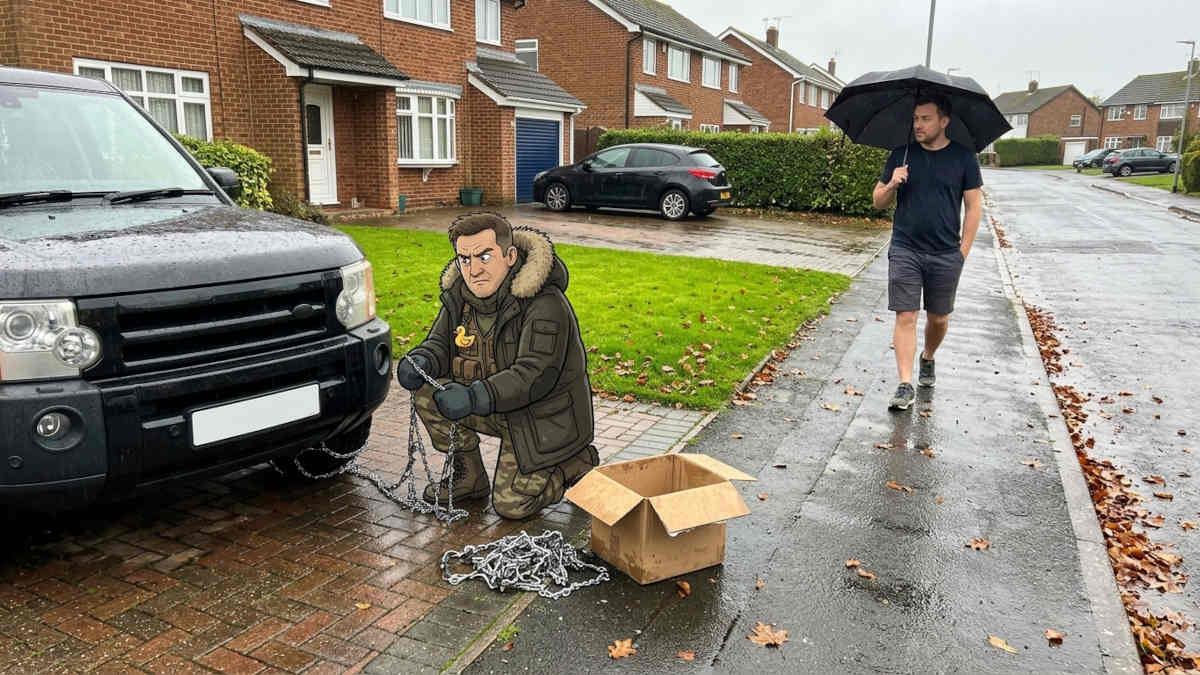
Keith read the headline, ordered snow chains for the Land Rover Discovery and a pair of Arctic expedition boots, and spent Saturday fitting a snow plough bracket to the front bumper. He still hasn’t lagged the pipe in his loft, and his wife found the stopcock behind a box of camping gas he bought in 2019. Sort the boring stuff first.
Keep the House Warm
Get the boiler serviced if it’s due, bleed the radiators, and know how to reset the boiler after a power cut (most have a reset button, and most people only find it in the dark). Then think about what you’d do if the heating stopped altogether: one warm room, layers, hot drinks and a blanket that doesn’t need a plug.
Silentnight Heat Genie Self Heating Giant Blanket
If you’re looking for a simple way to stay warm without turning the heating up, this is a low-cost option with zero running costs. It’s especially worth considering for cold homes, power cuts, or anyone wanting extra warmth without relying on electricity.
Our Full Review: Silentnight Heat Genie Self Heating Giant Blanket →
Protect the Pipes
Frozen and burst pipes are the most expensive cold-weather problem most households will ever have, and the most avoidable. Lag pipes in the loft and any outside walls, find your stopcock and check it actually turns, and know where your outside tap isolator is. A roll of self amalgamating tape won’t fix a burst pipe for good, but it’ll buy you time until the plumber turns up.
Self Amalgamating Tape
A roll of black silicone tape that fuses to itself into solid rubber: stop a leaking pipe tonight, waterproof a cable gland tomorrow.
Our Full Review: Self Amalgamating Tape →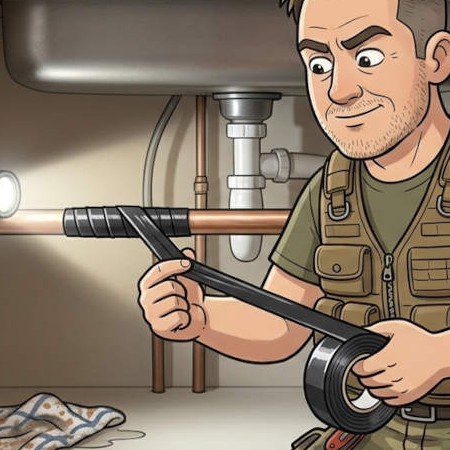
Get the Car Ready
Check the antifreeze, the screenwash (the proper winter stuff, not water), the tyres and the battery. Cold weather kills tired batteries. Keep a blanket, a torch, a phone charger, water and some snacks in the boot, because a two-hour queue on the motorway is a lot longer with a dead phone and no coat.
AA Emergency Winter Car Kit
A ready-made winter car kit from the UK’s most recognised breakdown brand — everything you need in the boot before the first frost hits.
Our Full Review: AA Emergency Winter Car Kit →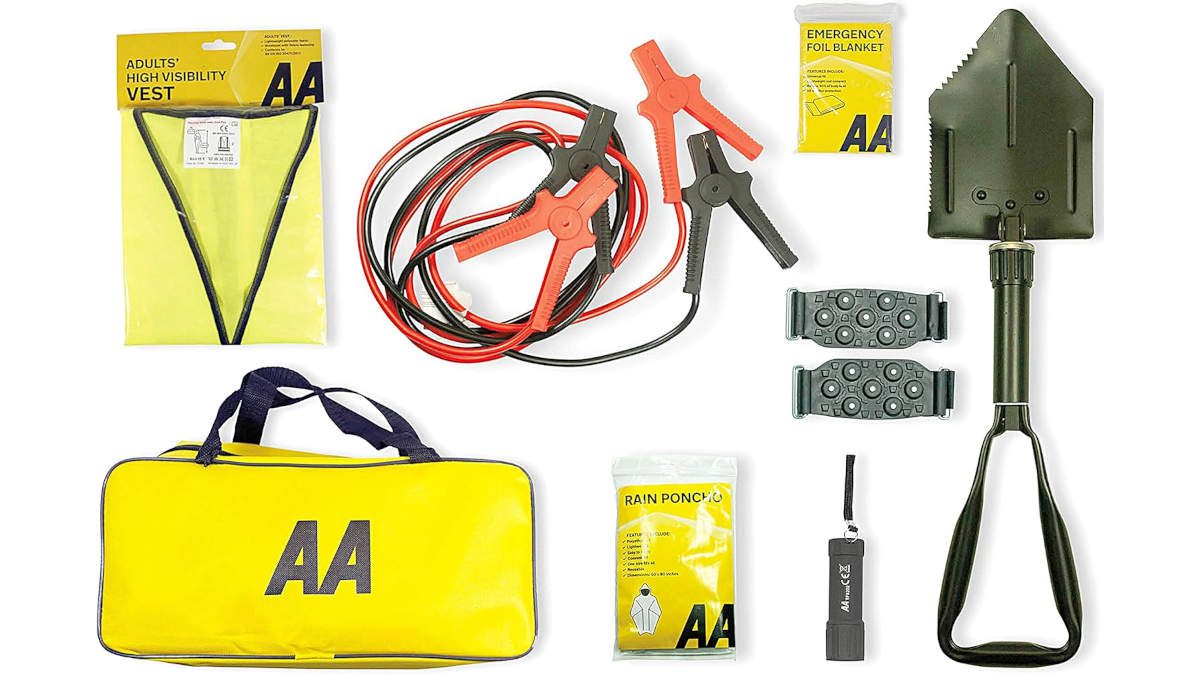
Be Ready for a Power Cut
Snow and ice bring lines down, and winter power cuts are the cold ones. Torches where you can find them in the dark, spare batteries, a charged power bank, a battery or wind-up radio, and a way to make a hot drink without the kettle. A light that comes on by itself when the power goes is worth its weight in stubbed toes.
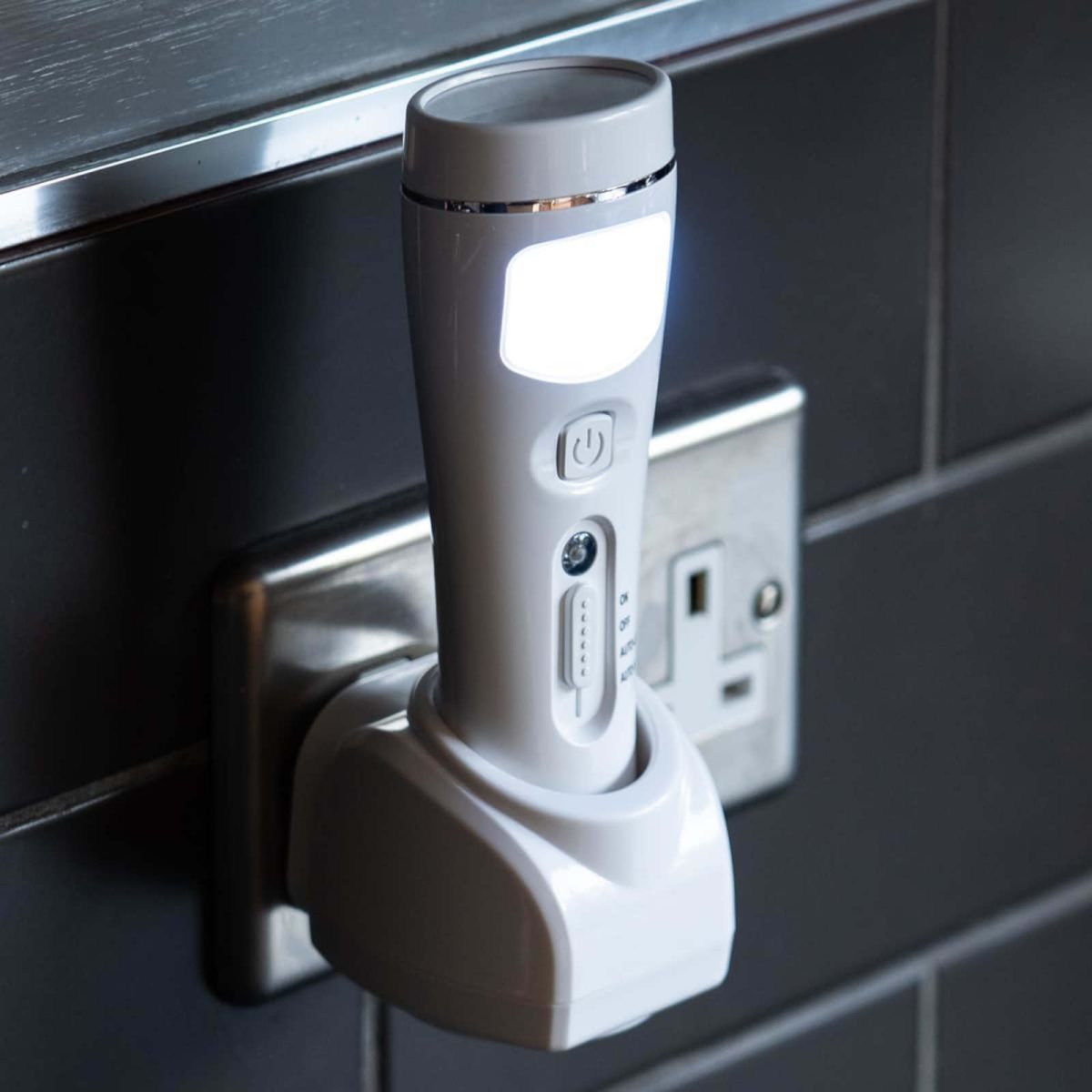
XtraLite NiteSafe
The NiteSafe is a dual-function device that works as both a plug-in nightlight and an emergency torch. It sits in a standard UK plug socket, charges continuously, and the moment mains power fails, it automatically illuminates.

📋 Clarissa
I’ve Made A Checklist
Here’s my power cut checklist. Lighting, heating, food, water and what to do when the power comes back, with a box to tick for each one. I did it in October, obviously. Janet says that’s “very me”.
Download: Power Cut Checklist →Stock the Cupboard Now, Not Later
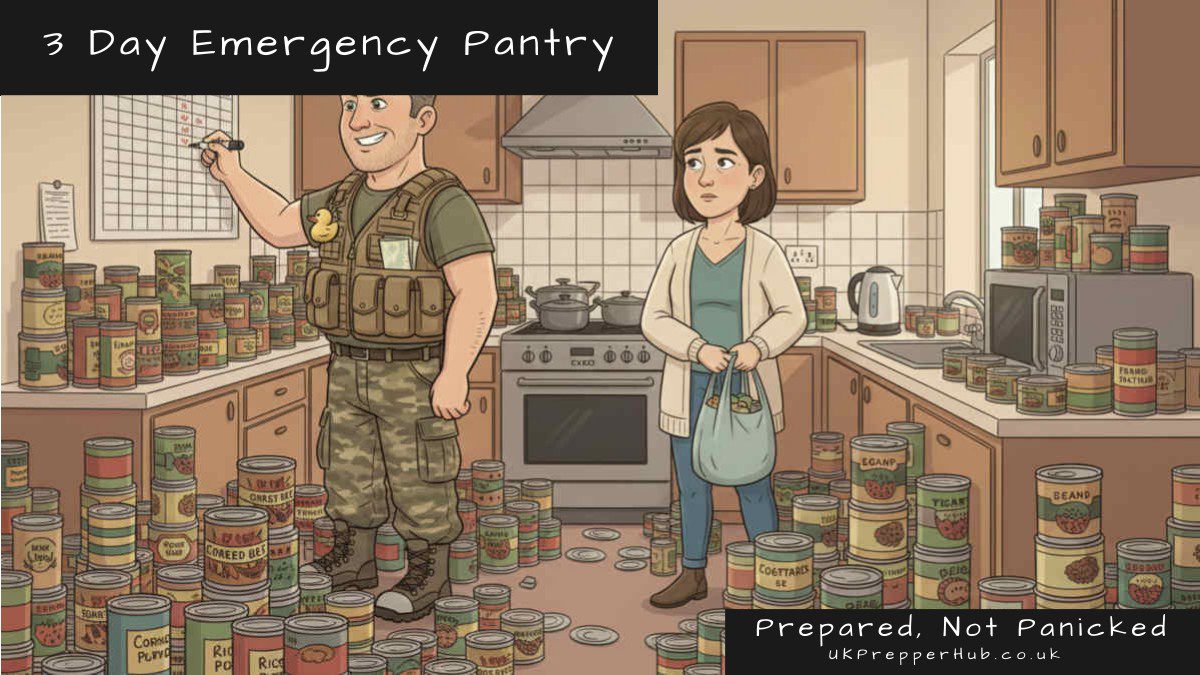
Three days of food that doesn’t need a fridge, a few days of water, and any regular medication topped up. Buy a little extra each shop over the next couple of weeks and it costs you almost nothing and nobody notices. Leave it until the snow’s on the news and you’ll be fighting someone in Tesco for the last tin of soup.
Complete Guide
3-Day Emergency Pantry
The low-barrier start: A shopping list of shelf-stable meals that require zero refrigeration.
The Bottom Line
The polar vortex 2026 disruption is real, and the Met Office really has said so. But the Met Office has not forecast snow across the UK this month, and the people who know most about it are the first to say they don’t know yet what it’ll mean for our weather.
It might not happen. That’s no reason not to prep. Everything on this page is worth doing every winter anyway, and if the cold does come, you’ll be the one with the warm house, the working pipes and the full cupboard, watching everyone else queue.
Frequently Asked Questions
What is the polar vortex 2026 disruption?
In early November 2026 the Met Office said the polar vortex high above the Arctic is being disturbed and a sudden stratospheric warming may be developing, which is exceptionally early in the season. It also said it’s still uncertain whether a major warming will happen, and that this is not a forecast of a UK cold spell.
Is the polar vortex going to bring snow to the UK in November?
Nothing official says so. The “November snow” headlines come from model maps showing possible snow in parts of Scotland and northern England, not from a Met Office forecast. The Met Office’s long-range forecast for late November points to changeable weather with temperatures near or above average for much of the period.
What is a sudden stratospheric warming?
It’s when the air 10 to 50 kilometres above the Arctic warms rapidly and the ring of westerly winds around the pole weakens or reverses. It happens about six times a decade. It can make cold weather more likely in the UK two to six weeks later, but it doesn’t always.
Will the polar vortex 2026 disruption cause another Beast from the East?
It could raise the chance of a cold spell later this winter, but it’s far from guaranteed. The 2018 Beast from the East followed a sudden stratospheric warming, but another one in January 2019 made little difference to UK weather.
What should I do to prepare for a cold winter?
Get the boiler checked, lag your pipes and find your stopcock, ready the car for winter, put together a power cut kit with torches, batteries and a power bank, and build up a few days of food and water a little at a time. All of it is worth doing every winter, cold spell or not.
Build Your Resilience
The whole plan, in one book
Prepared, Not Panicked (2026 edition) pulls our guides together into one plan for UK households. PDF, £4.99.
See inside the book →Further Reading: Related Guides
- Keep Warm Without Heating
- Heating Without Electricity
- How to Unfreeze Pipes
- Water Coming Through the Ceiling
- Winter Driving Tips
- How to Prepare for a Power Cut
- The 3-Day Emergency Pantry
- Animals in Extreme Weather
All our guides can be found listed on our resilience hub.
Gear We've Tested & Reviewed
- Silentnight Heat Genie Self Heating Throw
- HotHands Hand Warmers
- Paraffin Heater
- Manhattan Gas Heater
- Self Amalgamating Tape
- AA Emergency Winter Car Kit
- NOCO Boost GB40 Jump Starter
- Xtralite Nitesafe
- SnuggleSafe Microwave Heat Pad
All our reviews can be found on our reviews and resources page.


📡 Find Us Everywhere
Daily briefings, prep guides, and real-time updates across every platform. Pick yours.
Free. No commitment. Stay anonymous on WhatsApp & Telegram.
Stay Informed on UK Preparedness
Join our newsletter for UK-specific preparedness tips, product recommendations, and real-world advice for households.
Subscribe to Our Newsletter