

Emergency preparedness with a baby adds one more item to an already full list — but infants create specific, non-obvious vulnerabilities in a household emergency that take five minutes to plan for and a very stressful experience to discover on the fly.
This guide is practical and brief. It covers what you actually need to think about when your household includes a baby, without the alarm and without the padding.
Why Emergency Preparedness with a Baby Is Different
Adults can manage hunger, thirst, and mild discomfort for hours without harm. Babies cannot. They also cannot communicate what they need in a way that’s easy to interpret under pressure. An emergency that an adult household rides out relatively comfortably can escalate quickly with an infant involved.
The planning response to this is not panic — it’s making sure the basics are covered before you need them, so there are fewer decisions to make under stress.
Formula and feeding
For breastfeeding households, most feeding needs are unaffected by emergencies — no equipment, no power, no preparation required. The main considerations are maternal hydration and stress (both affect supply) and finding privacy and space in a disrupted environment.
For formula-feeding households, an emergency introduces several complications:
Formula stock. Keep at least two weeks of formula in the house. The standard UK advice on formula purchasing is conservative for exactly the reason that any supply disruption — severe weather, illness, transport problems — leaves formula-dependent families scrambling. A sealed tin of formula keeps for months; rotate it as you would any other emergency stock.
Water for preparation. Formula must be prepared with water that has reached at least 70°C to eliminate harmful bacteria — the formula itself is not sterile. In a power cut, this means using a gas hob, a camping stove, or pre-boiled water kept in an insulated flask. Cold water does not make safe formula. Know how you will heat water before the power goes out.
Ready-to-feed formula (the small cartons that don’t need preparation) is worth having as emergency backup specifically because it requires no mixing and no hot water. It’s more expensive than powder, but it’s the safest option when water heating is uncertain. Keep a 48-hour supply.
If supply is disrupted. The NHS strongly advises against giving cow’s milk as a formula substitute to infants under 12 months. If formula supply is genuinely unavailable for an extended period, contact your GP or 111 for advice — don’t improvise.
Complete Guide
Emergency Water Storage
How much to store, how to store it in small spaces, and the reality of UK water rotation.
Sterilising equipment
Bottles and teats must be sterilised before use. In a normal household, this usually means a microwave steriliser or cold-water sterilising tablets. In an emergency:
- Microwave sterilisers don’t work without power. Have an alternative method.
- Cold-water sterilising tablets (Milton or equivalent) work without any power and require only cold water — the most reliable emergency method. Keep a supply in your emergency kit.
- Boiling also works — submerge items in boiling water for ten minutes. Requires only a heat source and a pan.
Stock both Milton tablets and at least six spare bottles. If sterilising becomes difficult, ready-to-feed cartons with single-use sterile teats remove the problem entirely. The NHS bottle feeding guidance covers each sterilising method in full detail.
Nappies and sanitation
Nappies are bulky and used at a rate that surprises most first-time parents. A newborn uses 8–12 per day; by four to six months this typically reduces to 6–8. Keep at least two weeks’ worth in reserve, stored in the original packaging which provides some moisture protection.
Nappy rash cream and wet wipes (or a flannel and a bowl of water, which also works) should be in your emergency supplies as standard — skin integrity matters more, not less, when regular bathing becomes difficult.
If normal waste disposal is disrupted, nappies can be sealed in bags and stored outside temporarily. They are not recyclable and should go in normal household waste when service resumes.
Keeping baby warm
Infants cannot regulate their own body temperature. They are particularly vulnerable to cold — and particularly easy to overheat in an attempt to compensate. Both extremes are dangerous.
The NHS guideline for baby sleep temperature is 16–20°C in the room. Below this range, add layers (not loose blankets in the cot — a sleeping bag rated for the temperature is safer). Above 20°C, remove layers.
ThermoPro TP50 Digital Hygrometer
A compact, accurate hygrometer that tells you exactly what the humidity is in any room — so you know whether you have a damp problem before mould appears. Under £15 and the easiest first step in managing moisture at home. Now sold on Amazon UK as the TempPro TP50.
Our Full Review: ThermoPro TP50 Digital Hygrometer →
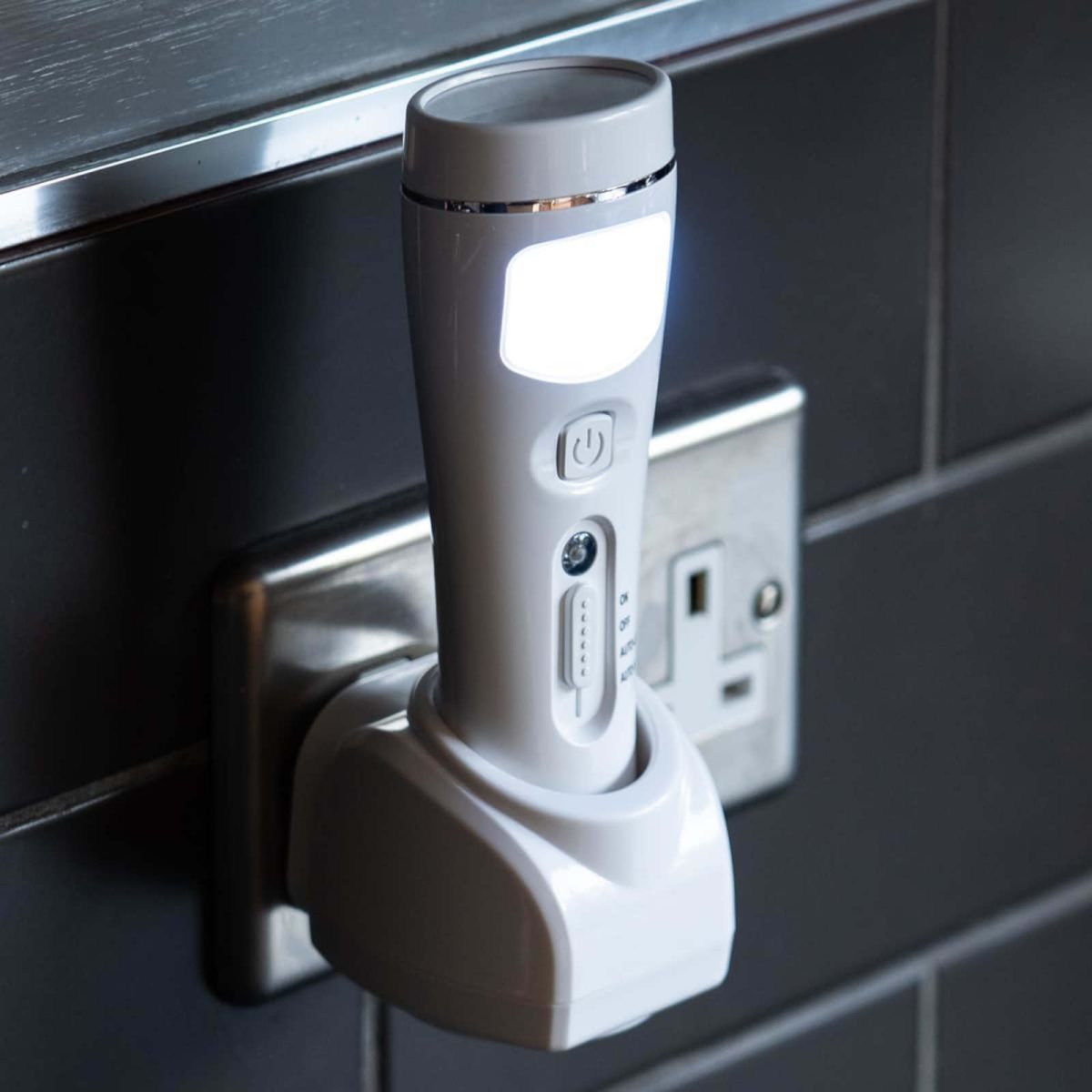
XtraLite NiteSafe
The NiteSafe is a dual-function device that works as both a plug-in nightlight and an emergency torch. It sits in a standard UK plug socket, charges continuously, and the moment mains power fails, it automatically illuminates.
During a heating failure or power cut in cold weather:
- Keep the baby in a room you can heat effectively — a small room is easier to warm than a large one
- Baby sleeping bags (tog-rated) are the safest way to maintain warmth without the risk of loose blankets
- Keep the baby close — body heat from a parent or carer during skin-to-skin contact is genuinely effective
- A room thermometer is not a luxury — it’s the only reliable way to know whether the room is safe
🐔 Chicken Licken
Did You Know?
Did you know a baby’s core temperature can drop to dangerous levels in a cold room long before they show any obvious signs of being cold? They can seem quiet and settled when they’re actually becoming hypothermic. If a baby is unusually quiet or lethargic in a cold room, check their temperature and get medical advice straight away. I’ve been saying this for years.
Braun PRT2000 – Age Precision Digital Thermometer
Brief description of why this product is worth considering. ‘teaste’tpyetext like “is this the best?”.
Our Full Review: Braun PRT2000 – Age Precision Digital Thermometer →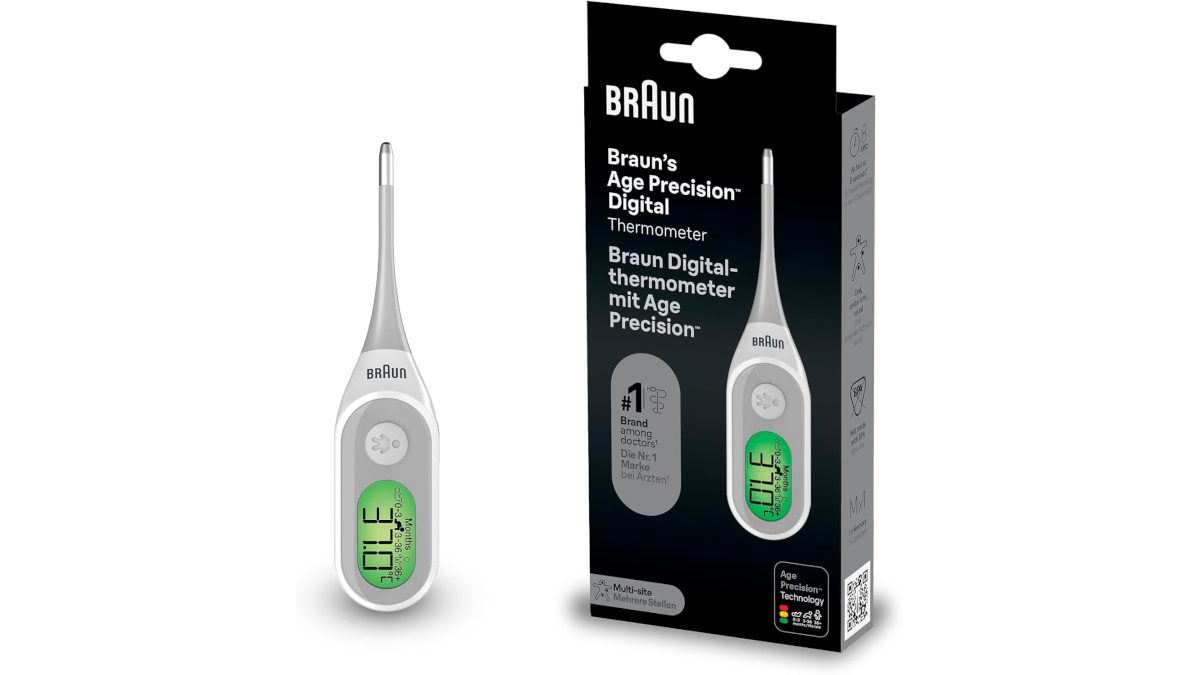
The baby grab bag
Everything in a standard grab bag applies — but with the following additions for a household with an infant:
- 48 hours of ready-to-feed formula (if formula feeding)
- Six sterile bottles and teats in sealed bags
- Packet of Milton sterilising tablets
- 48 hours of nappies (estimate generously)
- Nappy cream and baby wipes
- Infant paracetamol (Calpol or equivalent) and a dosing syringe
- Baby thermometer
- Temperature-rated baby sleeping bag
- Changes of clothing appropriate to the season
- Red book (Personal Child Health Record) — in a waterproof bag
- Any prescription medication with the prescription details
The Red Book is often overlooked. It contains the immunisation record, birth details, and growth charts — information that matters at any medical appointment and that cannot easily be reconstructed.
Complete Guide
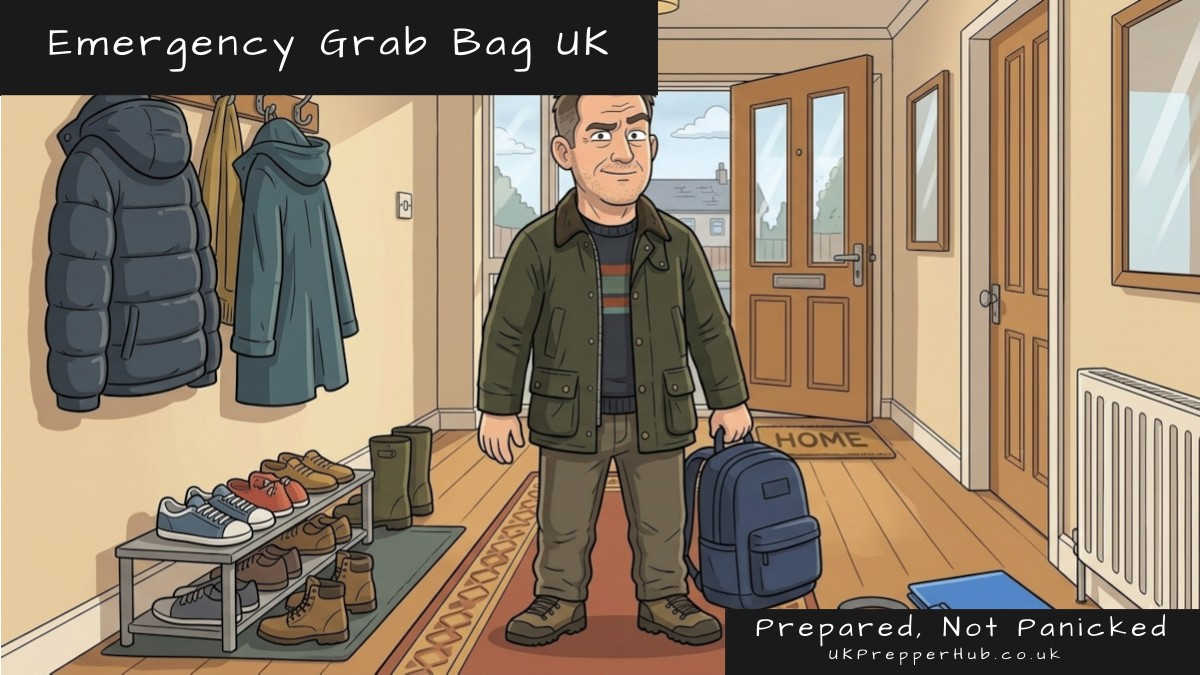
72-Hour UK Grab Bag
The ‘get out quick bag’ for rapid home evacuation in the event of fire, flood, or other incidents. Every essential for 3 days away from home in one bag.
Medicines and when to escalate
Keep a supply of infant paracetamol appropriate for your baby’s age and weight, and know the correct dosing. This is not alarmism — it’s the same logic as keeping aspirin in the house. Fever in a young infant is one of the more common reasons for urgent medical contact, and having the right medicine available at 2am during a power cut matters.
Know the symptoms that require emergency attention regardless of circumstances:
- High temperature in an infant under three months (38°C or above) — always seek urgent medical advice
- Difficulty breathing, blue lips, or laboured breathing — 999
- Unusual quietness or limpness, especially in a cold environment — 999
- Persistent vomiting or diarrhoea with signs of dehydration — 111 or 999 depending on severity
111 works during power cuts (mobile network permitting). Keep your phone charged.

🤡 Camping Clown
He Has The £4,000 Version
I bought a £180 “emergency baby preparedness kit” online. It’s full of things no health professional would recommend, and the bag is too heavy to lift. What you actually need is formula, nappies, Milton tablets, a baby sleeping bag and a thermometer, and it all fits in a drawstring bag under the cot. I’m not entirely sure why I bought it. I don’t even have a baby.
Complete Guide
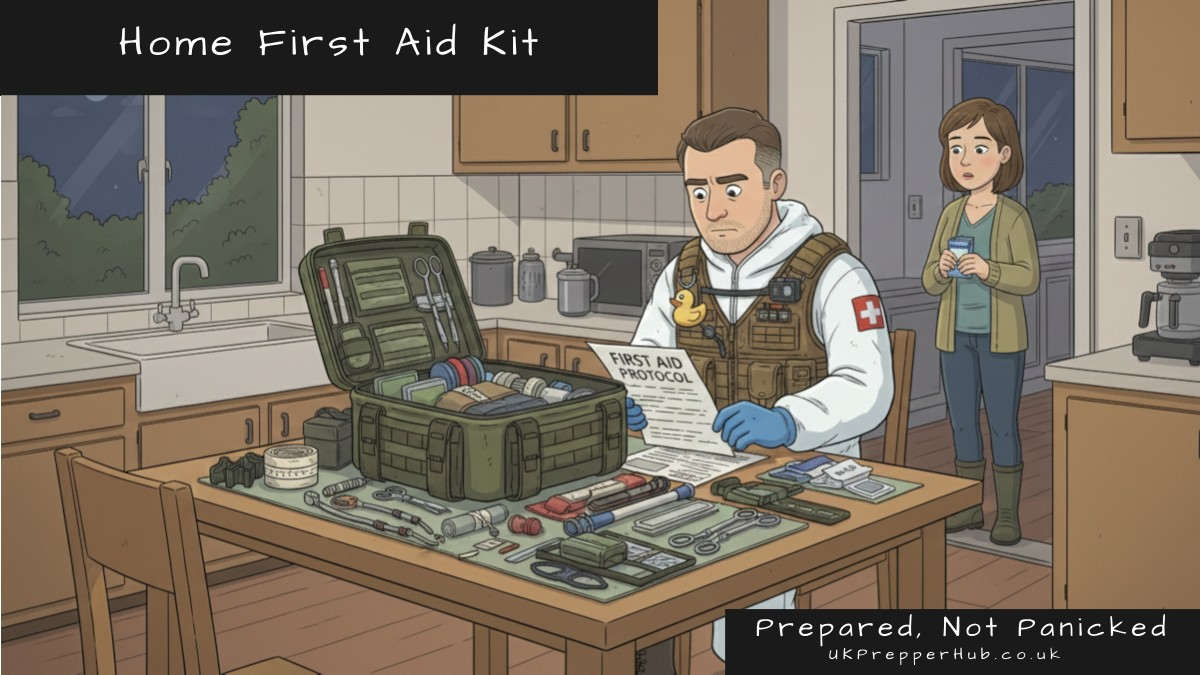
UK Home First Aid Kit
This guide covers comprehensive first aid supplies needed in the home to cover almost all emergencies.
First Aid Manual 11th Edition
The updated 11th Edition covers first aid in pandemic conditions, what to do in a terrorist incident, and delivering first aid for patients in a mental health crisis.
Our Full Review: First Aid Manual 11th Edition →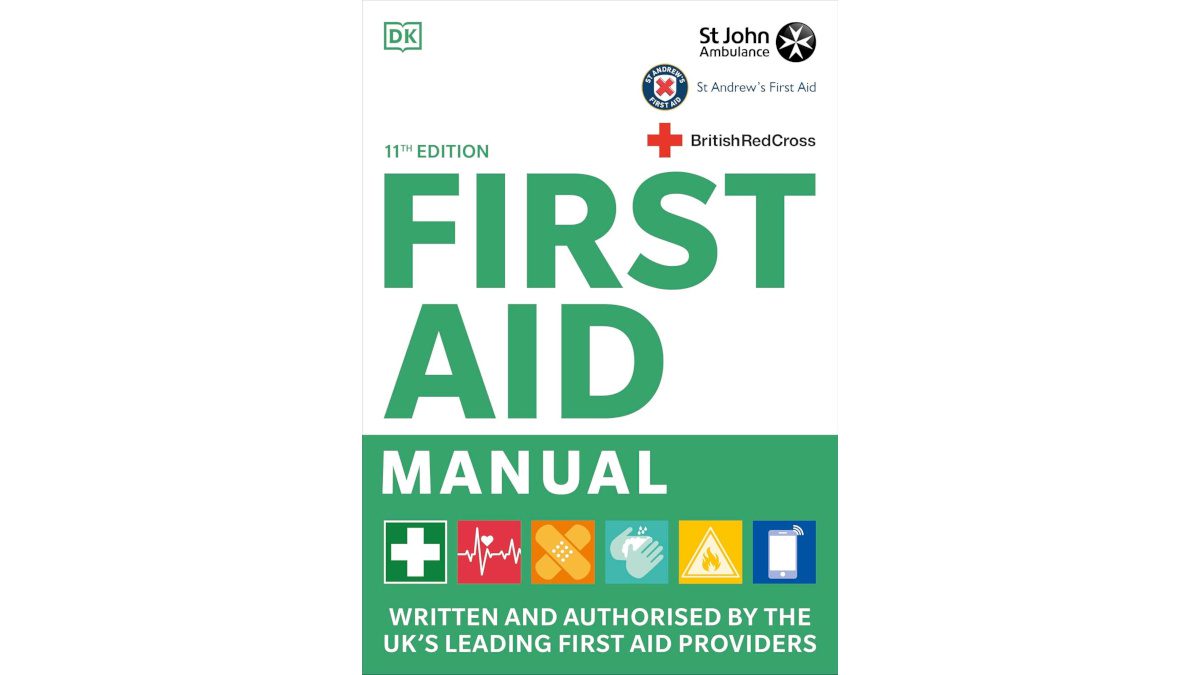
General Medi First Aid Kit
309 pieces, ISO 13485 certified, with a cold pack, emergency blanket, moleskin pad and CPR mask included — the first aid kit that actually covers the scenarios a cheap chemist kit doesn’t.
Our Full Review: General Medi First Aid Kit →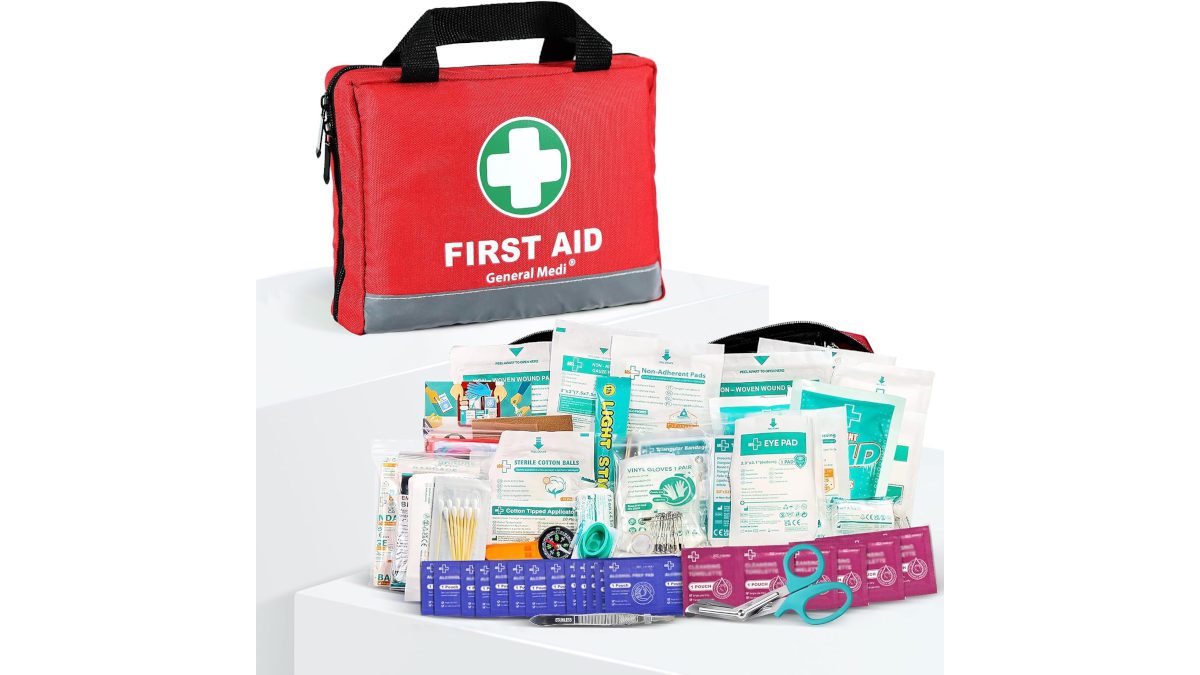
Frequently Asked Questions
How much formula should I keep in reserve?
A minimum of two weeks. Formula keeps for 12–24 months unopened. Calculate weekly usage and multiply by two, rotating oldest-first. For breastfeeding households, a reserve is still worth keeping in case feeding becomes impossible due to illness or separation.
Can I use tap water to make formula during a power cut?
Yes — a power cut doesn’t affect the mains supply in most cases. Tap water is safe provided it reaches at least 70°C before mixing. An electric kettle won’t work without power, so use a gas hob, camping stove, or pre-boiled water in an insulated flask. Never use cold water.
How long does made-up formula last?
NHS guidance: two hours at room temperature, or up to 24 hours in a fridge below 5°C. During a power cut affecting the fridge, use ready-to-feed cartons or make smaller quantities more frequently. Never reheat formula that has already been warmed once.
How do I sterilise bottles without electricity?
Cold-water sterilising tablets (Milton or equivalent) — one tablet per five litres of water, submerge for 15 minutes, use straight from the solution without rinsing. Boiling in a pan also works: fully submerge items and boil for ten minutes. Keep Milton tablets in your emergency kit specifically because they need no power.
What temperature should a baby’s room be?
The NHS recommends 16–20°C, with 18°C as the ideal. Below 16°C, add a layer using a correctly tog-rated sleeping bag rather than loose blankets. Above 20°C, remove a layer. A room thermometer is the only reliable way to know — don’t trust how warm it feels to an adult.
How do I keep a baby warm during a power cut in winter?
Layer clothing (vest + babygrow + fleece) and use a tog-rated sleeping bag. Keep the baby in the warmest room, close doors to retain heat. Skin-to-skin contact works — carrying in a sling generates significant warmth. Never use electric blankets, hot water bottles, or heated pads with babies.
What if formula supply runs out during a prolonged disruption?
Contact your GP or 111 immediately. The NHS strongly advises against cow’s milk as a substitute for infants under 12 months. In a genuine supply emergency, the NHS and local authority should be able to source formula — escalate quickly rather than improvising without medical guidance.
Build Your Resilience
Further Reading: Related Guides
All our guides can be found listed on our resilience hub.
Gear We’ve Tested & Reviewed
- ThermoPro TP50 Digital Hygrometer
- First Aid Manual 11th Edition
- Braun PRT2000 Thermometer
- General Medi First Aid Kit
All our reviews can be found on our reviews and resources page.