
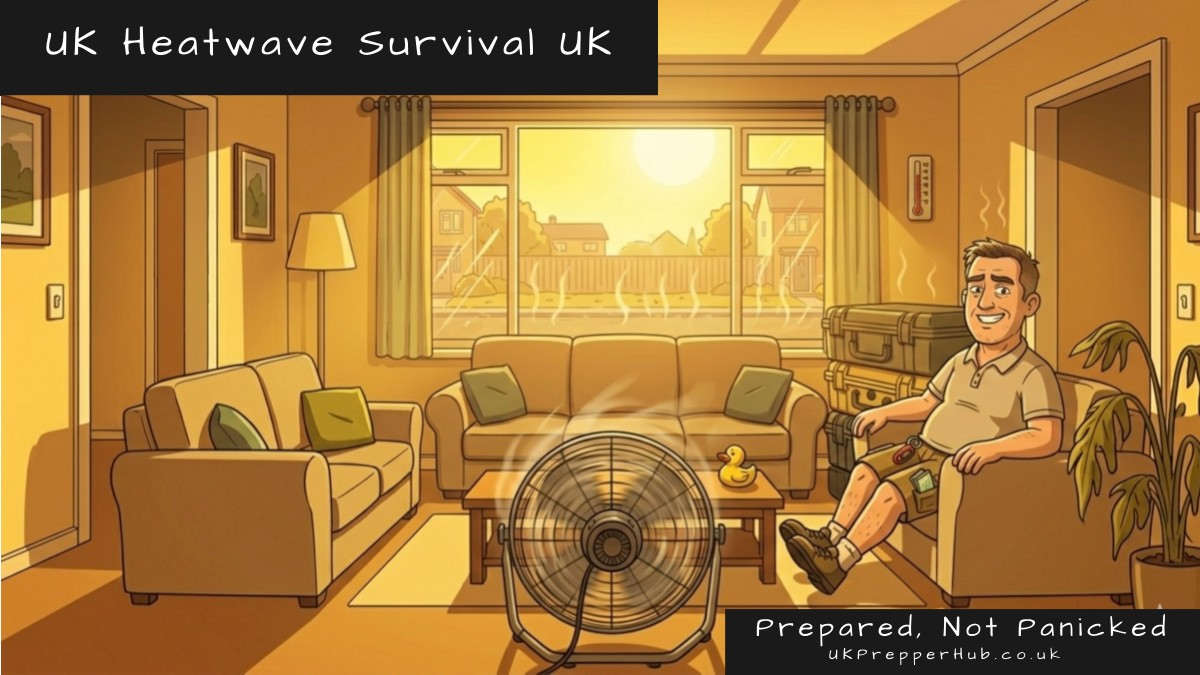
Every winter, the UK spends months talking about staying warm. We insulate, draught-proof, and worry about the heating bill. Then summer arrives and we discover the problem we built: houses designed to hold heat in are very good at holding heat in. When a heatwave hits, the inside of a British home can become genuinely dangerous — and unlike the cold, the risk creeps up quietly.
This guide covers the human side of heatwave preparedness: how to recognise when heat is becoming a medical emergency, how to stay cool without air conditioning, and how to protect the people around you who are most at risk.

🐔 Chicken Licken
Did You Know?
UK heatwaves kill more people proportionally than heatwaves in Mediterranean countries — because their homes are built to let heat out and ours are built to keep it in
The UKHSA Heat Health Alert System
The UK Health Security Agency runs a four-level alert system from June to September. Knowing what each level means helps you decide when to act — and how urgently.
- Level 1 — Business as usual. Year-round baseline. No specific action needed beyond normal summer awareness.
- Level 2 — Alert. A heatwave is possible within the next few days. Check on vulnerable neighbours and relatives. Review any medications that need cool storage.
- Level 3 — Heatwave action. A heatwave is occurring or imminent. Social and healthcare services move to heightened response. Keep older people, young children and those with health conditions cool and well hydrated.
- Level 4 — National emergency. A prolonged severe heatwave with significant impact on health services. Follows government emergency protocols. In practice, this has only been triggered once in the UK — during the summer of 2022.
Alerts are issued by region, not nationally, so a Level 3 in the South East does not mean the same applies in Scotland. Check the UKHSA or Met Office websites for your area.
Heat Exhaustion vs Heatstroke — Know the Difference
These are not the same thing. One you can treat at home. The other is a 999 call.
Heat exhaustion happens when your body overheats but is still trying to cool itself. Signs include heavy sweating, pale and clammy skin, a fast but weak pulse, dizziness, nausea, headache and muscle cramps. The person is still conscious and alert.
Heatstroke happens when the body’s cooling system fails entirely. The key difference: sweating stops. Skin becomes hot, red and dry. The pulse is fast and strong. Confusion, slurred speech and loss of consciousness follow. This is a medical emergency.
If you are unsure which you are dealing with — call 999 and describe the symptoms. Do not wait to find out.
🦆 Keith
Don’t Be Keith
Keith bought a large industrial floor fan to deal with the summer heat, positioned it directly in front of the sofa, and ran it on full power all day with every window closed. He was very warm but very well blown.
First Aid for Heat-Related Illness
Heat exhaustion — act quickly but stay calm:
- Move the person to a cool place immediately — indoors, in shade, or near air conditioning if available
- Lay them down and raise their feet slightly
- Give cool (not ice cold) water to drink — sip slowly. A rehydration sachet is better than water alone if available
- Cool their skin with a damp flannel or spray, and fan them
- Loosen tight clothing
- If there is no improvement within 30 minutes, or symptoms worsen — call 999
Heatstroke — call 999 immediately, then:
- Move them to a cool area and remove as much clothing as possible
- Cool them by whatever means available — ice packs to armpits and neck, cold wet towels, a fan, cool water poured over them
- Do not give fluids if they are confused or unconscious — there is a choking risk
- Put them in the recovery position if they lose consciousness
- Keep cooling until the ambulance arrives
OxiPro OX2 Pulse Oximeter
Clips to a fingertip and tells you blood oxygen and pulse rate in seconds. Useful during any illness where breathing is a concern — and the reading that matters is below 92%..
Our Full Review: OxiPro OX2 Pulse Oximeter →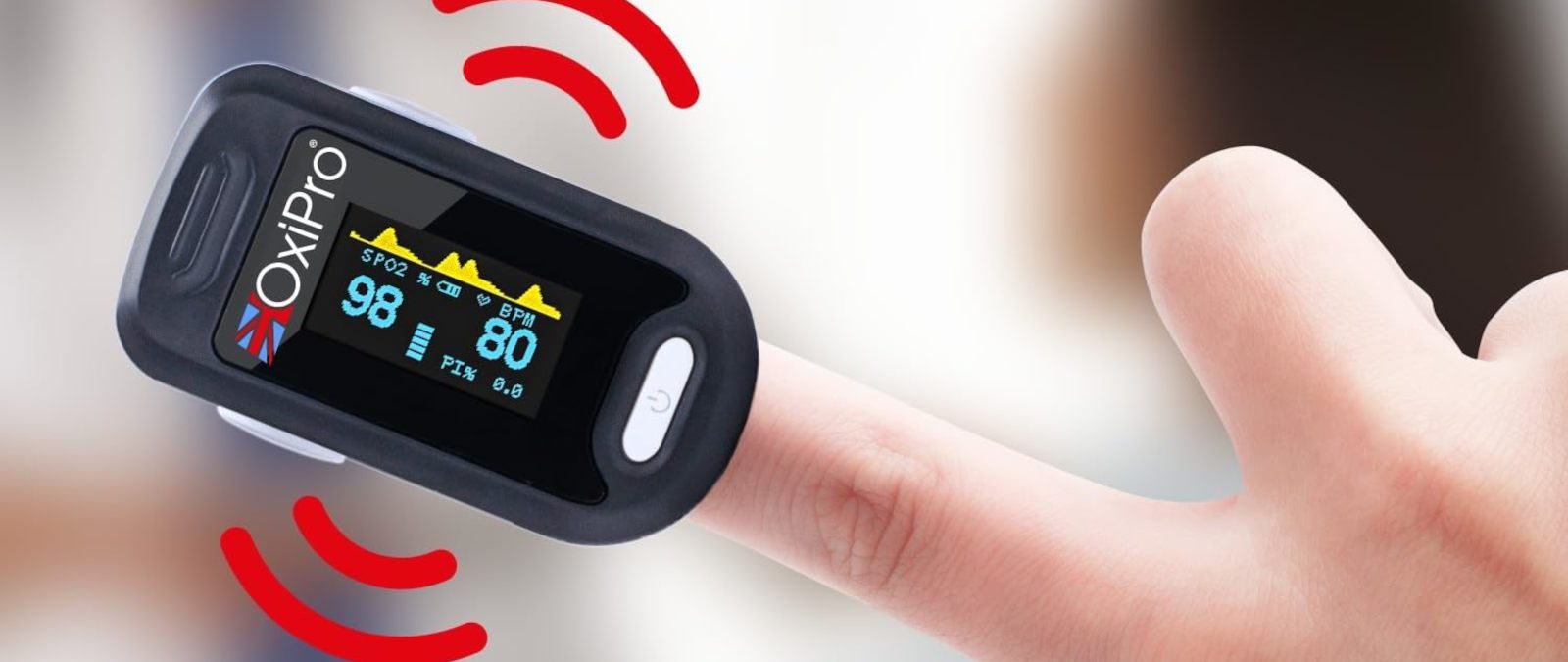
First Aid Manual 11th Edition
The updated 11th Edition covers first aid in pandemic conditions, what to do in a terrorist incident, and delivering first aid for patients in a mental health crisis.
Our Full Review: First Aid Manual 11th Edition →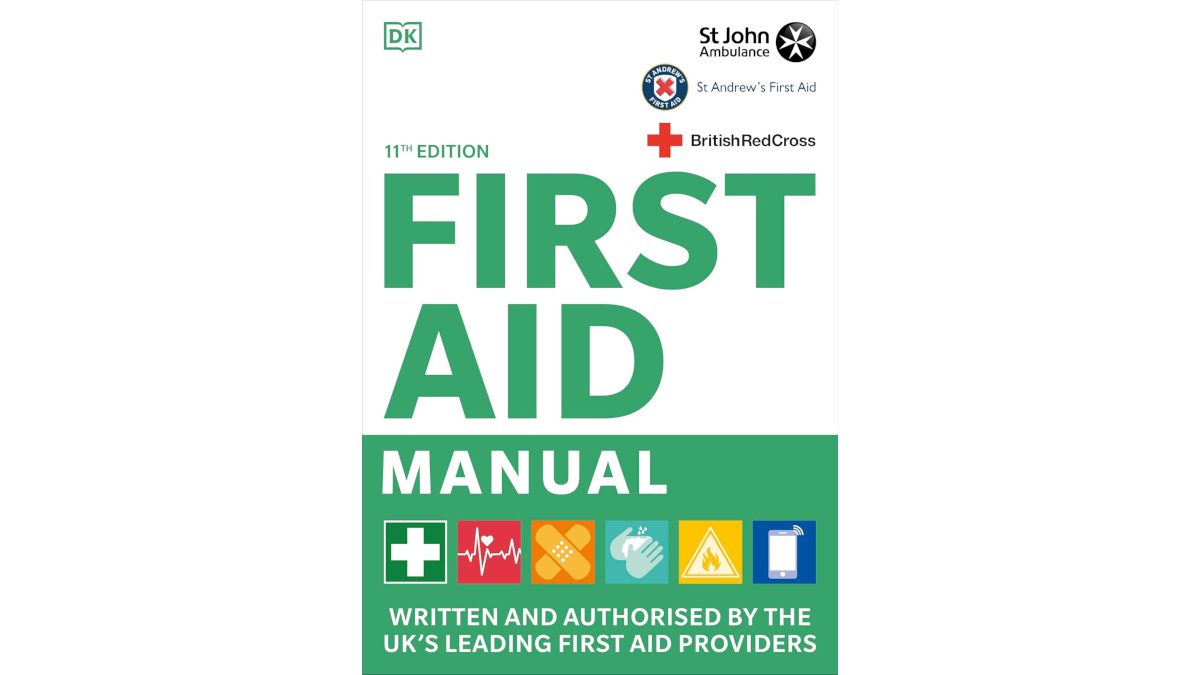
Staying Cool Without Air Conditioning
Most UK homes have no air conditioning, and a standard electric fan does not cool the air — it just moves it. In a heatwave, that can feel like pointing a hair dryer at yourself. The approach that works in a British home is managing airflow and shading, not just throwing a fan at the problem.
- Close south and west-facing curtains before the sun reaches them — not after. Once the glass has been heating up for two hours, the damage is done.
- Open windows only when outside air is cooler than inside — typically after 9pm. Opening them during the hottest part of the day lets heat in.
- Create cross ventilation at night — open windows on opposite sides of the house to pull cooler air through.
- Sleep downstairs — heat rises. The bedroom is usually the hottest room in the house by evening.
- Use a damp cloth on your wrists, neck and forehead — these are pulse points where cooling the skin has the most effect.
- Avoid using the oven — it adds heat to the house. Cold meals, the microwave, or a slow cooker used outside are better options.
- Take a cool (not cold) shower before bed — cold showers cause the body to generate warmth in response. Cool is more effective.
OCOOPA USB Rechargeable Desk Fan
Battery-powered desk fan with up to 15 hours runtime and airflow strong enough to feel 8 feet away — no plug socket needed.
Our Full Review: OCOOPA USB Rechargeable Desk Fan →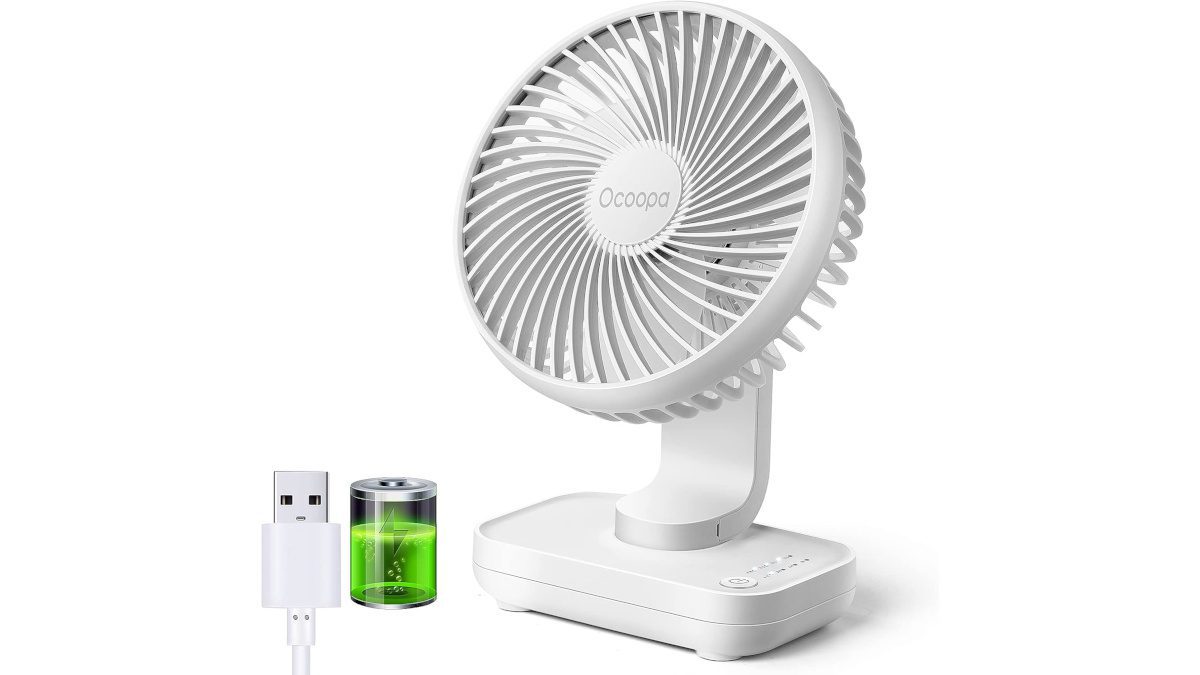
Hydration — More Than Just Drinking Water
The guidance to “drink plenty of water” is correct but incomplete. In a sustained heatwave, especially if you are sweating heavily, water alone does not replace the electrolytes you are losing. A headache that persists after drinking water, or muscle cramps, can be a sign of electrolyte depletion rather than dehydration.
Oral rehydration sachets (the same ones used for illness) work well. A diluted sports drink is an acceptable alternative. Plain water is fine for normal hydration — it is only at the extreme end that the difference matters.
Signs of dehydration to watch for:
- Dark yellow or amber urine — aim for pale straw colour
- Headache and light-headedness
- Dry mouth, lips and eyes
- Fatigue and difficulty concentrating
- In serious cases: no urination for eight hours or more
Alcohol and caffeine both increase fluid loss. This is not a reason to avoid them, but it is a reason to compensate with extra water on top. Older people often lose the sensation of thirst — do not wait until you feel thirsty to drink.
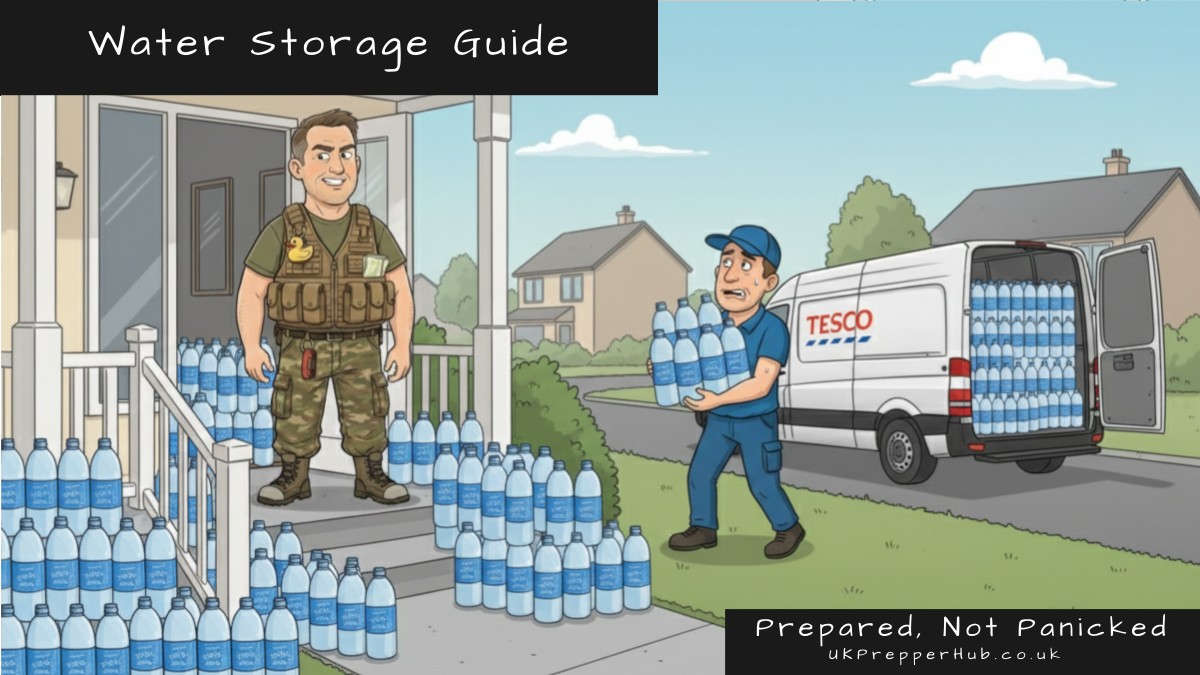
Complete Guide
Emergency Water Storage
How much to store, how to store it in small spaces, and the reality of UK water rotation.
Food Safety in the Heat
A domestic fridge should run at 5°C or below. In a heatwave, particularly if the kitchen faces south, it may struggle. A fridge thermometer costs very little and takes the guesswork out.
The practical rules:
- Do not leave cooked food at room temperature for more than two hours — in temperatures above 30°C, reduce that to one hour
- Bacteria that cause food poisoning multiply fastest between 8°C and 60°C — the fridge is your main line of defence
- If in doubt about something, throw it out — food poisoning in hot weather is significantly more dangerous than in winter, particularly for vulnerable people
- Defrost meat in the fridge rather than on the counter
- Buffet-style food left out at a summer gathering can become dangerous quickly
Medications That Need Keeping Cool
A number of commonly prescribed medications are temperature-sensitive and can lose effectiveness or become unsafe if stored in a warm environment. The most critical is insulin, which must be kept between 2°C and 8°C when not in use. Other medications to check include some eye drops, certain antibiotics (particularly liquid forms), some inhalers, and several types of antipsychotic and cardiac medication.
If you or someone in your household is on regular medication, check the storage guidance on the packaging or leaflet now — before a heatwave, not during one. Your GP or pharmacist can advise on travel or backup storage if your home is likely to get very warm.
FRIO Insulin Cooling Wallet
Keeps insulin at safe temperature for 45 hours using only water — no electricity, no ice, no power required. Tested by the British Medication Devices Evaluation Unit and recommended by UK hospitals.
Our Full Review: FRIO Insulin Cooling Wallet →
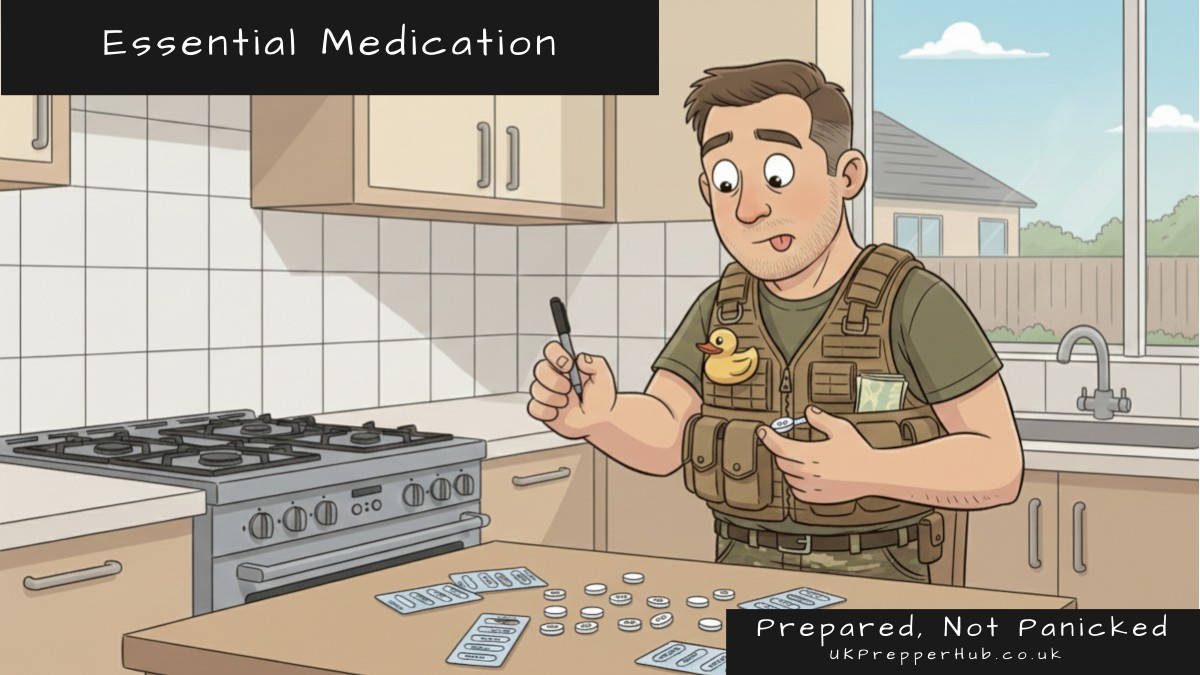
Complete Guide
Managing Essential Medication
This guide covers more detail on being prepared with essential medication for all emergency situations.
Checking on Vulnerable People
Most heatwave deaths in the UK are among people over 75. The risk is also elevated for young children, people with heart, lung or kidney conditions, those on certain medications (diuretics, beta-blockers and antipsychotics all affect the body’s ability to regulate temperature), and anyone working or sleeping in a very hot environment.
The practical ask is straightforward: check in. A phone call or a knock on the door to an elderly neighbour during a Level 3 alert takes two minutes. Ask if they are drinking enough, whether they have been able to sleep, and whether they have somewhere cool to go if the house is unbearable. NHS 111 can advise if you are concerned about someone’s condition.
Signs that someone needs urgent help: confusion or unusual behaviour, difficulty breathing, not responding normally, or very hot and dry skin with no sweating. Call 999.
Your Pets in the Heat
Dogs, cats and other pets are just as vulnerable to heat-related illness as people — and they cannot tell you they are struggling. The most common and preventable risk for dogs is being walked on hot pavements: tarmac can reach temperatures of 60°C on a sunny day and will cause paw pad burns within minutes.
Pecute Dog Cooling Mat
Pressure-activated gel mat in six sizes from XS to XXXL — no electricity, no freezer, no setup. Keeps dogs and cats cool during UK heatwaves without any of the faff.
Our Full Review: Pecute Dog Cooling Mat →
🐾 Weekend Warrior
Pet Tip
Pickle and hot pavements — if you can’t hold the back of your hand on the pavement for five seconds, it’s too hot for paws
For a full guide to keeping pets safe in hot weather — and what to do if they show signs of heatstroke — see the dedicated guide below.
Complete Guide
Animals in Extreme Weather
our pets can’t tell you they’re struggling — and by the time the signs are obvious, it’s often already serious. This guide covers dogs, cats, rabbits and guinea pigs in heat and cold: heatstroke signs, the pavement test, frozen Kong treats, breed-specific coats, rock salt risks, and what to do in an emergency.
Read the Full Guide: Animals in Extreme Weather →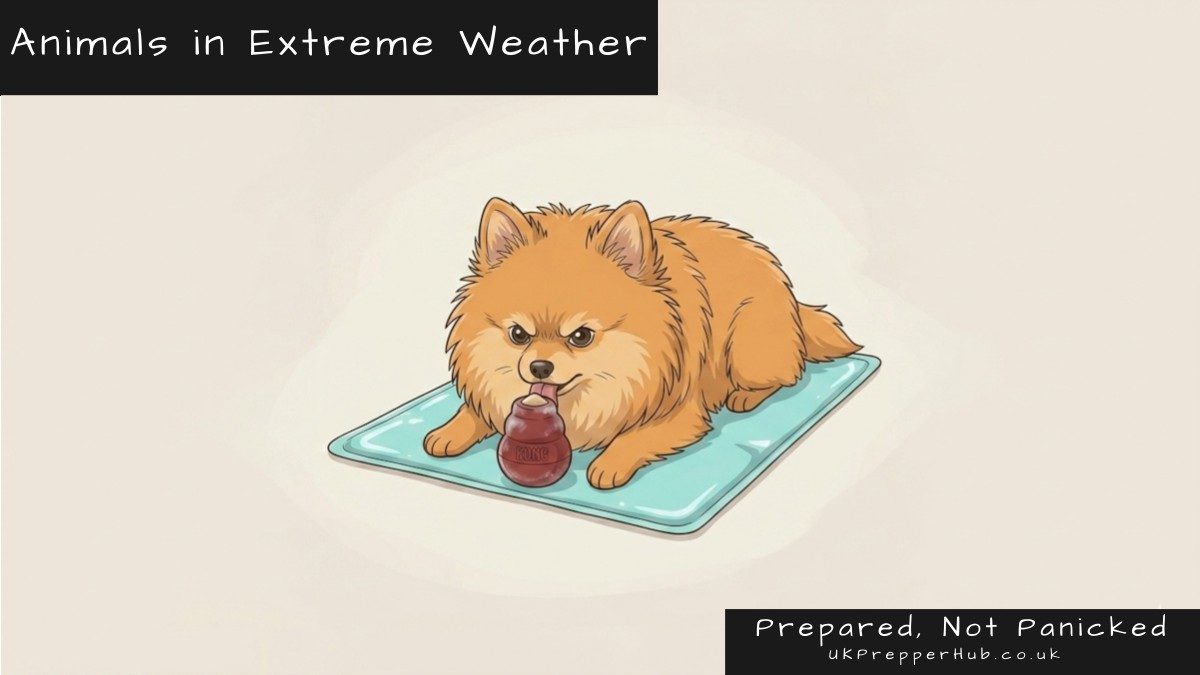

🌿 Aroura
Ancient Wisdom
Traditional method of cooling the body in summer heat using cool water on pulse points — wrists, temples, back of the neck — a practice found across cultures long before air conditioning existed
Frequently Asked Questions
What is the difference between heat exhaustion and heatstroke?
Heat exhaustion means the body is overheating but still sweating and trying to cool itself — the person is conscious, pale and clammy. Heatstroke means the cooling system has failed: sweating stops, skin becomes hot and dry, and confusion or unconsciousness follows. Heatstroke is a medical emergency requiring a 999 call immediately.
How do I cool down a room that gets very hot?
Close curtains on south and west-facing windows before the sun reaches them. Open windows only when outside air is cooler than inside — usually after 9pm. Use cross ventilation at night by opening windows on opposite sides of the house. Moving downstairs helps significantly as heat rises.
How much water should I drink in a heatwave?
The standard guidance of six to eight glasses a day is a baseline. In a heatwave, especially if you are active or sweating, you need more. Do not wait until you feel thirsty — older people often lose this sensation. Pale straw-coloured urine is the clearest sign that you are hydrating adequately.
At what point should I call 999 for someone with heat illness?
Call 999 immediately if the person is confused, has stopped sweating but is still very hot, is losing or has lost consciousness, or is breathing abnormally. For heat exhaustion without these symptoms, treat at home and call 111 if there is no improvement within 30 minutes.
Which medications are affected by heat?
Insulin is the most critical — it must be stored at 2–8°C. Others include some liquid antibiotics, certain eye drops, some inhalers, and some cardiac and mental health medications. Check the storage instructions on the packaging or ask your pharmacist before a heatwave.
Is it safe to use a fan during a heatwave?
Yes, with a caveat. A fan does not cool the air — it cools the body by increasing evaporation from the skin. It works well if you are hydrated and the air temperature is below about 35°C. Above that, in very dry conditions, NHS guidance suggests fans may become less effective for older people. Keeping a damp cloth to hand improves a fan’s effect considerably.
Build Your Resilience
Further Reading: Related Guides
- Heatwave & Power Cut Guide
- Emergency Water Storage
- Managing Essential Medication
- UK Home First Aid Kit
All our guides can be found listed on our resilience hub.
Gear We’ve Tested & Reviewed
- OCOOPA USB Rechargeable Desk Fan
- OxiPro OX2 Pulse Oximeter
- FRIO Insulin Cooling Wallet
- Pecute Dog/Cat Cooling Mat
- SOL Collapsible Dog Bowl
- Sukeen Cooling Towel
- General Medi First Aid Kit
All our reviews can be found on our reviews and resources page.