
Animals in extreme weather face risks that their owners often underestimate. Your pets cannot tell you they are struggling. In extreme heat or cold, by the time the signs are obvious, the situation is often already serious. The good news is that most of what keeps animals safe in weather extremes is straightforward, cheap, and easy to have ready before you need it.
This guide covers dogs, cats, and small outdoor animals — what to watch for, what to do, and a few things most owners haven’t thought of.
How Dogs Actually Cool Down
This is the thing most people get wrong, and it matters for everything that follows.
Dogs do not sweat through their skin the way humans do. They have sweat glands only in their paw pads. The main way they shed heat is through panting — evaporation of moisture from the mouth, tongue and respiratory tract. This is far less efficient than sweating across the whole body, which is why dogs overheat faster than we do, and why what works for us does not always work for them.
Signs of Heatstroke in Dogs and Cats
Early warning signs: excessive panting or drooling, restlessness or agitation, seeking shade or cool surfaces, reluctance to move.
Serious signs — act immediately: vomiting or diarrhoea, bright red or pale gums, glazed eyes, weakness, collapse, loss of coordination.
Cats tend to hide when unwell and may not show distress openly. If your cat is unusually lethargic, breathing fast, or has a hot dry coat on a hot day, treat it as an emergency.
If you suspect heatstroke: move the animal to a cool, shaded area. Pour cool (not ice cold) water over them, focusing on the head, neck, armpits and groin. Do not cover them with wet towels — this traps heat. Offer small amounts of cool water if they are conscious. Get to a vet immediately — heatstroke can cause organ damage that is not visible from the outside.
The Pavement Test
Tarmac absorbs heat through the day and can reach 60°C on a sunny afternoon — hot enough to cause paw pad burns in under a minute. The rule of thumb: place the back of your hand flat on the pavement and hold it there for five seconds. If you cannot hold it comfortably, it is too hot for your dog to walk on.
Walk early in the morning or in the evening. If you must go out at midday, stick to grass verges and shaded paths. Booties exist if the situation calls for it.
Water and a Collapsible Bowl — Always
A dog in warm weather needs water at every stop, not just at home. A collapsible silicone or fabric bowl takes up almost no space, clips to a rucksack strap, fits in a coat pocket, or lives in the car door. Pair it with a small bottle of water — a standard 500ml mineral water bottle works, but a cheap refillable sports bottle is better and costs less over time. Fill it before you leave, refill it at any tap you pass.
This is one of the most practical things you can add to a dog walk kit, and it is often missing until the day you need it.
SOL Collapsible Dog Bowl
Folds flat, clips to a lead or bag loop, and holds a full drink for a medium dog. Weighs almost nothing. If you’re evacuating with a dog, this goes in the grab bag without a second thought.
Our Full Review: SOL Collapsible Dog Bowl →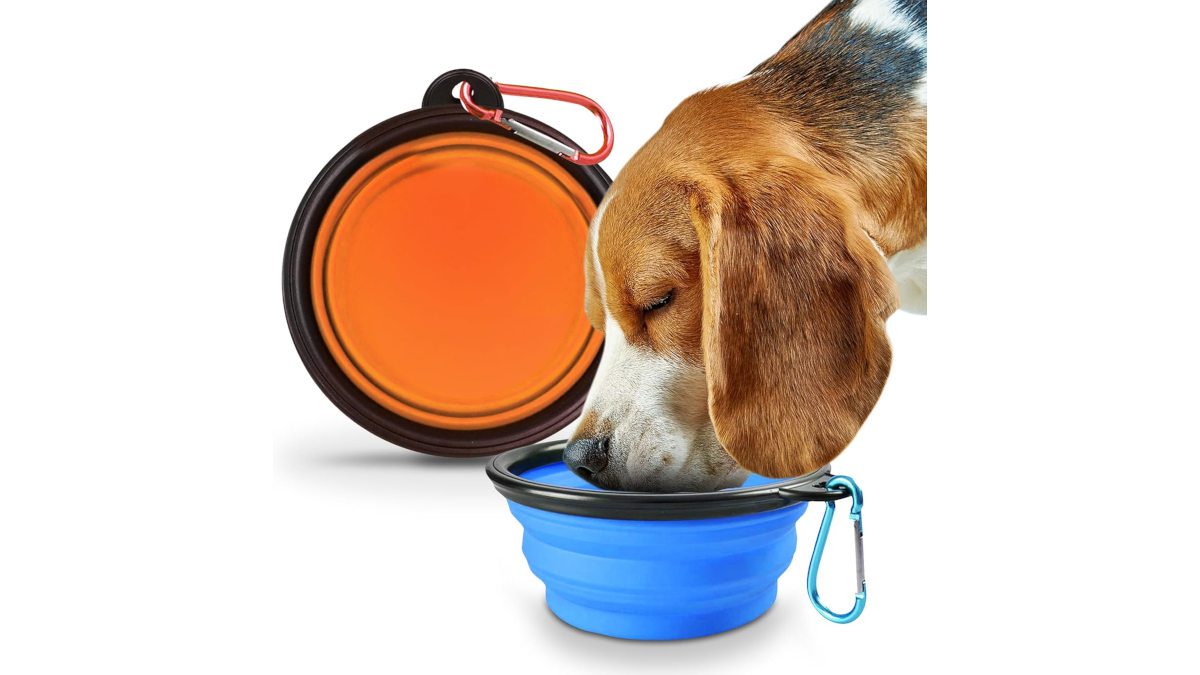
Complete Guide
The Get Home Bag
The Get Home Bag is built for a single journey home — on foot if necessary — from wherever you happen to be. It’s leaner, lighter, and focused entirely on the specific challenge of self-propelled movement across urban or suburban terrain in UK conditions. Once you’re home, its job is done.
Read the Full Guide: The Get Home Bag →
Dog Ice Lollies — Better Than They Sound
This tip works, it is cheap, and it does two things at once: it helps your dog cool down and keeps them occupied so they stop running around making themselves hotter.
Take a silicone mould, a Kong, or any small container. Fill it with one of the following:
- Dog gravy or dog broth powder mixed with water
- A slice of chub roll (the soft tube-format dog food, available in most supermarkets very cheaply)
- Plain low-sodium stock (chicken or beef, no onion or garlic)
- Mashed banana or plain yoghurt (both are fine for most dogs in small amounts)
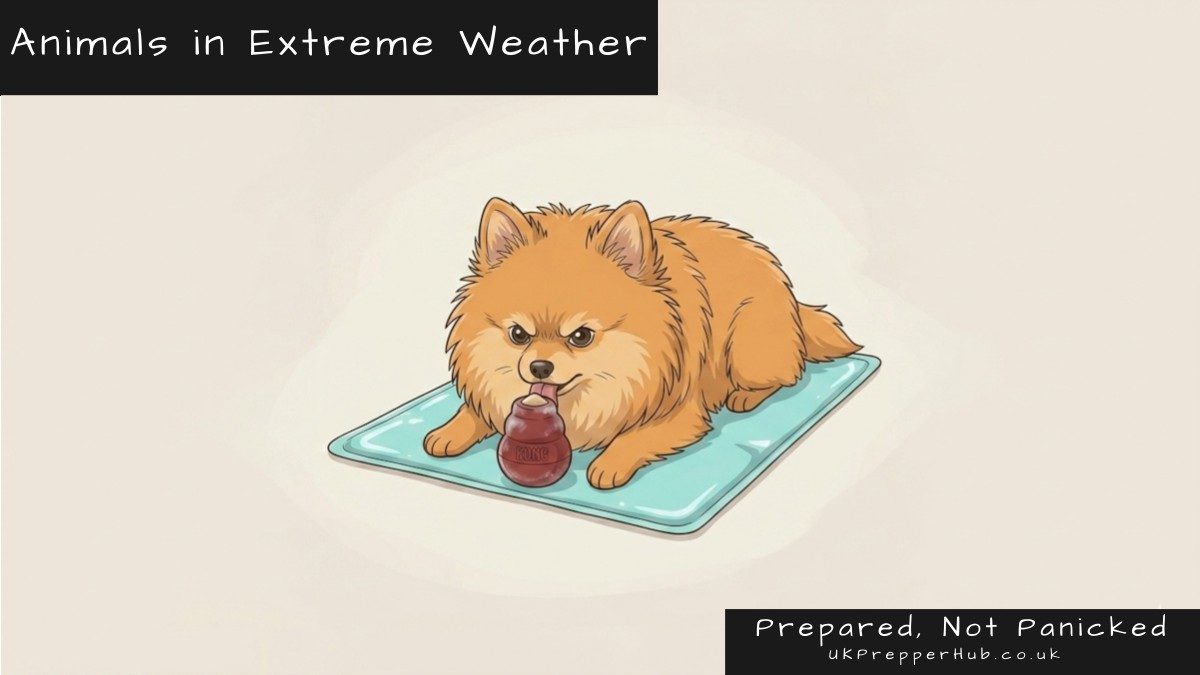
Freeze overnight. On a hot day, give it to them outside or on an easy-to-clean surface. A Kong works particularly well — frozen, it takes them a long time to work through, which is exactly the point. Cool, calm, and occupied. A frozen Kong is also one of the most effective distraction tools available when you need a dog to settle.

🐾 Weekend Warrior
Pet Tip
Pickle and the frozen Kong — keeping a small dog cool and amused in summer heat with a DIY frozen treat she treats with the seriousness of a tactical problem
Cool Coats and Cool Mats
Both of these are worth knowing about.
Dog cool coats are worn like a jacket but work in reverse — they are soaked in cold water and the evaporation cools the dog as they move. Useful on longer walks or when you cannot easily stop for shade. Sizes vary widely, so check the sizing guide for your breed carefully before buying.
Cool mats work through a pressure-activated gel that absorbs body heat. No electricity required, no fridge required — the dog or cat lies on it and the mat draws heat away from their body. They recharge simply by not being used for a few minutes. Available in sizes from small enough for a cat to large enough for a Labrador. Cats tend to find them independently once they work out what they are for.
Pecute Dog Cooling Mat
Pressure-activated gel mat in six sizes from XS to XXXL — no electricity, no freezer, no setup. Keeps dogs and cats cool during UK heatwaves without any of the faff.
Our Full Review: Pecute Dog Cooling Mat →
Complete Guide
Heatwave Survival UK
UK homes are built to keep heat in — not let it out. This guide covers recognising heatstroke, staying cool without air conditioning, and protecting the people around you most at risk.
Read the Full Guide: Heatwave Survival UK →
Cold Weather: Not Every Dog Needs a Coat — But Some Do
Dogs with dense double coats — Labradors, Huskies, Border Collies, German Shepherds — are generally well equipped for British winters. They do not need a coat and will often be uncomfortable in one.
Dogs with very little body fat or thin, short coats are a different matter. Greyhounds, lurchers, whippets and Staffordshire Bull Terriers in particular feel the cold quickly. For these breeds in wet, windy British winter weather, a decent waterproof coat is not a luxury. Look for one with a belly panel (wind chill from below is often worse than from the sides), a secure fit that does not restrict movement, and a reflective strip for low-light walks.
Signs of Hypothermia in Dogs
Shivering is the obvious one, but not the only sign. Watch for reluctance to move, whimpering, muscle stiffness, pale or grey gums, and in serious cases, lethargy and unresponsiveness.
If you suspect hypothermia: get the dog indoors immediately. Wrap them in dry blankets — wet fur loses heat faster than dry, so towel them down first. Warm the environment, not just the dog. Offer warm (not hot) water to drink if they are conscious. Contact a vet promptly — internal temperature is what matters and you cannot assess that at home.
Rock Salt and Grit — A Winter Hazard Worth Knowing
Gritted pavements are good news for humans and bad news for dogs. Rock salt causes irritation and cracking of paw pads on contact, and when dogs lick their paws — which they will — they ingest it. Salt toxicity in dogs is a real risk, particularly for smaller breeds.
After any winter walk on treated paths, wipe paws down before the dog has a chance to lick them. A damp cloth is enough. Paw balm helps prevent cracking if your dog is regularly on salted surfaces. If you notice excessive paw licking, redness, or swelling, rinse the paws thoroughly with warm water and monitor.
Cats and Cold Car Engines
Cats, particularly outdoor cats, seek warm spots to sleep in cold weather. Car engines retain heat for hours after being switched off and the space around the wheel arch and engine bay is a popular choice. Before starting your car on a cold morning — especially if you have outdoor cats in the area — knock firmly on the bonnet and check around the wheels.
This applies even if you do not own a cat. Neighbourhood cats will use any warm vehicle available.
Small Animals in Extreme Weather: Rabbits, Guinea Pigs and Outdoor Hutches
Rabbits and guinea pigs are frequently housed outdoors and are poorly suited to temperature extremes. Neither species handles cold as well as their fur suggests — particularly guinea pigs, which originate from a temperate Andean climate and struggle significantly below about 15°C.
In cold weather:
- Move outdoor hutches to a shed, garage, or sheltered porch if possible — out of wind and rain is more important than insulation alone
- Extra bedding matters — deep hay is the most effective insulation material
- Check water bottles and bowls at least twice daily — they freeze faster than you expect
- A microwaveable heat disc, designed for small animals, can be placed under bedding to provide safe, gentle warmth overnight. Unlike a hot water bottle, there is no leak risk and no scalding — they provide low, sustained heat and are available inexpensively. Reheat according to the product instructions and always wrap in a cloth before placing in the hutch.
SnuggleSafe Microwave Heat Pad
Ten hours of gentle warmth from a two-minute microwave blast — no electricity, no wires, and nothing that stops working the moment the power does. Essential kit for rabbits, guinea pigs, cats, and small dogs through a British winter power cut.
Our Full Review: SnuggleSafe Microwave Heat Pad →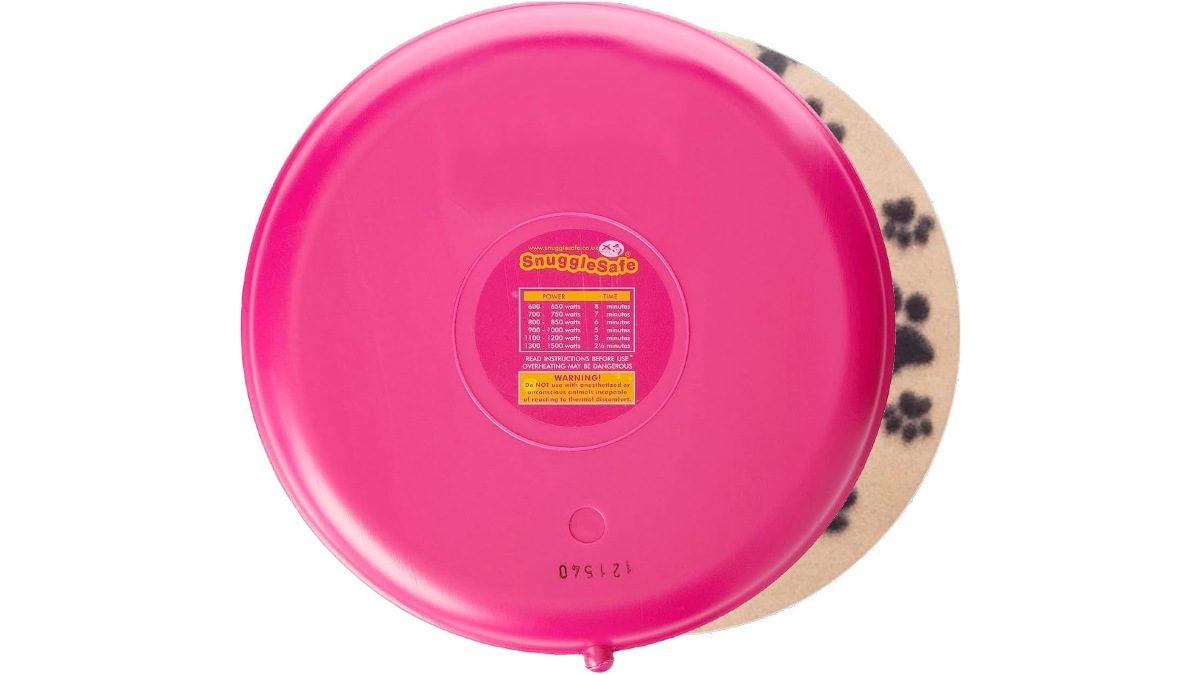
In hot weather:
- Move the hutch into full shade by mid-morning and keep it there
- A frozen water bottle placed in the hutch gives them something to press against to cool down
- Mist around (not directly on) the hutch with cool water
- Rabbits and guinea pigs both pant when overheated — if you see rapid, shallow breathing, act immediately and get them into a cool environment
When to Call the Vet
Do not wait to see if things improve on their own with any of the following: collapse or inability to stand, seizures, vomiting that does not stop, pale or blue-tinged gums, breathing that is laboured or very rapid, or any animal that is unresponsive. These are emergency situations. Ring the vet, describe what you are seeing, and get there.
Many veterinary practices have an out-of-hours emergency line. Find the number before you need it — not at midnight in a crisis. For further guidance, the RSPCA’s pet welfare advice pages are a reliable UK reference for specific conditions.
Complete Guide
Keep Warm Without Heating
When a cold snap hits and the boiler gives up, the house loses heat fast. How to keep warm without heating, fix a frozen condensate pipe, protect your pipes, and spot hypothermia in someone vulnerable before it gets serious.
Read the Full Guide: Keep Warm Without Heating →
Frequently Asked Questions
How do I know if my dog is too hot?
Heavy, continuous panting is the first sign. If they are also drooling more than usual, seem restless or disoriented, or are actively seeking cold surfaces to lie on, get them into shade and offer water immediately. Bright red gums, vomiting or collapse are serious — treat as an emergency and contact a vet.
Can I leave my dog in the car briefly on a warm day?
No. A car parked in sun on a 22°C day reaches 47°C inside within an hour — and far higher temperatures faster than that. Even a few minutes is enough to cause serious harm. If you see a dog in a hot car showing signs of distress, call 999. Breaking the window is legally defensible ONLY if the animal is in immediate danger.
My dog has thin fur — do they really need a coat in winter?
For greyhounds, lurchers, whippets, Staffies and similar breeds, yes — particularly in wet and windy conditions. These breeds have very little insulating fat and a single short coat. A waterproof, well-fitted coat with a belly panel makes a significant practical difference on cold British walks.
Is rock salt dangerous for dogs?
Yes, both on contact with paws (causes cracking and irritation) and if ingested through paw licking (salt toxicity). Wipe paws after every winter walk on treated paths before your dog can lick them. If you are concerned about ingestion, contact your vet.
At what temperature should I bring outdoor rabbits inside?
Rabbits can tolerate cold better than heat, but below about 10°C they need additional protection — extra bedding, draught-proofing, and ideally a move indoors or into a shed. Guinea pigs are more cold-sensitive and should be brought indoors or into a heated space below about 15°C.
What is a cool mat and does it actually work?
A cool mat contains a pressure-activated gel that absorbs body heat when pressed against it. It does not need electricity or refrigeration. Most dogs and cats will use one readily once they discover it. The mat recharges by being left unused for a few minutes. They work well for dogs and cats in warm weather — a practical alternative to air conditioning.
Build Your Resilience
Further Reading: Related Guides
All our guides can be found listed on our resilience hub.
Gear We’ve Tested & Reviewed
- OCOOPA USB Rechargeable Desk Fan
- Pecute Dog Cooling Mat
- SnuggleSafe Microwave Heat Pad
- SOL Collapsible Dog Bowl
All our reviews can be found on our reviews and resources page.