
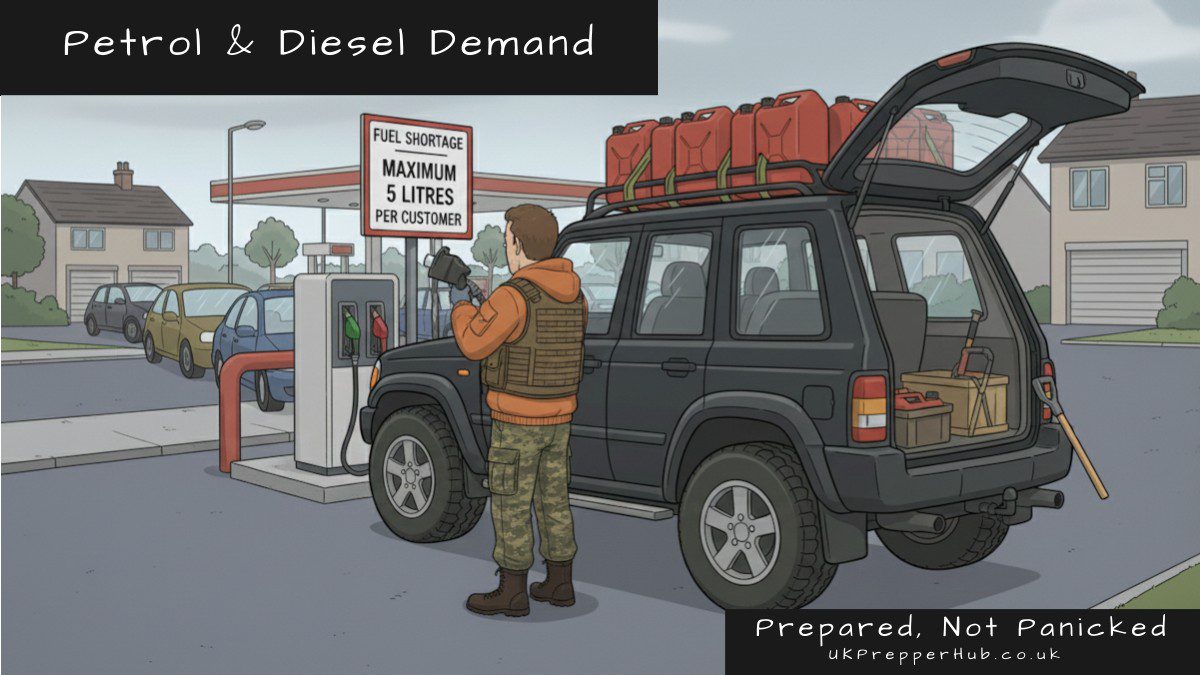
Diesel shortage is a phrase most UK drivers hadn’t thought about since the 2021 forecourt queues. This week it’s back. Average diesel prices passed £2 a litre for the first time, the US threatened to stop selling diesel abroad, a former BP executive raised the prospect of rationing, and North Sea oil workers voted to strike. The government’s line is that supply is “inherently resilient”.
So is there a diesel shortage, or isn’t there? This special report sets out what’s actually happening to diesel supply, why the UK is more exposed on diesel than on petrol, what a real fuel shortage would look like, and what your household should and shouldn’t do about it.
Diesel Shortage Fears: Where Things Stand
According to the RAC, the average price of a litre of diesel reached a record 200.01p on Friday 2 October. Petrol has risen too, but more slowly. The underlying cause is the war in the Middle East, which has disrupted crude oil and refined fuel supplies from the Gulf since February. Our Middle East Conflict: UK Household Impact tracker follows that side of the story day by day.
Then came the past fortnight:
- A US export threat. The Trump administration warned it could ban diesel exports unless European countries released their own emergency stockpiles. The Guardian reported that about a third of the UK’s diesel imports last year came from the US.
- A G7 stockpile release. On 2 October, G7 leaders agreed to release up to 100 million barrels from emergency reserves, half diesel and half crude oil, with diesel front-loaded in the first 20 days. French President Emmanuel Macron said members were “all committed to ensuring there are no export bans”.
- Rationing talk. A former BP executive said the UK could face rationing and “restrictions” for drivers. Transport minister Keir Mather responded on Good Morning Britain that people “can still go to the pump and fill up with diesel because the supply we have to the UK is inherently resilient”.
- Businesses feeling it. The Road Haulage Association says hauliers are paying an extra £350 a week per lorry compared with before the war, and coach operators have warned that services including school transport could be cut.
Right now this is a price shock, not a diesel shortage. Nobody is reporting forecourts running dry. But the fuel crisis has moved from “it costs more” to “could it run out?”, and that’s the question people are now searching.
Why Diesel Is the UK’s Weak Spot
Petrol and diesel come from the same barrel of crude, but the UK’s position on each is very different. The UK makes broadly enough petrol for its own needs. It doesn’t refine enough diesel, and around half of the diesel used in the UK is imported, mostly from northern Europe and the US.
That’s why a threat from Washington matters far more for diesel than for petrol, and why a diesel shortage is a more realistic risk for the UK than a petrol one. Europe as a whole makes about 70% of its own diesel and imports the rest, so when the US talks about keeping its diesel at home, every European country starts bidding for the same cargoes. Even if the fuel still arrives, it arrives at a higher price.
And diesel is the fuel that moves everything else. Lorries, vans, buses, coaches, tractors, trains on non-electrified lines and most construction plant run on it. A diesel shortage would hit the supermarket shelves long before it hit your own car, even if your own car runs on petrol.

🐔 Chicken Licken
Did You Know?
Around half the diesel we use is imported? I’ve been saying this for years. We make enough petrol but not enough diesel, and diesel is what the lorries run on. Nobody believed me until the price passed £2.
See our Special Report “How Does War Affect Prices?” first published on 8 July 2026.
The North Sea Strike Threat
The newest pressure point is closer to home. On 5 October the Unite union said more than 160 offshore workers at Apache had backed strike action after pay talks broke down. Action could start later this month and would affect the Forties and Beryl oilfields.
Unite says a strike could bring a key platform to a standstill and take down the Forties pipeline system, which it says handles almost a third of the UK’s oil and gas. Apache says it has engaged constructively and offered a 4% pay rise. Whether a strike goes ahead, and how much disruption it would actually cause, is still unknown. It’s one to watch rather than one to act on, but a long strike on top of an import squeeze is the kind of combination that turns high prices into a genuine diesel shortage.
Who Feels a Diesel Shortage First
Long before anyone queues at a forecourt, high diesel prices land on the businesses that run on it. The Road Haulage Association says hauliers typically work on margins of about 2%, are paying an extra £350 a week per lorry, and that hundreds of transport businesses have already gone bust this year. One Oxfordshire haulage firm running 22 lorries told the Guardian its fuel bill had gone from about £50,000 a month to nearly £65,000.
Coaches are in the same position. The Confederation of Passenger Transport says 85% of independent coach operators are family businesses, and warns that school transport is among the services at risk if prices stay this high.
For households, that means the cost turns up in places you don’t expect: delivery charges, food prices, school coach fees and anything else that travels by road. As one haulier put it, “somebody somewhere is having to pay for this”. A diesel shortage would be that same pressure, only sharper and faster.
Will There Be a Fuel Shortage?
Nobody can promise either way, but the history of every recent fuel shortage is worth knowing, because the UK’s two most recent fuel crises have something in common.
September 2000. Protests over fuel duty, led largely by lorry owner-drivers, blockaded oil refineries and fuel depots. Deliveries stopped and forecourts ran dry within days.
September 2021. There was no shortage of fuel at all. A news report about a shortage of HGV drivers triggered panic buying. By 26 September, BP estimated that 30% of its sites had run out of the main grades, and in some regions of England most forecourts were empty. It took weeks to settle.
The lesson from 2021 is the one that matters most for households: the queues created the shortage, not the other way round. Forecourts only hold limited stock and are refilled on a schedule. If everyone fills up at once, the tanks empty, and the people who genuinely need fuel that day, such as carers, nurses and delivery drivers, can’t get any.

🦆 Keith
Don’t Be Keith
Keith heard the word “rationing” on the radio and drove his Land Rover Discovery straight to the supermarket forecourt with a boot full of jerry cans and old water bottles. He spent 40 minutes in the queue, filled everything he’d brought, and told everyone behind him he was “just being prepared”. The pump ran dry two cars later. Don’t be Keith.
What Diesel Rationing Would Actually Look Like
“Rationing” conjures up ration books, and the UK has been here before. During the 1956 Suez crisis, when a vital shipping route became too dangerous to use, petrol was rationed. During the 1973 oil crisis the government went as far as printing petrol coupons, though they were never used.
Two things are different now. First, the UK and other members of the International Energy Agency are required to hold emergency oil stocks equal to at least 90 days of the previous year’s net imports, and to release them together in a crisis. This month’s G7 release is that system working as designed. Second, the government’s response to a real diesel shortage is written down and published.
The government’s National Emergency Plan for Fuel sets out its options, with the least invasive used first. The early steps are about keeping fuel moving: letting oil companies share information and coordinate deliveries, putting a reserve fleet of tankers on the road, using trained military drivers, relaxing drivers’ hours, and releasing the emergency oil stocks the UK is obliged to hold.
Only in a severe national shortage would the government use its emergency powers under the Energy Act 1976 to control who gets fuel. Those measures include:
- Designated filling stations giving emergency and critical service vehicles priority access.
- Priority deliveries of bulk fuel to emergency services, utilities and public transport.
- Diesel prioritised for commercial vehicles that keep food and health supply chains running.
- A maximum purchase limit per visit for the public at forecourts, and possibly restricted opening hours.
That last one is what diesel rationing would most likely mean for a household in a real diesel shortage: a cap on how much you can buy at once, not a coupon book. And notice who comes first. If diesel is ever rationed, the lorries carrying food and medicines get priority over private cars, and that’s exactly how it should be.
What to Do About a Diesel Shortage Now
None of this calls for dramatic action. It calls for a few habits that cost little and make any diesel shortage or wider fuel shortage easier to ride out.
- Keep your tank above half full. Not a brimmed tank every day, just never running it low. If a disruption starts tomorrow, you already have a decent range in hand without joining a queue.
- Don’t join the panic buying. If the pumps are busy and your tank is half full, drive past. Panic buying fuel is how 2021 happened.
- Check prices before you fill up. The government’s Fuel Finder service shows live forecourt prices, and supermarket sites are often a few pence cheaper.
- Have a plan for a week without the car. Who can work from home, which journeys can be shared, whether the bike in the shed still has air in its tyres.
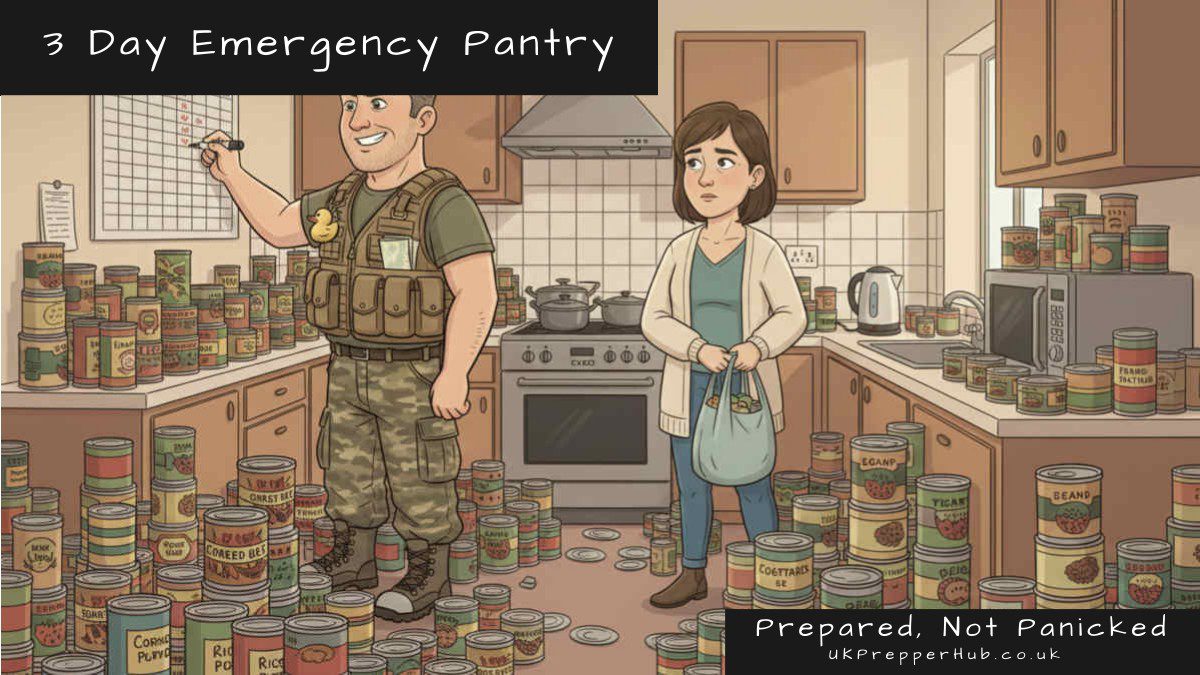
- Keep the store cupboard topped up. If diesel gets tight, the lorries that stock the shelves are affected first. A few days of food you’d eat anyway means a gap in deliveries is an inconvenience, not a problem.
- If you keep fuel at home, keep it legal. Up to 30 litres of petrol in proper containers, stored outside your living space, and diesel in clearly labelled cans. Don’t start filling jerry cans now, during the rush.
Complete Guide
Fuel Storage at Home
Most people have never read the rules on keeping petrol, diesel and gas bottles at home. This guide covers the petrol limit, which containers are legal, how long petrol and diesel last in a can, and where it’s safe to store them.
Read the Full Guide: Fuel Storage at Home →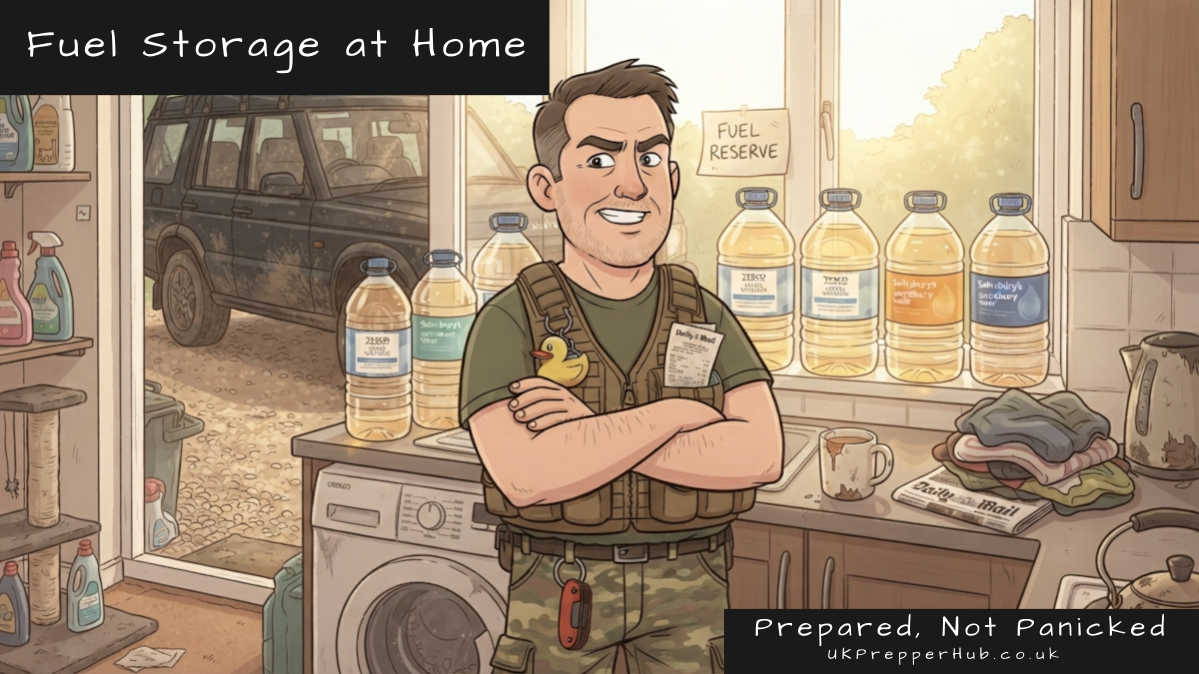
Complete Guide
The Two Wheeled Contingency
This guide makes the case for adding a bike to your resilience planning, covers what to look for if you’re buying one specifically for this purpose, and explains how to set up a bike you already own for emergency use.
Read the Full Guide: The Two Wheeled Contingency →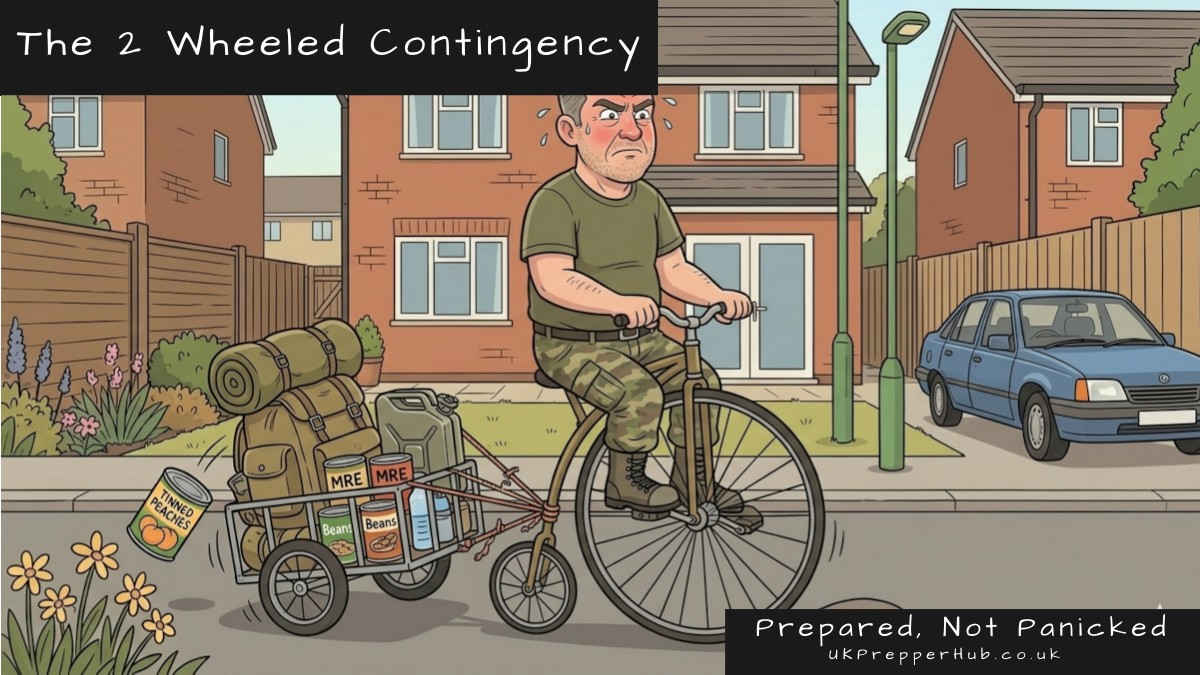
Complete Guide
3-Day Emergency Pantry
The low-barrier start: A shopping list of shelf-stable meals that require zero refrigeration.
What the Government Says It Can Do
Ministers are leaning on three things: the variety of places UK diesel comes from, coordinated stock releases with European and G7 partners, and the 5p cut in fuel duty, which has been extended until the end of the year. Haulage and coach industry groups are asking for more, including a pause on planned duty rises and help with diesel costs. The chancellor is expected to set out what happens to fuel duty in the Budget.
For households, the realistic picture is higher prices for some time rather than an outright diesel shortage, and a supply system that holds up as long as people don’t empty it in a panic. If that changes, the National Emergency Plan above is what comes next, and we’ll update this report.
Build Your Resilience
Further Reading: Related Guides
- Fuel Storage at Home
- The Two-Wheeled Contingency
- The 3-Day Emergency Pantry
- Get Home Bag
- Winter Driving Tips
All our guides can be found listed on our resilience hub.
Gear We've Tested & Reviewed
All our reviews can be found on our reviews and resources page.
📡 Find Us Everywhere
Daily briefings, prep guides, and real-time updates across every platform. Pick yours.
Free. No commitment. Stay anonymous on WhatsApp & Telegram.
Stay Informed on UK Preparedness
Join our newsletter for UK-specific preparedness tips, product recommendations, and real-world advice for households.
Subscribe to Our Newsletter