
This post contains affiliate links. Learn more
What to put in an emergency kit isn’t actually a mystery — the UK government publishes an official list. On 22 October 2026 it was relaunched as the Be Ready campaign at gov.uk/beready, and the list grew: it now also includes blankets and warm clothing, cash, copies of documents, phone numbers on paper, and baby and pet supplies. This page covers the original ten items. We’ve already covered what that list actually says and why. This page is the practical follow-up: the exact product for every item on it, and what the whole thing genuinely costs to buy.
None of this needs to be expensive gear-culture nonsense. Every pick below is a real, sensible product a UK household can buy this week — most of it for under £30 a category, and several items you may already own. Once the official list is done, our companion list covers what it leaves out and what else you need.
On a budget? We’ve put the kit that has to work without power (torches, a lantern, a radio, a power bank, a camping stove and batteries) into one Amazon basket for under £100: see our 72 hour emergency kit on a budget.
The UK Government’s Emergency Kit Checklist
| Item | Price |
|---|---|
| 1. Water | £5.46 |
| 2. Non-Perishable Food | ~£20.00 |
| 3. Manual Tin Opener | £5.99 |
| 4. Lighting | £12.99 |
| 5. Radio | £29.99 |
| 6. Power Bank | £26.99 |
| 7. First Aid Kit | £17.99 |
| 8. Medications | £15.95 |
| 9. Hygiene Supplies | £19.99 |
| 10. Important Documents | £58.10 |
| Total potential cost | ≈£213.45 |
Prices checked at time of writing — click any item to jump to it below, or check the button on each card for the current price.

📋 Clarissa
I’ve Made A Checklist
I’ve already turned the new Be Ready list into a checklist: all fourteen items, plus the gaps it leaves, with a link and a box to tick as you buy each one. Free to download, obviously.
Download: Government Be Ready Emergency Kit Checklist →The Government’s List, Item by Item
1. Water

The Be Ready checklist says 3 litres per person per day for drinking, with more needed for cooking and washing. Over three days, that’s 9 litres per person for drinking alone, or 18 litres for two people.
You don’t need a fancy container. A cheap multipack of bottled water does the job, and this particular one has a genuinely useful detail: a rigid carry handle moulded into the cap. That means once you’ve drunk it, the empty bottle is actually practical to refill — including from a standpipe or water bowser, which is exactly what water companies deploy during a prolonged mains outage.
2. Non-Perishable Food
The list simply says food that needs no cooking preparation. A proper ration pack is the honest, no-fuss way to tick this off — shelf-stable, no fridge, no prep beyond hot water if you have it.
Ration-X 24 Hour Ration Pack
A full day’s food in one sealed bag. UK-made, in the same format as the British Army 24 hour ration pack, ready to eat hot or cold with four menus to choose from.
Our Full Review: Ration-X 24 Hour Ration Pack →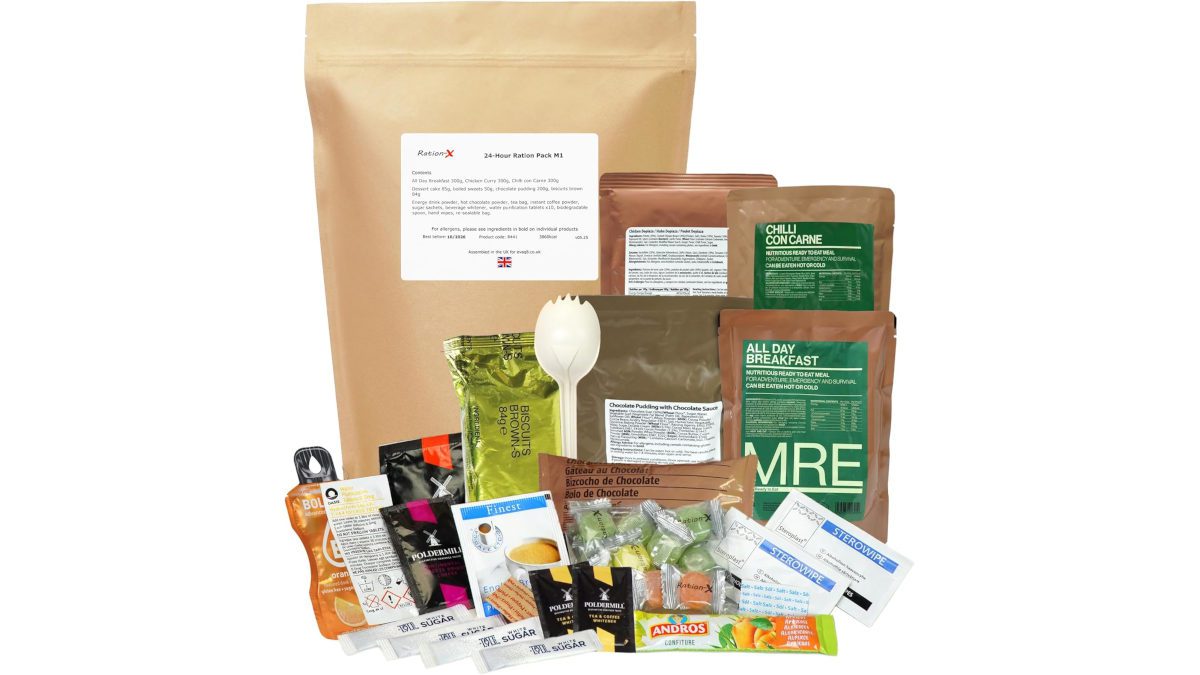
3. Manual Tin Opener
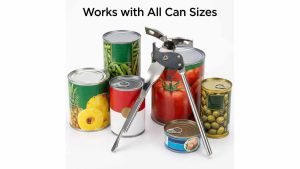
Most emergency food is tinned, and an electric tin opener is dead the moment the power goes. This is the one item on the whole list nobody thinks to check they actually own a manual one for. It doesn’t need to be pretty — this one is purely functional, stainless steel, and has a bottle opener built on the end for good measure.
4. Lighting
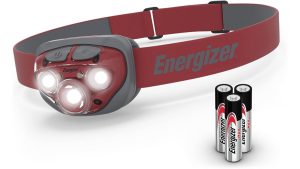
The government is explicit that this means a battery or wind-up torch — not candles, which are a genuine fire risk in a blackout. A proper head torch keeps both hands free, which matters more than it sounds like it would when the power’s actually out.
A genuinely useful trick worth knowing: turn the head torch inside out — band on the outside, light facing in — and strap it around one of the 5L water bottles from item 1, beam pointing into the water. The water scatters the light in every direction, turning a narrow directional beam into soft ambient light for the whole room, instead of one bright spot on the ceiling.
Energizer Vision HD+ Head Torch
Is this the most versatile head torch for your kit? Does it deliver what it promises? Does it have longevity?
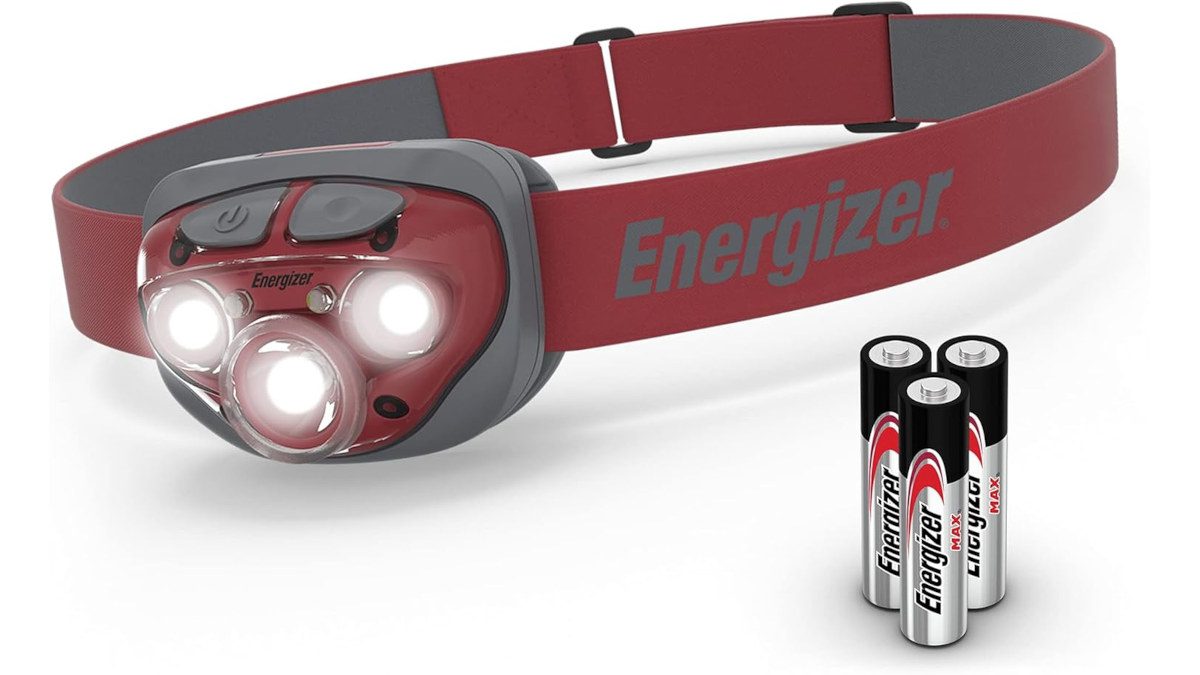
XtraLite NiteSafe
The NiteSafe is a dual-function device that works as both a plug-in nightlight and an emergency torch. It sits in a standard UK plug socket, charges continuously, and the moment mains power fails, it automatically illuminates.
5. Radio
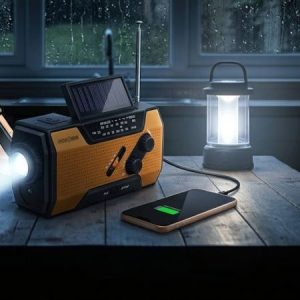
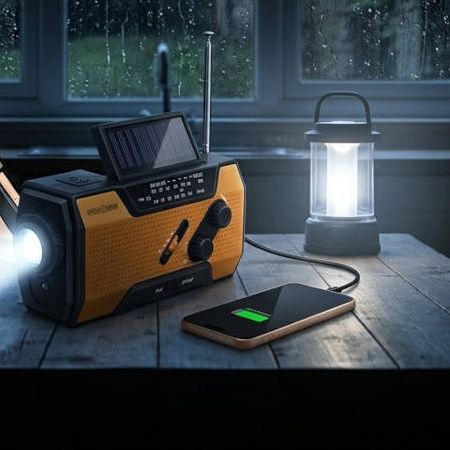
Battery or wind-up powered, so you can still get news and alerts when the mobile network is struggling or down entirely. This is also the one item that keeps you connected to official updates without relying on a phone battery.
FosPower Emergency Radio
Most emergency radios have one or two power options. The FosPower has four, and that redundancy is the single most important feature for preparedness use.
6. Power Bank
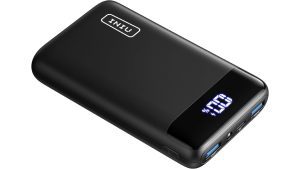
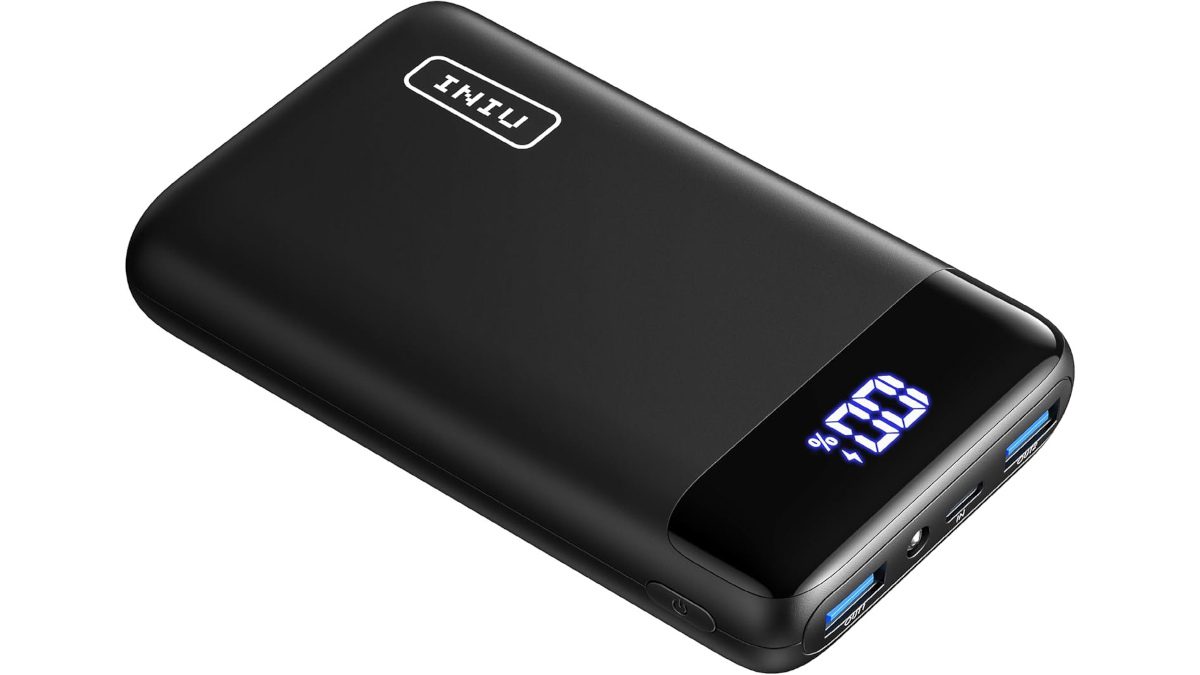
Not on the government’s list by name, but it should be — your phone is your link to everything else once the power’s gone, and it’s the first thing to die.
INIU 20,000mAh Power Bank
We tested it so you don’t have to — here’s the one thing most power banks get wrong, and why this one doesn’t.
7. First Aid Kit
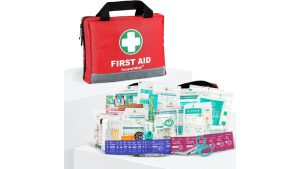
Basic medical supplies, properly stocked rather than a token box of plasters.
General Medi First Aid Kit
309 pieces, ISO 13485 certified, with a cold pack, emergency blanket, moleskin pad and CPR mask included — the first aid kit that actually covers the scenarios a cheap chemist kit doesn’t.
Our Full Review: General Medi First Aid Kit →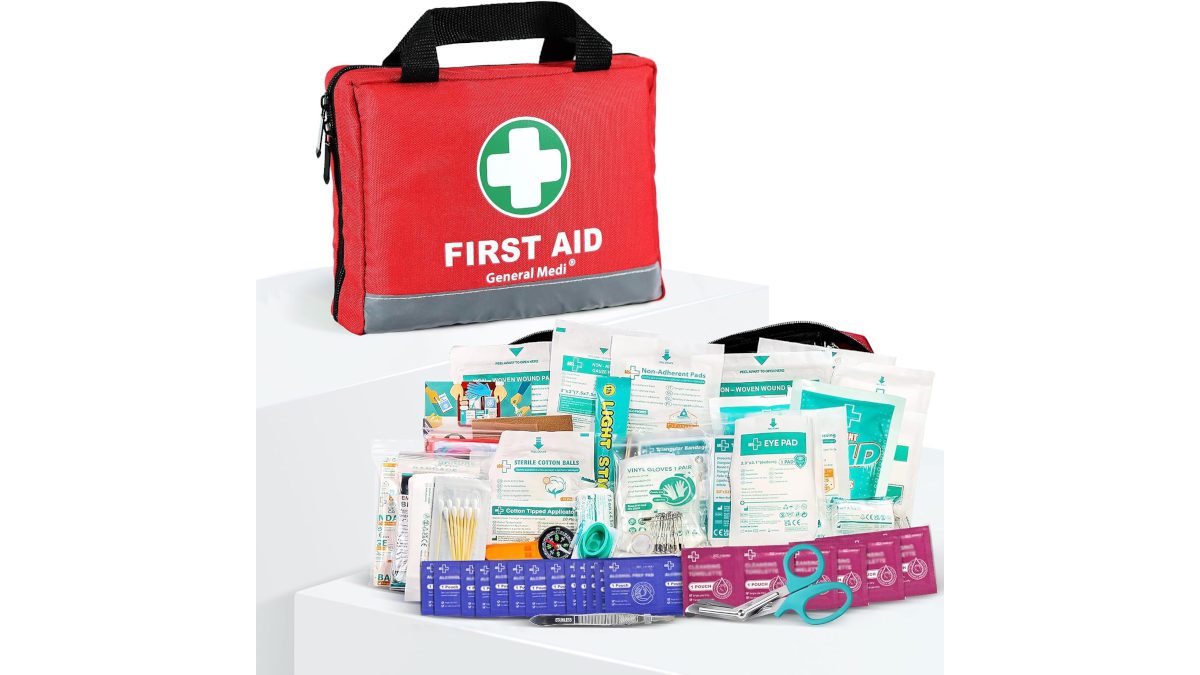
8. Medications
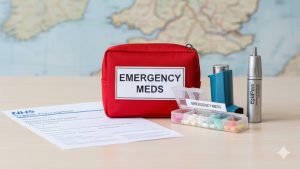
The guidance says several days of any essential medication. For most tablets and inhalers, that’s just a matter of having the stock. For anything that needs to stay cold — insulin is the obvious example — a power cut is exactly the scenario a non-electric cooling wallet is built for.
FRIO Insulin Cooling Wallet
Keeps insulin at safe temperature for 45 hours using only water — no electricity, no ice, no power required. Tested by the British Medication Devices Evaluation Unit and recommended by UK hospitals.
Our Full Review: FRIO Insulin Cooling Wallet →
9. Hygiene Supplies

The official list mentions hand sanitiser and wet wipes. Worth going bigger than a small pack of baby wipes here. Proper large body wipes like these cover a full-body wash with no running water at all, which is the real situation you’re planning for.
Drench Body Wipes
Big, rinse-free body wipes for adults, in five sealed packs of 12: a clean wash in every grab bag, car and bathroom cupboard when the water goes off.
Our Full Review: Drench Body Wipes →
10. Important Documents
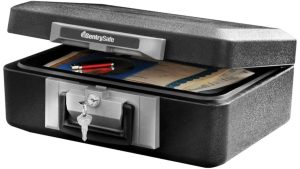
Paper copies of documents and phone numbers, the government says — but if there’s a fire risk alongside the power cut, a fireproof safe is what actually protects the originals, not just copies.
SentrySafe Fireproof Safe Box with Key Lock
UL-tested at 843°C, takes A4 flat, and ETL verified for USB backups — the fireproof document safe that actually fits your birth certificate.
Our Full Review: SentrySafe Fireproof Safe Box with Key Lock →
What The Government’s Emergency Kit Actually Costs
Add it all up, at the prices checked when this page was written, and the original ten-item list comes to roughly £213 for a two-person household. That’s not a precise live figure — individual prices move, and the buttons above always show the current price — but it’s a genuinely honest ballpark, not an inflated one.
And that’s the cost from zero. Most households already own a torch, a first aid kit, or a power bank — so the real number, for what you’re actually missing, is very likely a lot less than £213.
Pros and Cons of the UK Government List
Pros
- Covers the core basics for an emergency lasting a few days, from water and food to light and power
- Backed by real, official guidance, not invented prepper folklore
- Genuinely affordable — nothing on the list requires expensive gear
- Most items are reusable or long shelf-life, not one-time consumables
- Simple enough to build in a single shopping trip
Cons
- It’s a genuine minimum, not tailored to your specific household size
- Doesn’t spell out cold-chain medication needs beyond “bring your medication”
- No guidance on rotating or checking stock over time
- Assumes you’re staying at home — doesn’t cover evacuation scenarios
- Vague on quantities for food and hygiene supplies specifically
- Leaves out some real-world basics, such as a toilet, a way to heat or cook, and cash — we cover those gaps here
Frequently Asked Questions
What to put in an emergency kit, according to the UK government?
The government’s Be Ready checklist (October 2026) covers water, non-perishable food, hygiene products, a torch, blankets and warm clothing, an FM radio, a power bank, cash, copies of documents, phone numbers on paper, a first aid kit and medication, plus baby and pet supplies if you need them. The earlier GOV.UK/Prepare list had ten items, including a manual tin opener.
How much does a UK government emergency kit actually cost?
Roughly £213 for the original ten items from scratch, based on prices checked when this page was written. Most households already own some of the items, so the real cost is often lower.
Why does the government recommend a torch instead of candles?
Candles are a genuine fire risk during a power cut, especially if households are unfamiliar with using naked flame safely at home. A battery or wind-up torch does the same job with none of the risk.
How much water should I store for an emergency kit?
The Be Ready checklist says 3 litres per person per day for drinking, with more needed for cooking and washing. Over three days, that’s 9 litres per person for drinking alone.
Do I need to buy everything on the list even if I already own some of it?
No — the list is a checklist, not a shopping list. Check what you already have first; most households already own a torch, a first aid kit, or a power bank.
What the Rest of the Team Think

🦆 Keith the Prepper
I bought all ten items in one go, then panic-bought a satellite phone as well “just in case the list is wrong.” The list was not wrong.
⭐⭐⭐⭐

🪖 Black Panther
In my previous role this would’ve been a fraction of the full loadout. For a household, this list covers what actually matters and nothing you don’t need. Carry on.
⭐⭐⭐⭐⭐

🤡 Camping Clown
I own three head torches that individually cost more than this entire list. Turns out I didn’t need any of them to be that expensive.
⭐⭐⭐⭐
🐾 Weekend Warrior
I’ve got a bug-out vehicle prepped for full societal collapse and somehow didn’t own a manual tin opener until this list told me to buy one. Pickle supervised the whole order.
⭐⭐⭐⭐⭐

🐕 Pickle
Snorgle! Snorgle snorgle. Snorgle!
⭐⭐⭐⭐⭐ (translation: the tin opener smells interesting)
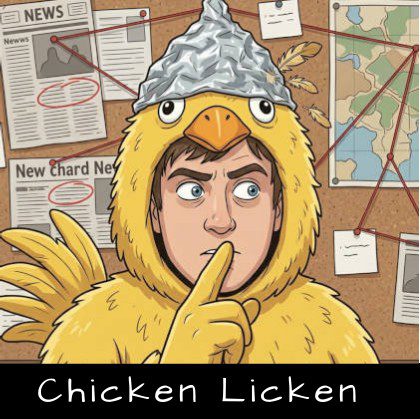
🐔 Chicken Licken
The government doesn’t publish a list like this for no reason. I’ve been saying this for years. At least now I’ve got a proper tin opener while I’m right about it.
⭐⭐⭐⭐⭐
📋 Calm Clarissa
I had this laminated before I’d finished reading it. Janet’s already ticked off six of the ten items from her own cupboard.
✅✅✅✅✅
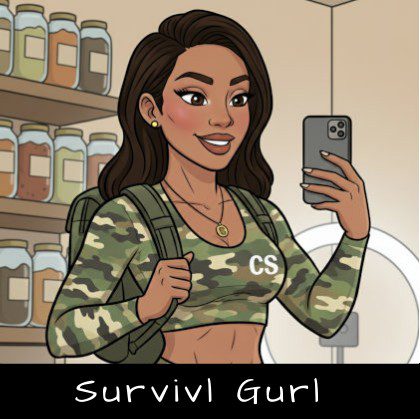
💄 Survivl Gurl 🚩
The wet wipes aren’t cute but bestie, neither is dehydration. Docking a star because the tin opener doesn’t come in rose gold.
⭐⭐⭐⭐

🌿 Aroura
The earth provides water freely, but sometimes the earth needs a five-litre bottle from Amazon to help it along. I’ve made my peace with that. Namaste 🙏
⭐⭐⭐⭐
Build Your Resilience
Further Reading: Related Guides
- Emergency Water Storage
- Long-Term Food Storage
- Managing Essential Medication in an Emergency
- Protecting Your Important Documents
- Your Home Emergency Kit: What You Actually Need
All our guides can be found listed on our resilience hub.
📡 Find Us Everywhere
Daily briefings, prep guides, and real-time updates across every platform. Pick yours.
Free. No commitment. Stay anonymous on WhatsApp & Telegram.
Stay Informed on UK Preparedness
Join our newsletter for UK-specific preparedness tips, product recommendations, and real-world advice for households.
Subscribe to Our Newsletter