
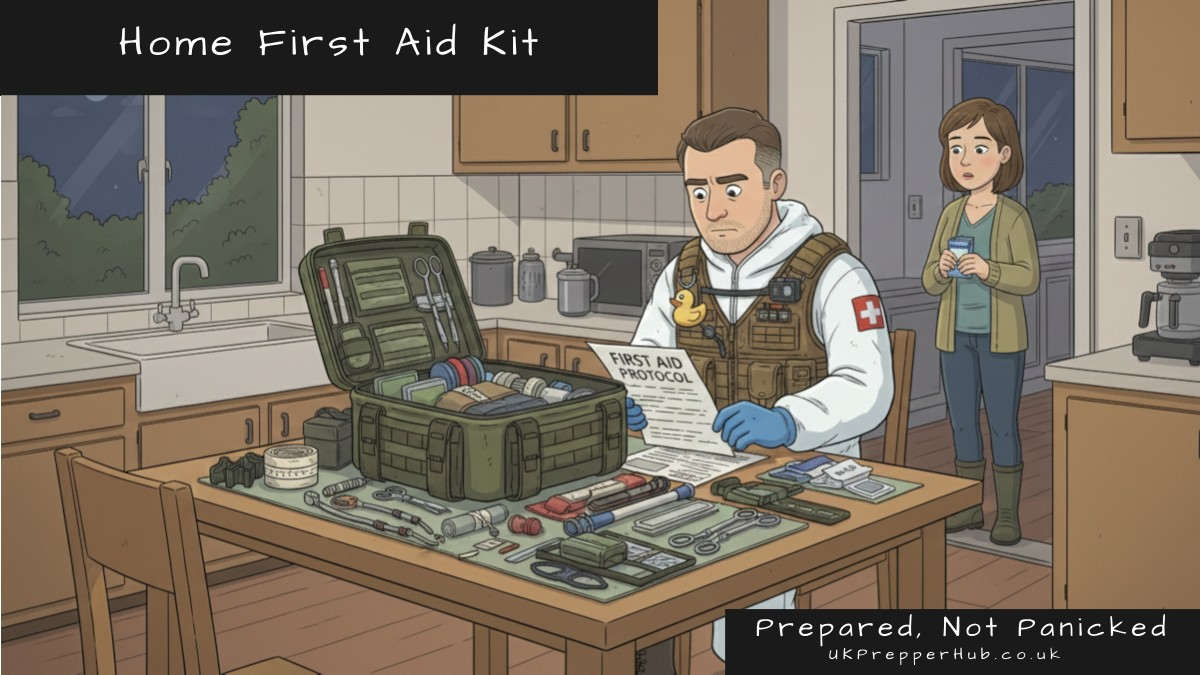
Most UK households have a first aid kit. Fewer have one that could actually help if something went wrong. The rest have a battered green box at the back of the bathroom cabinet containing three plasters (one of which is shaped like a cartoon character from a children’s variety pack), a tube of antiseptic cream that expired in 2021, and an unravelled bandage that has quietly become a draught excluder.
That kit is not a safety net. It is a prop. It creates the feeling of being prepared without delivering any of the substance. This guide is about fixing that — building a kit that works, keeping it current, and actually being able to find what you need when someone is bleeding on your kitchen floor.
Why Most Home First Aid Kits Fail
There are three reasons a home first aid kit fails when you need it. They are not dramatic. They are extremely mundane, which is why they catch people out every time.
It’s expired. Antiseptic cream loses its active compounds. Paracetamol degrades. Adhesive plasters lose their sterility and their stick. Most people have never checked the expiry dates on anything in their kit. If you bought it more than two years ago and haven’t audited it since, assume at least half of it is out of date.
It’s incomplete. The budget first aid kit from a pound shop looks reassuringly comprehensive until you actually need it. The wound dressings are the wrong size. The bandage is one, and it’s the kind that turns into a tangled mess the moment you look at it. There are no nitrile gloves. The “antiseptic” is a single-use wipe that has been in there since 2019.
It’s impossible to use under pressure. In a real emergency — a child with a deep cut, a burn from the hob, a fall down the stairs — you do not have time to rummage through an unorganised box trying to find a wound dressing. Organisation is not a nice-to-have. It is the difference between a kit that helps and one that adds to the panic.
A functional home first aid kit has three properties: complete, current, and accessible. Most home kits fail on at least two of those three.
🦆 Keith
Don’t Be Keith
Keith audited his first aid kit in January. He found a plaster he’d used to cover a blister in 2018, returned to the box because it still had some stick left. He kept it. He was satisfied with the audit.
First Things First: The Container
Before you think about contents, think about the box. This matters more than most guides acknowledge.
You have two sensible options. The first is a purpose-built pre-packed first aid kit in a bag or case — one that already contains a reasonable set of supplies and comes clearly labelled. These vary enormously in quality; the General Medi kit below is a solid tested starting point. The second option — and the one that suits anyone building their own kit to a higher standard — is a dedicated rigid container that you stock yourself.
General Medi First Aid Kit
309 pieces, ISO 13485 certified, with a cold pack, emergency blanket, moleskin pad and CPR mask included — the first aid kit that actually covers the scenarios a cheap chemist kit doesn’t.
Our Full Review: General Medi First Aid Kit →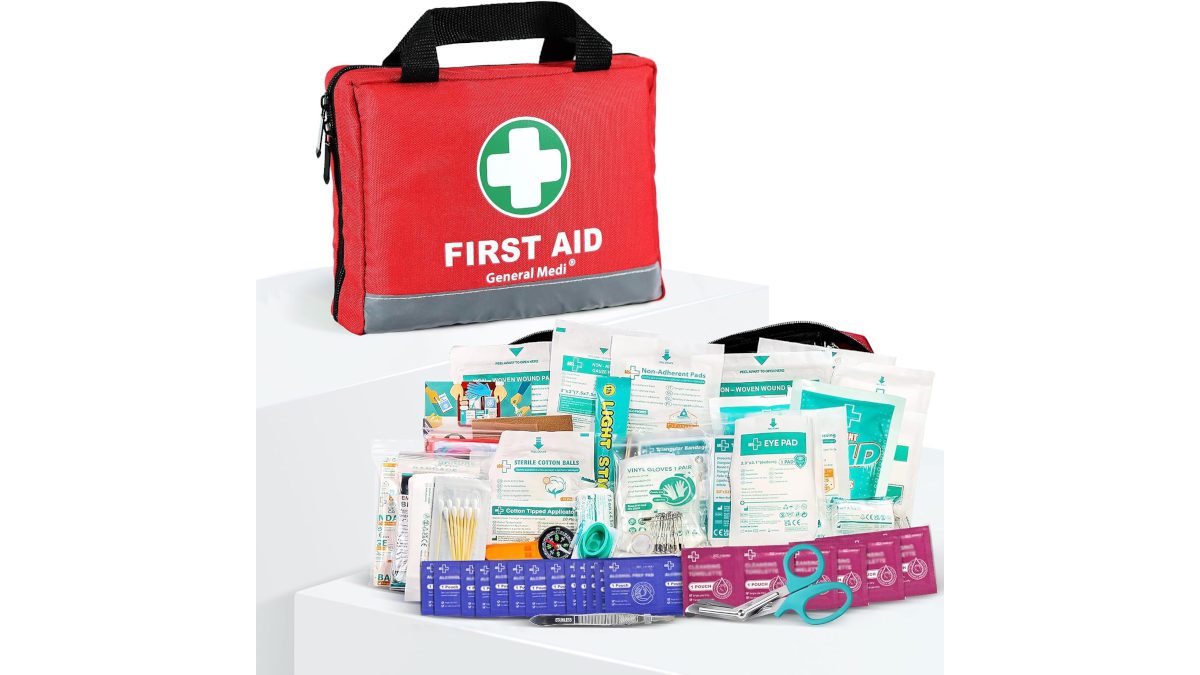
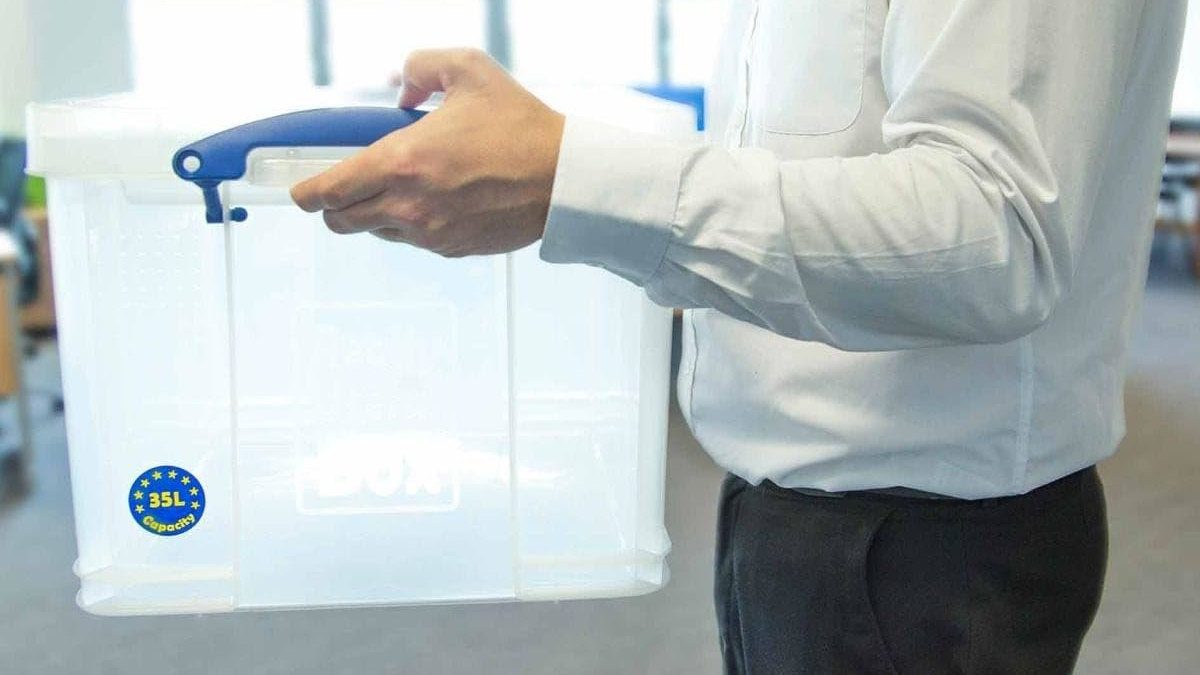
A waterproof, rigid, lidded box keeps everything together, prevents items rattling loose, protects sterile packaging from humidity, and means you can see at a glance if anything is missing. A 9-litre or 14-litre Really Useful Box is ideal — airtight, stackable, clear sides so you can see the contents without opening it. Label it clearly. Keep it in a cool, dry location away from the bathroom — humidity degrades medications and compromises sterile packaging faster than anything else.
Really Useful Boxes
Really Useful Boxes are actually waterproof, they seal properly, and they’re engineered well. Built to last and protect anything stored in them.
One box per household. Not one box per floor, not one box tucked in every room where nobody can find them. One box, one location, known to every adult in the house.
What Goes In It
Wound Care
Sterile dressings (assorted sizes) — The foundation of wound care. You need at minimum small (fingers and minor cuts), medium (larger lacerations), and large (serious wounds). They must be individually sealed and marked as sterile. Once opened, use it and discard the packaging. Do not return a part-used dressing to the kit.
Adhesive plasters (assorted) — Waterproof fabric plasters in multiple sizes. Keep at least 20. You will use these more than anything else. Hypoallergenic options are worth having if anyone in the household has sensitive skin.
Sterile wound closure strips — Steri-strips or butterfly closures. These hold wound edges together for cuts that are too wide for a plaster but don’t need stitches. A pack of assorted sizes. If a cut is gaping and deep, close it with these and get to A&E — they’ll hold the wound while you travel.
Triangular bandages (x2) — Multipurpose: slings for arm and shoulder injuries, improvised pressure bandages, support for sprains. The British Red Cross recommends at least two.
Crepe roller bandages (5cm and 10cm) — For securing dressings and supporting injured limbs. Crepe, not rigid cotton — crepe allows for swelling without cutting off circulation.
Sterile eye pad — Specifically designed for eye injuries. Do not substitute a general dressing. Eye injuries are more common than most people expect from DIY and gardening.
Sterile gauze pads — For wounds too large or irregular for a standard dressing. Must be individually sealed and marked sterile.
Skin Prep and Antiseptic
70% Isopropyl Alcohol (IPA) prep swabs — individually foil-sealed — The NHS standard for cleaning skin before wound dressing and medical device handling. They must be individually foil-sealed — not loose in a pot or shared container. A 100-pack costs very little and lasts years. See our review of the Core Medical 70% IPA Prep Swabs for what to look for.
Core Medical 70% Isopropyl Alcohol Swabs
The easy swap for the alcohol-free wipes UKHSA told us to bin. 100 individually sealed 70% isopropyl alcohol swabs for skin prep before injections, first aid kits and cleaning medical kit.
Our Full Review: Core Medical 70% Isopropyl Alcohol Swabs →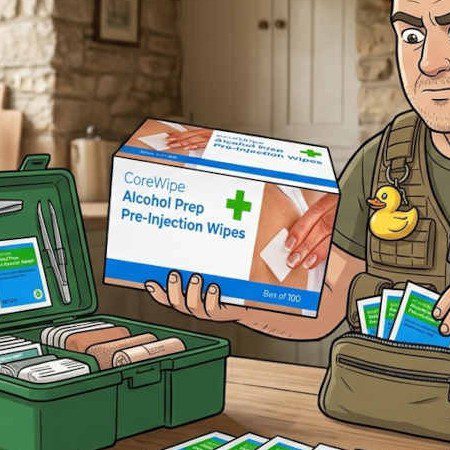
One important note: IPA swabs are for cleaning the skin around a wound, not inside it. Do not apply alcohol directly into an open wound.
Single-use sterile saline pods — For flushing debris from wounds and eyes. Single-use pods only — a shared bottle of saline becomes contaminated the moment it’s opened.
Antiseptic cream (small tube, within expiry) — For minor cuts and abrasions after cleaning. Check the date.

🐔 Chicken Licken
Did You Know?
Did you know that in 2026, contaminated alcohol-free wipes caused 59 infections and one death in the UK — and they’d been sitting in home first aid kits for years after the recall? I’ve been saying for years nobody checks what’s actually in these kits. The alcohol-free ones are the problem. Get the IPA foil-sealed swabs instead. I’ve been saying it for years.
Medication
Paracetamol — Adult and children’s formulations if you have children in the household. Check expiry dates annually — paracetamol degrades and expired paracetamol should go to a pharmacy collection point, not household waste.
Ibuprofen — Anti-inflammatory for pain, fever, and swelling. Not suitable for children under 3 months, anyone with stomach issues, or anyone on blood-thinning medication without medical advice.
Antihistamine tablets — For allergic reactions. Loratadine (non-drowsy) for daytime use; chlorphenamine (Piriton) is sedating but faster-acting for acute reactions. Both are worth having.
Keep medications in their original packaging with the patient information leaflet. Never decant tablets into unlabelled containers. Check expiry dates every six months.
Complete Guide
Managing Essential Medication
This guide covers more detail on being prepared with essential medication for all emergency situations.
Equipment
Nitrile gloves (multiple pairs) — Nitrile, not latex. Latex allergy is common and you won’t know if a casualty has one until it’s too late. Keep at least four pairs. Single-use — discard after contact with blood or body fluids.
Digital thermometer — An ear or underarm thermometer. Glass mercury thermometers are no longer recommended — they’re a contamination risk if broken and less accurate. A decent digital thermometer costs under £15.
Braun PRT2000 – Age Precision Digital Thermometer
Brief description of why this product is worth considering. ‘teaste’tpyetext like “is this the best?”.
Our Full Review: Braun PRT2000 – Age Precision Digital Thermometer →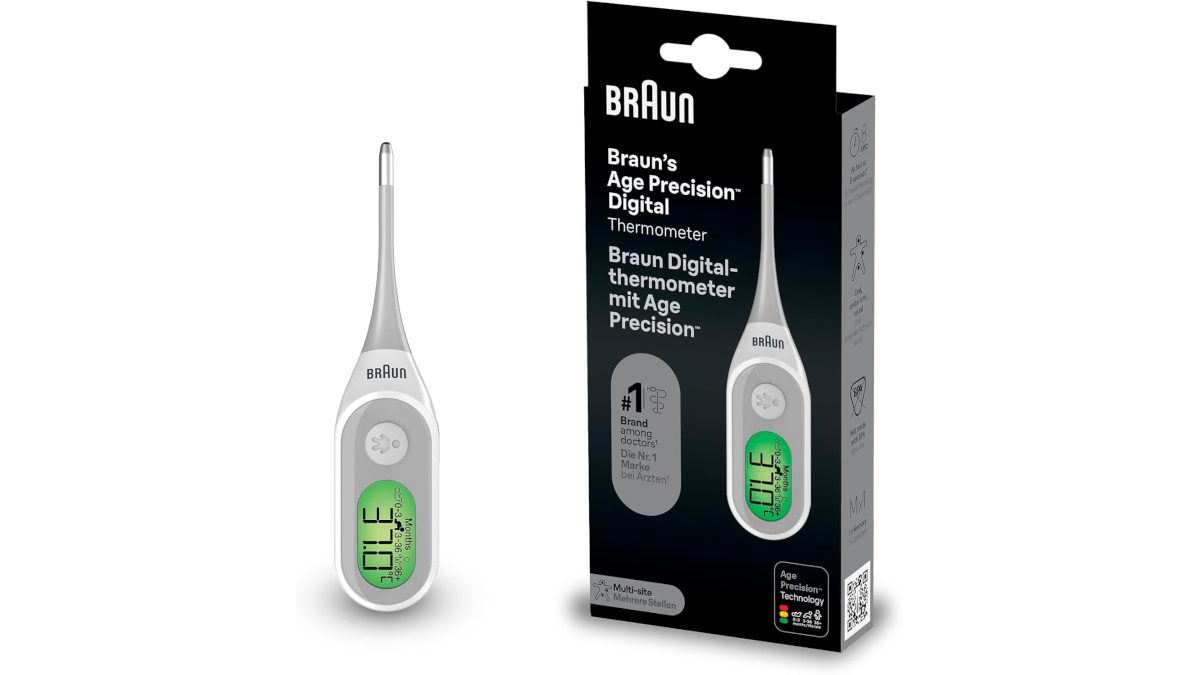
Pulse oximeter — A small clip-on device that measures blood oxygen saturation and pulse rate. Useful during illness, particularly for household members with respiratory conditions, heart conditions, or anyone recovering from COVID or chest infections. Normal blood oxygen is 95–100% — anything below 92% warrants urgent medical attention. The OxiPro OX2 is what we use and recommend for home use: accurate, simple to operate, and inexpensive.
OxiPro OX2 Pulse Oximeter
Clips to a fingertip and tells you blood oxygen and pulse rate in seconds. Useful during any illness where breathing is a concern — and the reading that matters is below 92%..
Our Full Review: OxiPro OX2 Pulse Oximeter →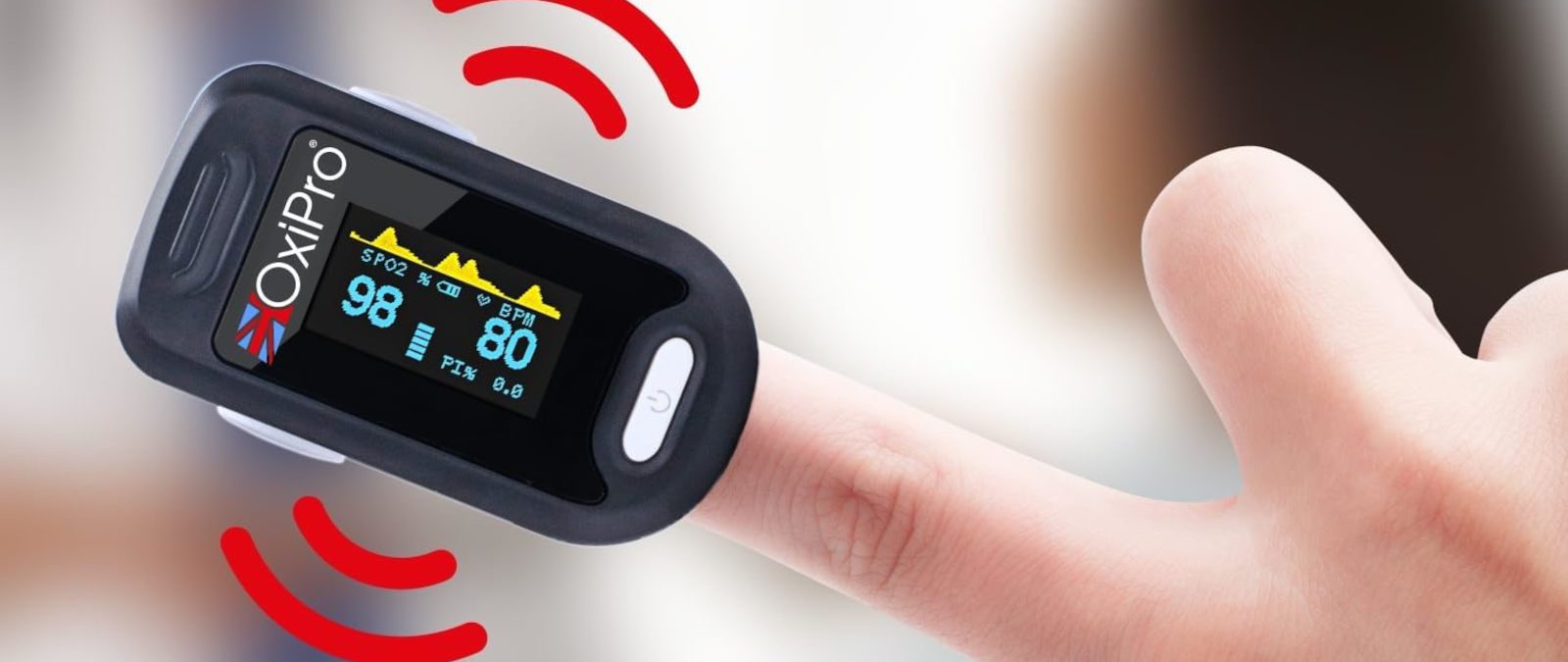
Blunt-ended tweezers — For removing splinters, debris from wounds, and ticks. For tick removal specifically, a purpose-made tick removal tool is more effective than standard tweezers.
Tick Twister Tick Remover Tools
Three sizes, one twisting motion, and a French vet’s design that gets the whole tick out — for humans and pets — without the squeeze that tweezers risk.
Our Full Review: Tick Twister Tick Remover Tools →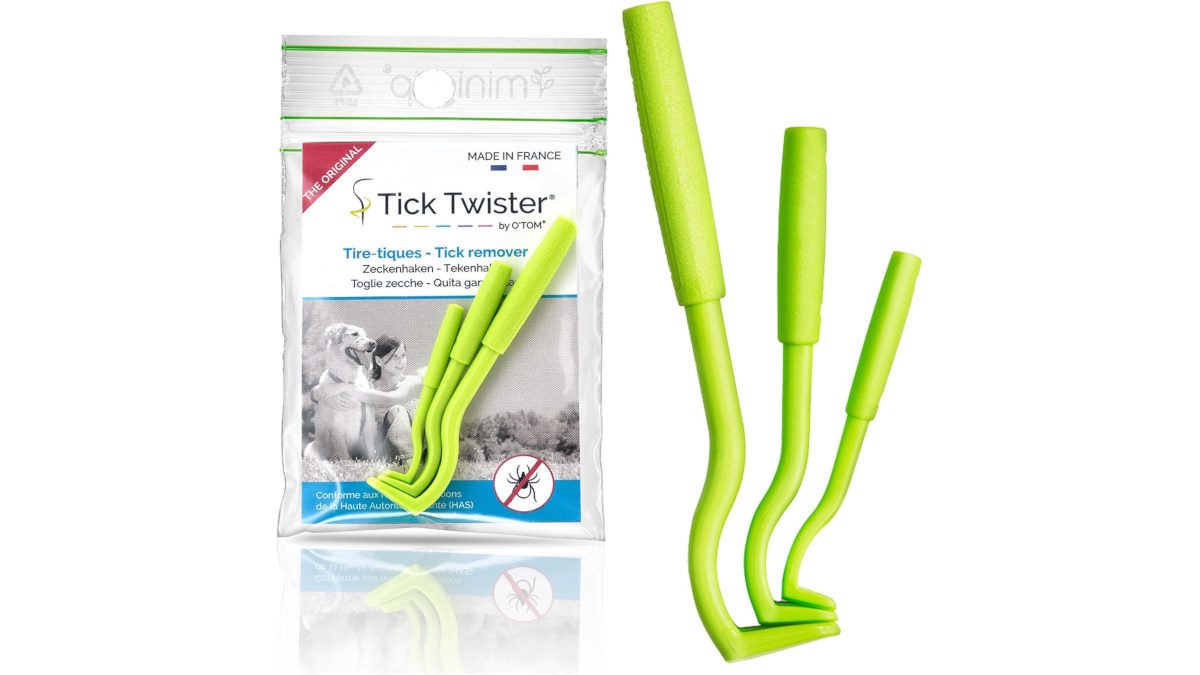
Medical scissors — Blunt-ended, for cutting bandages, tape, and clothing. The flat lower blade is designed to cut along skin without risk of cutting the casualty.
Safety pins (assorted) — For securing bandages and slings.
CPR face shield — A one-way valve mask for rescue breathing. Included in NHS and Red Cross recommended home kits. Designed for untrained users — it will not shock you or make the situation worse. It just means you’re not doing direct mouth-to-mouth.
Emergency foil blankets (x2) — For shock management and heat retention. One for the casualty, one to sit them on if the ground is cold. Compact, virtually weightless.
Notepad and pen — For recording the time of injuries, medication given, and doses. When the paramedics arrive, being able to hand them a written record of what happened and what was given is genuinely useful. Your phone is not reliable for this — if the battery is flat, the record is gone.
ADESTE – FFP2 Masks – UKCA Certified
BSI-certified FFP2 protection at 28p a mask — 50 individually sealed, long-term storage ready, and exactly what disappeared from shelves in March 2020.
Our Full Review: ADESTE – FFP2 Masks →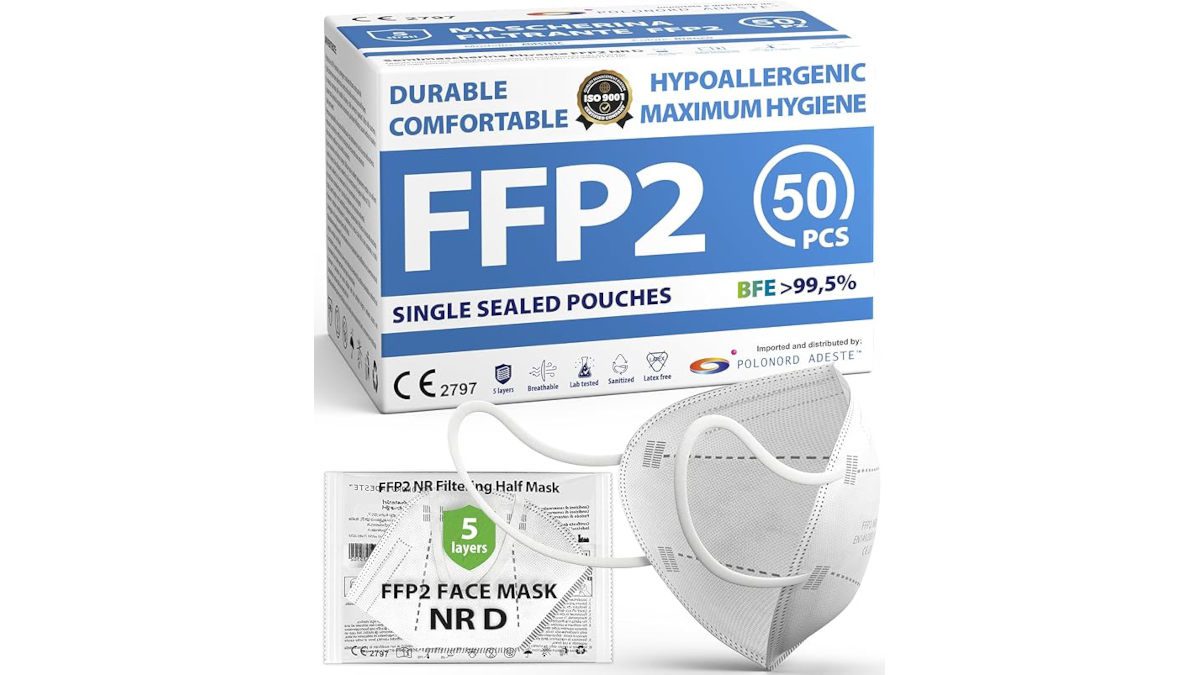
Burns: The One Where Everyone Gets It Wrong
Burns are among the most common home injuries in the UK — cooking accidents, hot drinks, irons, radiators — and they are consistently mismanaged. Not because people don’t care, but because the wrong advice (butter, toothpaste, ice, cold water in a bucket) has circulated so long that it feels like received wisdom.
The actual answer is so simple it seems wrong. Cool running water. For ten minutes. Starting as soon as possible after the burn occurs. That’s it. That is the most effective first aid action you can take for a burn, and it costs nothing and requires nothing from your kit.
Do not use ice — it causes additional tissue damage. Do not use butter or toothpaste — same reason. Do not put the burn under very cold water — cool or lukewarm tap water is correct. Ten minutes minimum. Don’t stop at two because it feels better.
After cooling: cover loosely with cling film (not wrapped tight) or a clean non-fluffy material. Do not use cotton wool or towels — the fibres stick. Sterile non-adherent burn dressings are worth adding to the kit if you have young children or anyone who cooks regularly.

🌿 Aroura
Ancient Wisdom
Cold running water for ten minutes — this is the one piece of traditional wisdom that has been known for centuries and ignored for just as long. I cool mine under the tap for ten minutes, let the water carry the heat away, and cover with something clean and smooth. The earth provides the cure. The water does the work. Namaste 🙏
Call 999 or go to A&E for: any burn larger than the casualty’s hand · any burn to the face, hands, feet, genitals, or joints · any burn that has gone through the skin (white or brown, leathery appearance) · any burn caused by chemicals or electricity · any burn in a child under 5 or an elderly person.
Special Considerations
Households with Young Children
Add to the standard kit: children’s liquid paracetamol and ibuprofen, hypoallergenic plasters, a digital ear thermometer (faster and less distressing for children than underarm), and a purpose-made tick removal tool if you have a garden. Keep medications in a lockable box or stored high enough to be genuinely inaccessible.
Households with Elderly Members
Add: non-latex compression bandages for fragile skin, a written list of current medications and dosages (update it quarterly), the GP surgery’s out-of-hours number on a card inside the kit, and a copy of any advance care plans if applicable. A pulse oximeter is particularly useful for monitoring respiratory illness in elderly household members — see the OxiPro note in the Equipment section above.
Households Managing Chronic Conditions
If anyone in the household self-administers insulin or other injectable medication, IPA swabs are essential — the foil-sealed 70% IPA variety. If anyone is on blood-thinning medication (warfarin, apixaban, etc.), even minor wounds can bleed significantly. Keep extra wound closure strips and sterile dressings and be clear on when to call 999 rather than manage at home.
The St John Ambulance First Aid Manual
The official St John Ambulance First Aid Manual is the standard reference for home first aid in the UK — updated regularly, endorsed by St John Ambulance, the British Red Cross, and St Andrew’s First Aid, and written for non-medical readers. It covers every scenario in this guide and several dozen more, including specific protocols for infants, children, and elderly casualties.
It belongs in the kit box, or on the shelf next to it. Not on your phone. Not in a browser bookmark. In the box. We’ll be reviewing it properly in due course — for now, it’s worth knowing it exists and getting a copy.
First Aid Manual 11th Edition
The updated 11th Edition covers first aid in pandemic conditions, what to do in a terrorist incident, and delivering first aid for patients in a mental health crisis.
Our Full Review: First Aid Manual 11th Edition →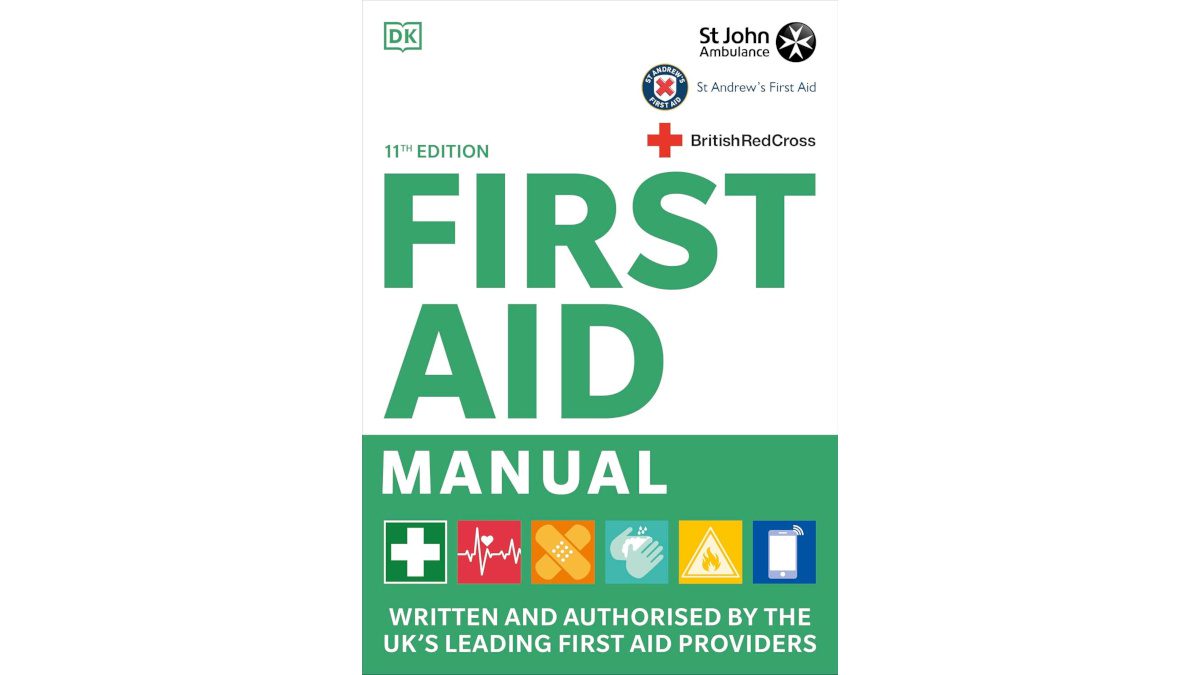
The Annual Audit
Set a calendar reminder, same date every year — bonfire night works well since it’s memorable and it’s before the winter season properly bites. Go through the entire kit and do five things:
- Check every expiry date — medications, antiseptics, saline pods, plasters
- Check every foil-sealed item for packaging integrity — any torn or suspect sachet goes in the bin
- Check the MHRA recall list on GOV.UK for any alerts on products currently in your kit
- Restock anything used, expired, or suspect
- Update the household medication list if prescriptions have changed
Confirm that every adult in the house knows where the kit is. This sounds obvious. It isn’t. Ask someone in your household right now where the first aid kit is and see what happens.
Complete Guide
72-Hour UK Grab Bag
The ‘get out quick bag’ for rapid home evacuation in the event of fire, flood, or other incidents. Every essential for 3 days away from home in one bag.
When to Call 999 Instead
A home first aid kit is for managing minor injuries and stabilising serious ones while waiting for help. It is not a substitute for emergency services. Call 999 immediately for:
- Suspected heart attack or stroke
- Severe bleeding that cannot be controlled with direct pressure after five minutes
- Deep wounds to the chest, abdomen, or neck
- Head injuries with loss of consciousness, confusion, or unequal pupils
- Suspected spinal injury
- Severe allergic reaction (anaphylaxis) — use an EpiPen if available, then call 999 regardless
- Any child with high fever accompanied by a rash, stiff neck, or sensitivity to light
- Any burn meeting the criteria listed above
When in doubt, call NHS 111. They will direct you to the right level of care. The 111 online service is also available if you’d rather not hold.
The Home First Aid Kit Checklist
The Immediate Audit (Do This Today)
- Find your first aid kit — if you don’t have one, start a container today
- Remove any wipe that does not say “Sterile” on the individual foil sachet
- Check the expiry date on every medication — dispose of expired items via pharmacy
- Discard any opened sterile items that have been returned to the kit
- Check you have at minimum: plasters, one sterile dressing, one bandage, nitrile gloves, paracetamol
The Full Restock
- Rigid waterproof container, clearly labelled
- Sterile dressings: small, medium, large (at least 2 of each)
- Adhesive plasters: assorted waterproof fabric (20+)
- Sterile wound closure strips (assorted)
- Triangular bandages × 2
- Crepe roller bandages: 5cm and 10cm
- Sterile eye pad × 2
- Individually foil-sealed 70% IPA prep swabs (100-pack)
- Single-use sterile saline pods (eyewash/wound flush)
- Nitrile gloves: at least 4 pairs
- Digital thermometer
- Pulse oximeter
- Blunt tweezers
- Medical scissors
- Safety pins (assorted)
- CPR face shield
- Emergency foil blankets × 2
- Paracetamol (adult and children’s if applicable)
- Ibuprofen
- Non-drowsy antihistamine
- Antiseptic cream (small tube, within expiry)
- Notepad and pen
- St John Ambulance First Aid Manual
Frequently Asked Questions
What should be in a UK home first aid kit?
Sterile dressings, adhesive plasters, wound closure strips, triangular bandages, crepe bandages, sterile eye pad, 70% IPA foil-sealed swabs, saline pods, nitrile gloves,
thermometer, pulse oximeter, scissors, tweezers, CPR face shield, foil blankets, paracetamol, ibuprofen, antihistamine, antiseptic cream, notepad, and the St John Ambulance First Aid Manual.
How often should I check my home first aid kit?
Annually as a minimum — bonfire night is a good annual reminder. Medications and sterile items benefit from a quick check every six months. Any time you use something from the kit, note it down and restock before next time.
Where should I store a home first aid kit?
A cool, dry location away from the bathroom. Humidity degrades medications and compromises sterile packaging. A bedroom cupboard or kitchen drawer (away from the cooker) is better than most bathrooms.
What first aid wipes should I use?
Individually foil-sealed 70% isopropyl alcohol (IPA) prep swabs. Never alcohol-free wipes — in 2026 a batch of contaminated alcohol-free wipes caused 59 infections and one death in the UK. If the individual sachet doesn’t say “Sterile”, it doesn’t go near a wound.
Do I need a pulse oximeter at home?
Not essential for everyone, but useful for households with respiratory or heart conditions, anyone recovering from a chest infection, or elderly family members. Normal blood oxygen is 95–100% — a reading below 92% is a signal to seek urgent medical help.
What should I do if someone gets a burn?
Cool running water for ten minutes immediately. Not ice, not butter, not toothpaste — cool tap water for ten minutes. Cover loosely with cling film or a clean non-fluffy material afterwards. Call 999 or go to A&E for any burn larger than the casualty’s hand, or any burn to the face, hands, feet, or joints.
Build Your Resilience
Further Reading: Related Guides
- Managing Essential Medication
- Emergency Hygiene Guide
- Emergency Sanitation Guide
- 72-Hour Grab Bag Checklist
- Tick Bite Guide
- Emergency Preparedness with a Baby
- Pandemic Preparedness
All our guides can be found listed on our resilience hub.
Gear We’ve Tested & Reviewed
- OxiPro OX2 Pulse Oximeter
- Really Useful Box
- Core Medical 70% IPA Prep Swabs
- ADESTE FFP2 NR D Masks
- First Aid Manual 11th Edition
- General Medi First Aid Kit
- Lifesystems Tick Tweezers
- Smidge Tick Removing Card
- FRIO Insulin Cooling Wallet
All our reviews can be found on our reviews and resources page.