
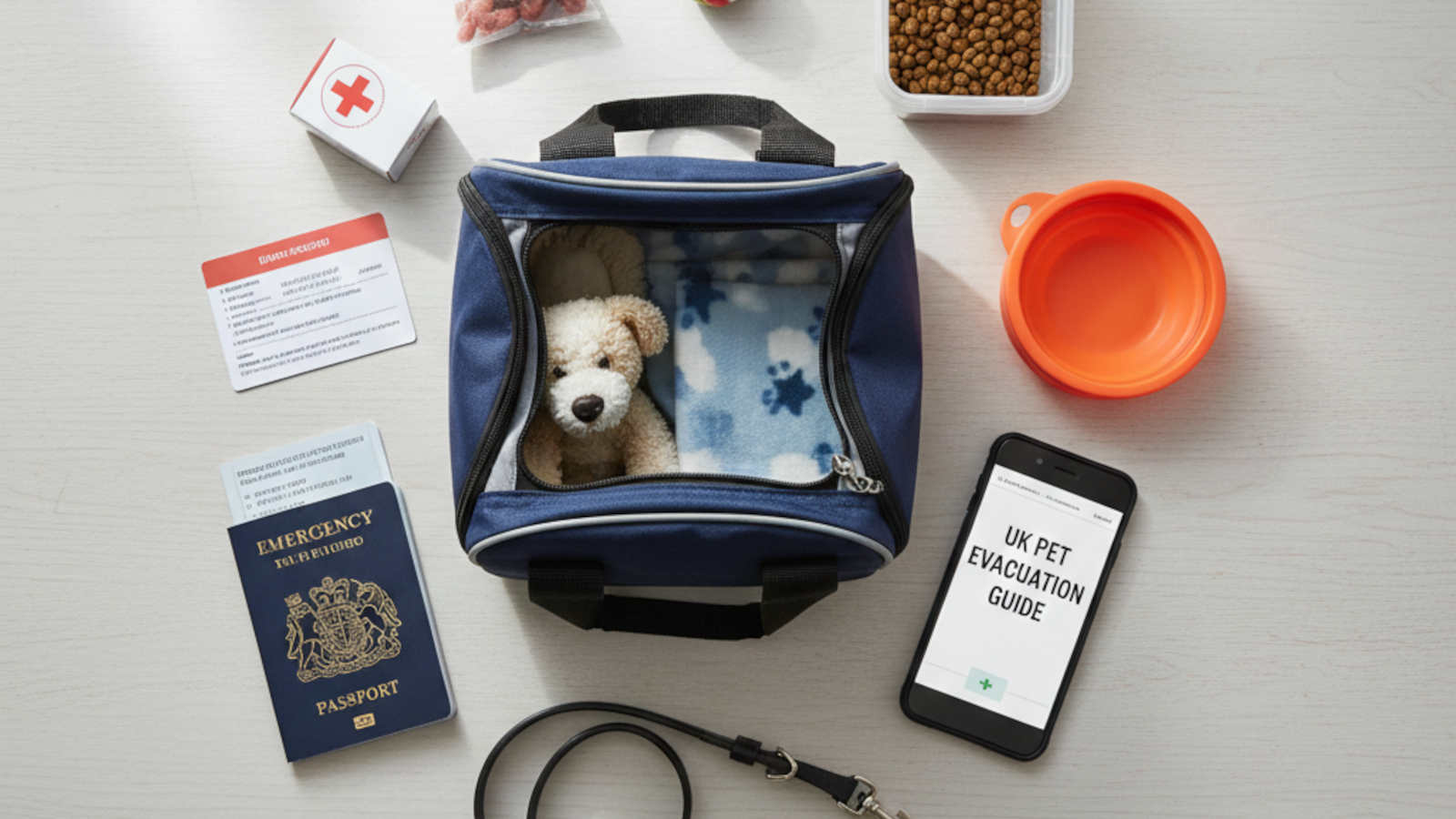
A pet emergency kit is a small bag of food, water, medication, paperwork and a lead or carrier that lets you take your animals with you, or look after them at home, when something goes wrong. Here’s what goes in one, and the plan that goes with it.
When the knock on the door comes at 3:00 AM because of a gas leak or a flash flood, you don’t just have a “Grab Bag” problem—you have a family problem. For millions of us in the UK, our dogs, cats, and small animals are non-negotiable members of that family.
Yet, most “prepping” advice forgets one brutal truth about the UK: Our emergency infrastructure is not designed for your pets.
If you think you can just turn up at a local leisure centre or a church hall with a Labrador on a piece of string and be welcomed in, you are in for a heartbreaking shock. To be “Prepared, Not Panicked” means knowing exactly how to navigate the UK’s evacuation rules while keeping your animals safe, calm, and fed.
1. The Evacuation Reality: Rest Centres and Rules
In the UK, the local authority is responsible for setting up “Rest Centres” (That’s the official name, we would probably use “Emergency shelter”) during an emergency. These are usually school halls, sports centres, or community hubs.
The Hard Truth: Many of these centres have strict “No Animals” policies for hygiene and safety reasons, with the exception of assistance dogs (Guide Dogs, etc.).
If they do allow pets, they will almost certainly have three requirements:
- Containment: Dogs must be on a lead and, in many cases, muzzled. Cats and small furries must be in secure carriers.
- Vaccination Proof: If you are being moved to a temporary holding area or a commercial kennel booked by the council, they will demand proof of up-to-date vaccinations (especially Kennel Cough for dogs).
- Owner Responsibility: You are responsible for cleaning up. If you don’t have the “mess kit” with you, you may be asked to leave.
Line Up Somewhere That Will Take Them
Because a rest centre may say no, the real plan is to have two or three places that will say yes, sorted out before you need them. That might be a family member or friend who is happy to take the dog, a kennel or cattery near you that takes animals at short notice, or a hotel that accepts pets. Pet policies change, so check them now and write the numbers down, rather than ringing round while the water is rising.
2. Your Pet Emergency Kit: The Essentials
You have your bag; they need theirs. This shouldn’t be a massive rucksack—a sturdy, waterproof holdall is best.
The Paperwork (The Most Important Part)
In a crisis, your word isn’t enough. You need a waterproof “Life Folder” for your pet containing:
- Vaccination Records: Photocopies of their latest jabs.
- Microchip Details: The number and the company (ensure your phone number is up to date NOW).
- Photos: A photo of you with your pet to prove ownership if you get separated.
- Medical History: A list of any medications and the contact details for your local vet.
Food and Water
- 72 Hours of Food: Stick to their normal brand. A crisis is not the time to switch to “survival” kibble that gives them an upset stomach. Use lightweight foil pouches or a small plastic container.
- Water: Pack 1 litre of water per day for a medium dog.
- Collapsible Bowls: Silicone bowls are lightweight and take up zero space.
Pawaboo Collapsible Dog Bowl
Two folding bowls with lids and carabiners that clip to a lead or bag. If you’re evacuating with a dog, this goes in the grab bag without a second thought.
Our Full Review: Pawaboo Collapsible Dog Bowl →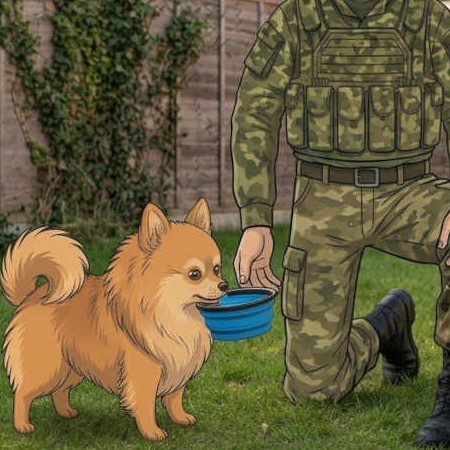
Health and Hygiene
- Medication: A 7-day supply of any regular meds (heart tablets, thyroid, etc.).
- The “Muzzle Rule”: Even if your dog is a “softie,” pack a comfortable basket muzzle. In a high-stress hall full of crying children and other barking dogs, even the calmest pet can snap. Some rest centres will only let you in if the dog is muzzled.
- Waste Bags: Pack double what you think you need.
📋 Calm Clarissa
My printable grab bag checklist has a pets section too: the carrier, the lead and muzzle, the paperwork and the food, alongside everything for the humans. Free to download, obviously.
Download the Free Checklist →3. Your Pet Emergency Plan for Staying Home
If the emergency means you are snowed in or the power is out (the most likely UK scenario), your focus shifts to warmth and stress management.
- Pheromone Sprays: Keep a bottle of Adaptil (for dogs) or Feliway (for cats) in your cupboard. These mimic natural calming scents and are a godsend during thunderstorms or power-cut-induced stress.
- Thermal Blankets: Animals lose heat to cold floors. A “space blanket” or a dedicated self-heating pet mat is essential if the central heating fails in February.
- ID Tags: If a window is smashed or a door is left open during a crisis, a pet might bolt. Ensure they are wearing a collar with an ID tag inside the house.
- Reptiles, Tropical Fish and Birds: These need warmth that comes from the mains, and they get into trouble in a winter power cut long before a dog or cat does. Know how long your tank or vivarium holds its temperature, what backup heat you can give them safely, and who you could move them to if the power stays off.
SnuggleSafe Microwave Heat Pad
Ten hours of gentle warmth from a two-minute microwave blast — no electricity, no wires, and nothing that stops working the moment the power does. Essential kit for rabbits, guinea pigs, cats, and small dogs through a British winter power cut.
Our Full Review: SnuggleSafe Microwave Heat Pad →
4. Small Furries and Birds
Don’t forget the rabbits, hamsters, and budgies.
- Travel Cages: You cannot evacuate a large hutch. Have a small, sturdy travel carrier ready to go.
- Coverings: Birds and small rodents are highly susceptible to temperature changes and draughts. A thick, dark cover for their carrier will keep them warm and reduce their heart rate by blocking out the chaos.
- Animals You Can’t Take: Chickens, a large aquarium or a big outdoor enclosure won’t come with you. Agree now who would feed and check on them if you had to leave, and leave written instructions with them.
5. The “No-Go” Plan
What if you are at work when the emergency happens? Develop a “Buddy System” with a neighbour. Give them a spare key and a copy of your pet’s emergency plan. If the police cordoned off your street while you’re on the M6, you need to know someone is there to get your dog out or feed the cat.
If There Is a Fire
Get yourself and your family out, and don’t go back in for a pet. Frightened cats hide, and they are very hard to find in smoke. Once you are out, call 999 and tell the operator there are animals inside and where they are likely to be. Firefighters will try to rescue them when it is safe to do so.
You can help them now: know where each of your animals hides when it’s scared, and keep the carrier and lead somewhere you can reach on your way out.
Frequently Asked Questions
What should be in a pet emergency kit?
Three days of your pet’s normal food, water (about a litre a day for a medium dog), collapsible bowls, a week of any medication, a lead and a comfortable muzzle or a secure carrier, waste bags, and a waterproof folder with vaccination records, microchip details, your vet’s number and a photo of you with your pet.
Will a UK rest centre take my dog?
Often not. Many council rest centres only accept assistance dogs. Those that do take pets usually want them on a lead or in a carrier, sometimes muzzled, with proof of vaccinations. Arrange two or three places that will take your animals, such as family, friends or a pet-friendly hotel, before you ever need them.
What is a pet emergency plan?
It’s knowing in advance where your pets would go if you had to leave, who has a spare key and would collect them if you couldn’t get home, and how you’d keep them warm and calm if you had to stay put through a power cut or snow.
How do I keep my pet warm in a power cut?
Keep them off cold floors with blankets or a pet bed, keep them in your warmest room with you, and cover bird and small-animal cages to cut draughts. Reptiles and tropical fish need mains heat, so plan for them first.
Should I take my pet if I have to evacuate?
Yes, if you can do it safely. Pets left behind can be hurt or lost, and you may not be allowed back for days. But never go back into a burning building for a pet: get out, call 999 and tell them there are animals inside.
Build Your Resilience
The whole plan, in one book
Prepared, Not Panicked (2026 edition) pulls our guides together into one plan for UK households. PDF, £4.99.
See inside the book →Further Reading: Related Guides
All our guides can be found listed on our resilience hub.
Gear We’ve Tested & Reviewed
All our reviews can be found on our reviews and resources page.


