
Water and food are the two things every household needs every single day, and the two things that run out first when the taps stop or the shops empty. The government advice is to keep enough for at least three days, and you don’t need a bunker or a garage full of tins to do it.
This part of the Resilience Hub covers storing and treating water, building an emergency pantry from food you already eat, keeping it for longer and cooking it when the power is off.
Emergency Water
A burst main or a contamination notice can leave a whole area without safe tap water for days. Stored water, and knowing how to make doubtful water safe, means you are not queueing at a bottle station.
Complete Guide
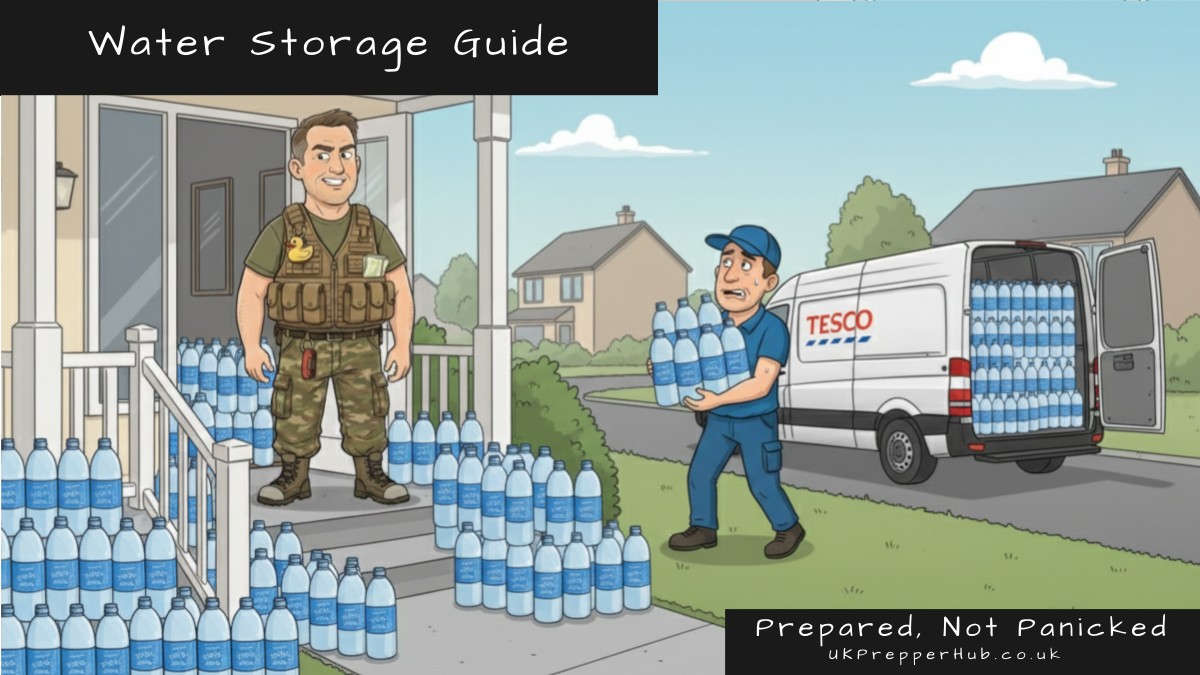
Emergency Water Storage
How much to store, how to store it in small spaces, and the reality of UK water rotation.
Complete Guide
Water Purification & Safety
When the taps run dry—whether from burst mains, contamination alerts, or prolonged power cuts—knowing how to make water safe becomes critical. But here’s what most survival guides won’t tell you straight
Read the Full Guide: Water Purification & Safety →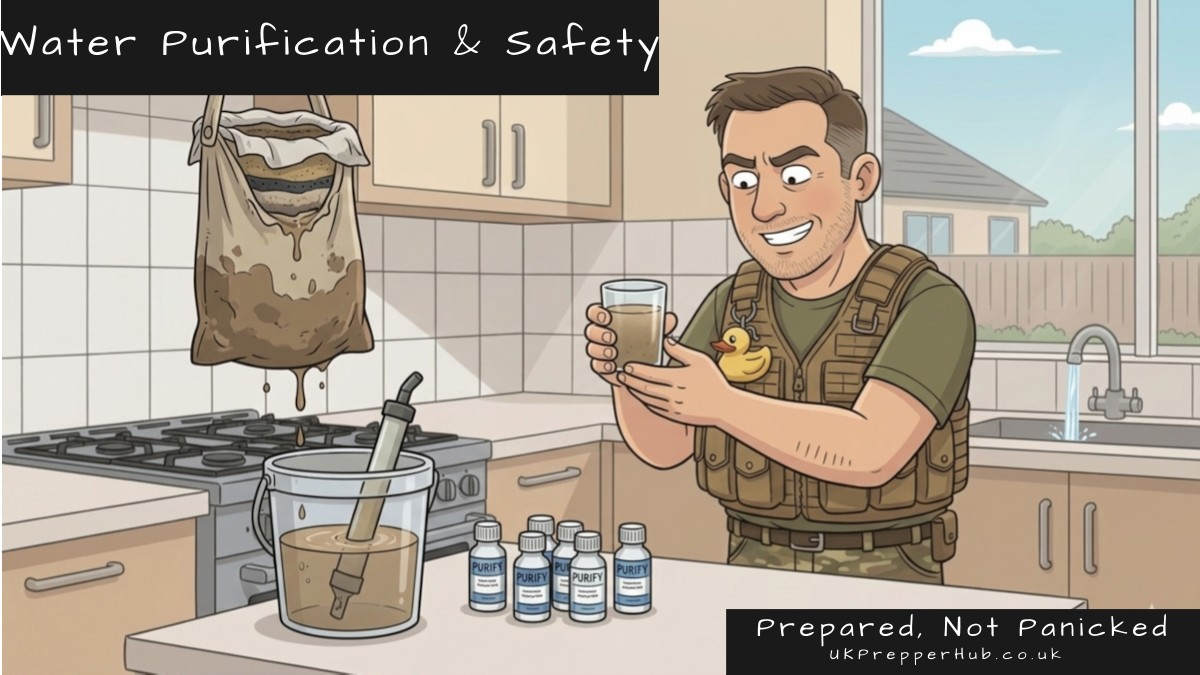
Complete Guide
Hosepipe Ban Exemptions
Most people think a hosepipe ban means no hosepipes, full stop. It doesn’t. Not everything’s banned — livestock, ponds, food crops and stored rainwater are all still fair game. Our full guide breaks down exactly what you can and can’t do, water company by water company, so you’re not left guessing.
Read the Full Guide: Hosepipe Ban Exemptions →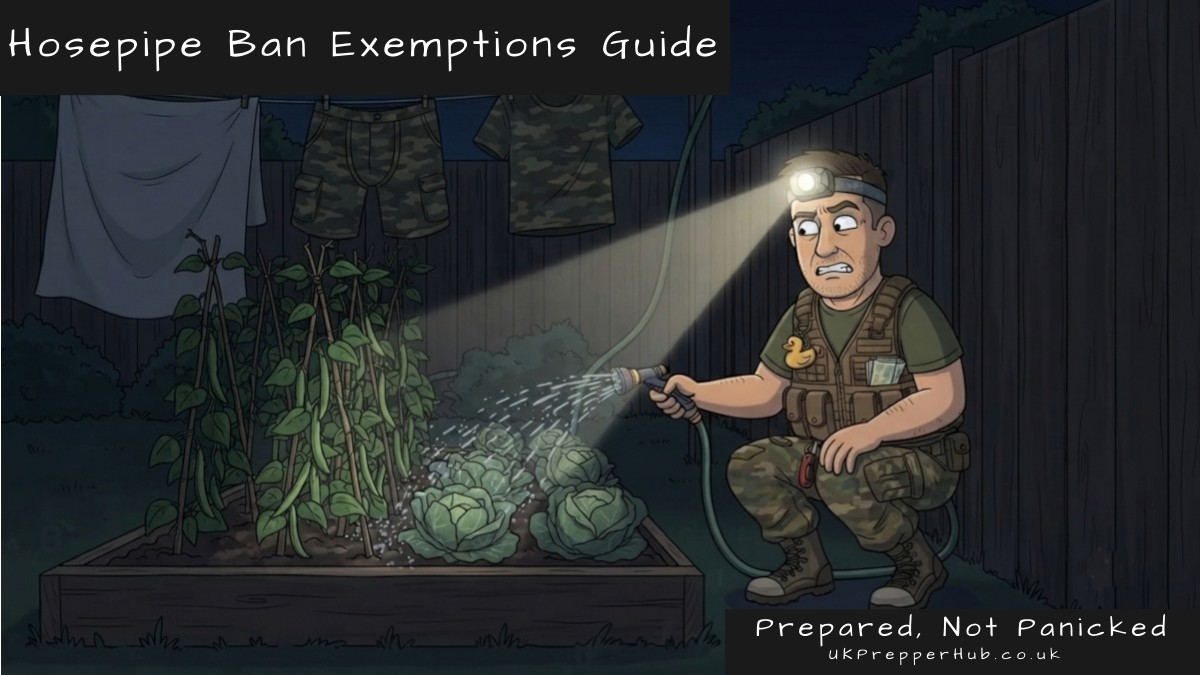
📋 Clarissa
I’ve Made A Checklist
Here’s my checklist for emergency water, so you know what you’ve got stored and what’s still missing before the taps stop.
Download: Water Checklist →Emergency Food
The best emergency food is food you already like, bought a little at a time and eaten in rotation so nothing goes out of date. Start with three days, then build towards a longer store if you want one.
Complete Guide
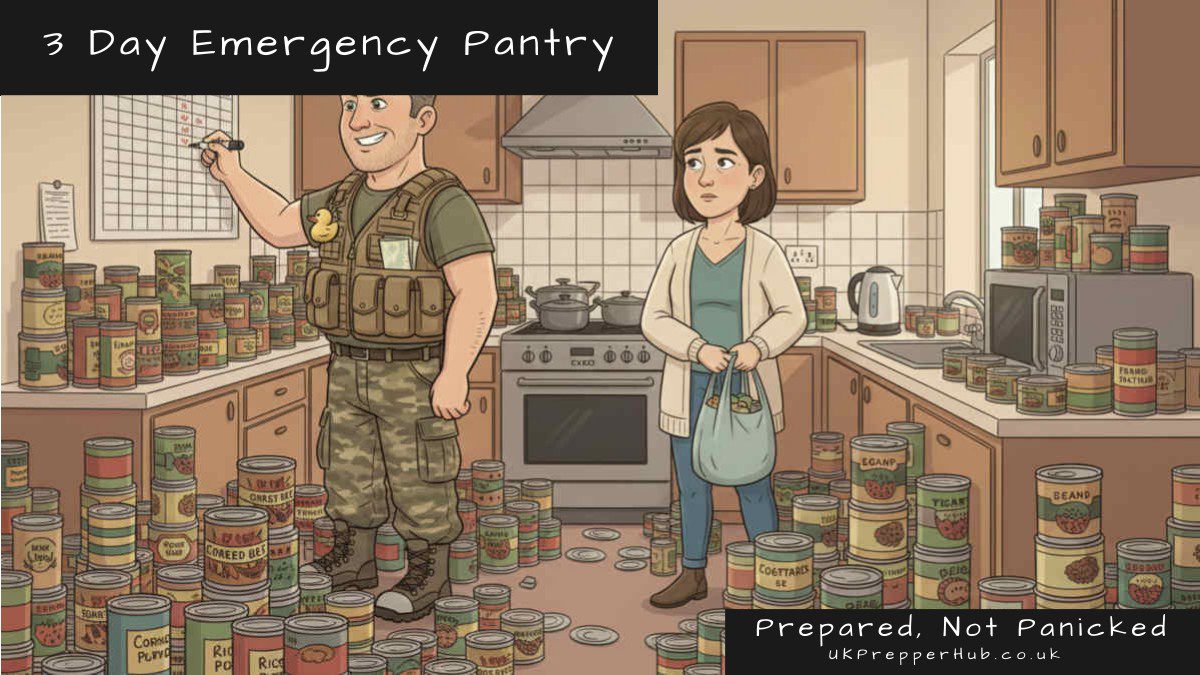
3-Day Emergency Pantry
The low-barrier start: A shopping list of shelf-stable meals that require zero refrigeration.
Complete Guide
Emergency Meal Planning
A 7-day meal plan for a power cut, built from tins and pouches you can buy at any UK supermarket. No specialist survival food: what to stock, how to heat it, how much water it needs, and how to keep children and fussy eaters fed.
Read the Full Guide: Emergency Meal Planning →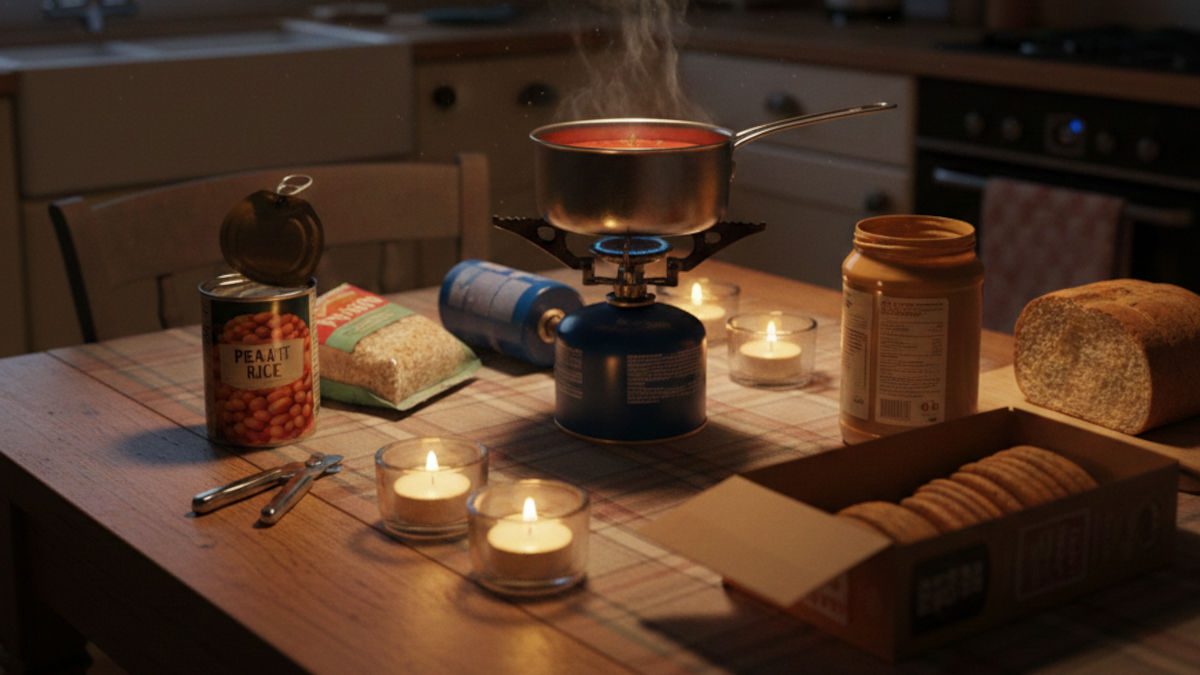
Complete Guide
Long-term food storage
Most households have a few days of food at best, but real disruptions in the UK can last far longer and quickly expose that gap. This guide shows you how to build a practical, affordable food reserve that actually works in the real world—not just on paper.
Read the Full Guide: Long-term food storage →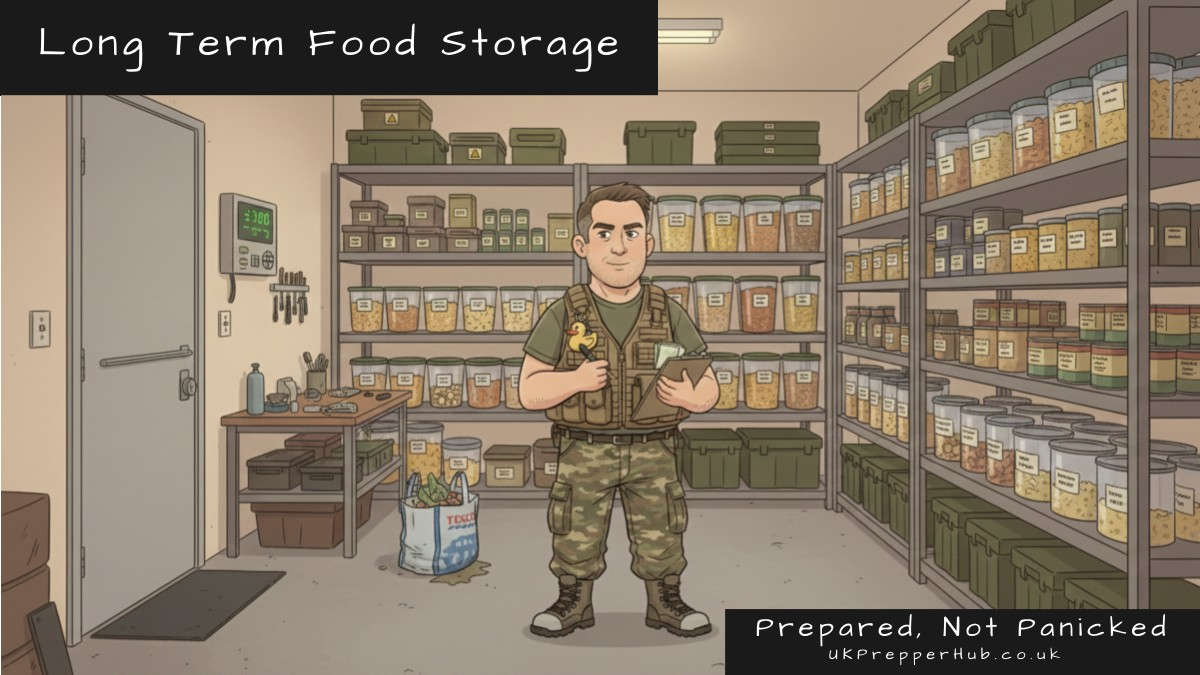
Complete Guide
Cooking Without Power
A well-stocked long-term pantry is only useful if you can actually prepare the food when the power goes down. This guide covers practical cooking options for UK households — from camping stoves to solid fuel — so your stored food stays accessible when you need it most.
Read the Full Guide: Cooking Without Power →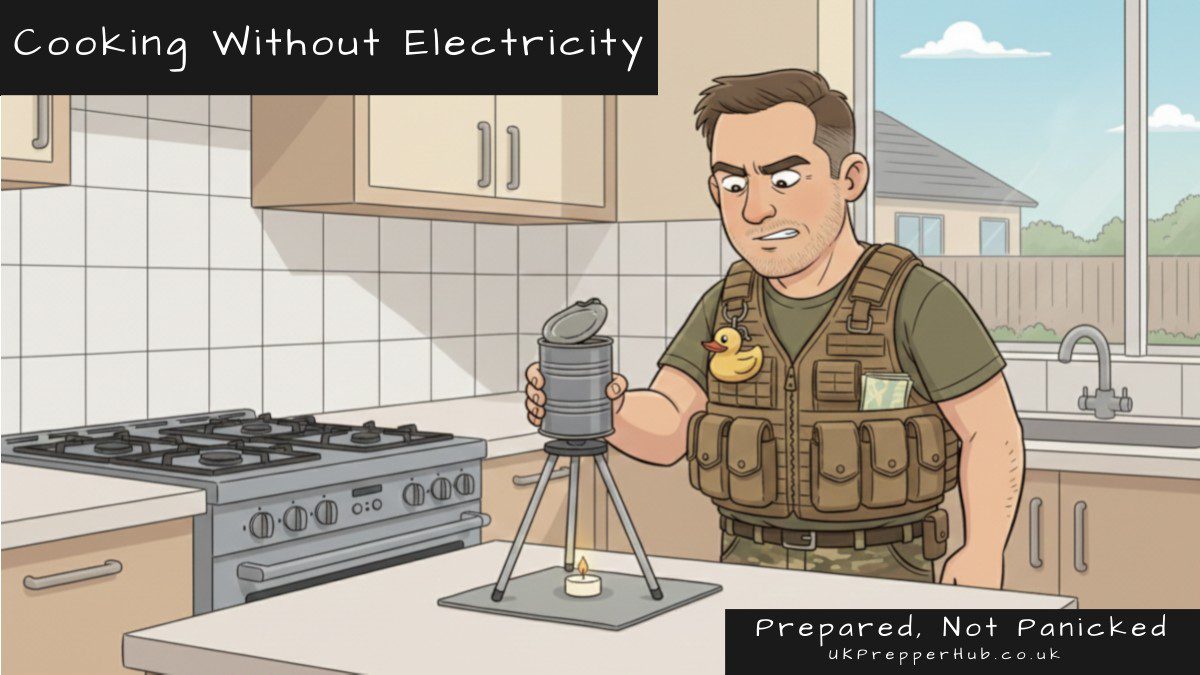

🍳 Greasy Gary
From Gary’s Kitchen
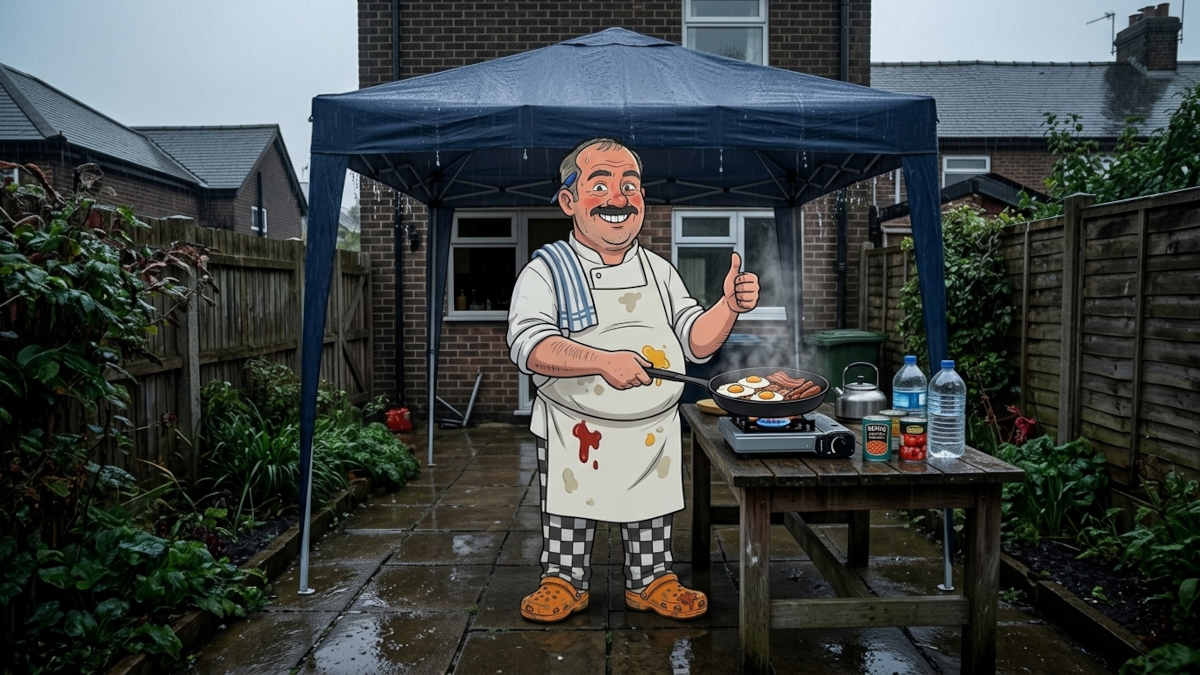
Cooking in a power cut? Lovely, but the camping stove, the barbecue and the patio heater stay outside, mate. Burn them indoors and you fill the house with carbon monoxide, which you can’t see or smell. Cook outdoors or under a proper open shelter, and keep a few things in the cupboard that don’t need cooking at all.
More From the Resilience Hub
- Protect Your Home: planning, flood, storm, fire and security
- Power, Heat and Light: power cuts, backup power and keeping warm
- Stay Informed: emergency radio and off-grid communications
- Health, Hygiene and Pets: first aid, medication, sanitation and pets
- On the Road: winter car, get home bag and backup transport
- Back to the Resilience Hub: every topic in one place


