
When a storm takes out the power, the phone in the hall goes with the broadband router, and the mobile masts only last as long as their backup batteries. A satellite messenger doesn’t need any of them. It sends texts, your location and an SOS by satellite, from anywhere with a view of the sky. This guide explains what a satellite messenger does, how the Garmin inReach and SPOT compare, when a personal locator beacon is the better buy, and what your phone’s own satellite SOS can and can’t do.
For most UK households, satellite is the last tier of off-grid communications, not the first. But for rural homes, older relatives living alone, remote roads in winter and anyone who walks or works out of signal, it’s the one link that still works when everything else has stopped.
Complete Guide
Off Grid Communications
When mobile networks go down and the internet disappears, most households are completely cut off — and most people have no backup plan. This guide covers every practical option for staying in contact during a UK emergency, from emergency radio and walkie-talkies to mesh networks and satellite communicators.
Read the Full Guide: Off Grid Communications →
What a Satellite Messenger Actually Does
A satellite messenger is a small handheld device that talks to satellites instead of phone masts. Depending on the model, it can:
- Send a preset “I’m OK” message with your location to family
- Send and receive full text messages (two-way models only)
- Share your location so family can follow you on a map
- Send an SOS to a 24/7 emergency response centre
Every satellite messenger needs a paid service plan, which covers the satellite airtime. That’s the main difference from a personal locator beacon, which we’ll come to.
Two-Way or One-Way: The Real Decision
Before you look at brands, decide whether your satellite messenger needs to receive messages, or just send them.
- Two-way means a conversation: “Are you OK?” “Yes, but the road’s flooded, staying put.” You can read replies and answer them.
- One-way means you can tell people things, but they can’t reply. “I’m OK”, “Please come round when you can” and SOS all go out, and nothing comes back.
One-way sounds like a big limitation, and for walkers in serious trouble it can be. But for an older relative checking in every morning, or a household that just needs “we’re fine, power’s off”, one-way does the job with nothing to type.
Two-Way: Garmin inReach
Garmin’s inReach devices run on the Iridium satellite network, which covers the whole planet. The inReach Mini 2 is the compact two-way satellite messenger pick: 100 g, texts and email both ways, location sharing, weather forecasts and interactive SOS to Garmin Response, a 24/7 response coordination centre you can message back and forth with. You can type quick replies on the device or pair it with your phone and type there.
Garmin also sells the newer inReach Mini 3 and Mini 3 Plus, with colour touchscreens (the Plus adds photo and voice messages), and the inReach Messenger range. Every inReach needs a monthly plan. Garmin’s UK plans come in four tiers, all including SOS, and you can suspend a plan for up to 12 months at no cost. Current prices are on Garmin’s website.
Garmin inReach Mini 2 Satellite Communicator
A 100g satellite messenger that still sends texts and an SOS when a storm has taken out the power, the landline and the phone masts.
Our Full Review: Garmin inReach Mini 2 →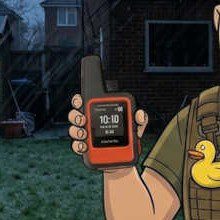
One-Way: SPOT Gen 4
SPOT devices run on the Globalstar satellite network, which covers the UK and virtually all of Europe. The SPOT Gen 4 is the simple one-way satellite messenger: five buttons for Check In, Custom Message, HELP, SOS and tracking. You write the messages online in advance, then just press the button on the day.
It runs on four AAA lithium batteries, so there’s nothing to charge in a long power cut, and SOS goes to FocusPoint International’s search and rescue coordination centres. SPOT also sells the two-way SPOT X, with its own keyboard. Plans are 12-month contracts or monthly Flex plans for seasonal use, and current prices are on SPOT’s website.
SPOT Gen4 Satellite GPS Messenger
A satellite messenger with an “I’m OK” button and an SOS button that runs on AAA batteries, so there’s nothing to charge when the power’s off.
Our Full Review: SPOT Gen 4 →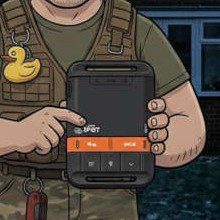
Garmin inReach vs SPOT, Side by Side
Here’s the Garmin inReach vs SPOT decision at a glance, comparing the two devices we’ve reviewed:
| Garmin inReach Mini 2 | SPOT Gen 4 | |
|---|---|---|
| Messaging | Two-way: send and receive texts and email | One-way: preset messages out, no replies |
| Network | Iridium, global coverage | Globalstar, covers the UK and virtually all of Europe |
| SOS goes to | Garmin Response, 24/7, and you can message them back | FocusPoint International search and rescue coordination |
| Non-emergency help | Text anyone | HELP button to your own contacts |
| Power | Built-in rechargeable battery, USB-C | 4 x AAA lithium batteries, nothing to charge |
| Weight | 100 g | 142 g with batteries |
| Plans | Monthly, four tiers, suspend free for up to 12 months | 12-month contract, or monthly Flex for seasonal use |
| Best for | Conversations when it matters | Simple “I’m OK” check-ins and SOS |
The short version: if you need replies, it’s the Garmin. If you need a simple “I’m OK” and an SOS button that sits in a drawer for months and still works, it’s the SPOT.
🪖 Black Panther
In My Previous Role…
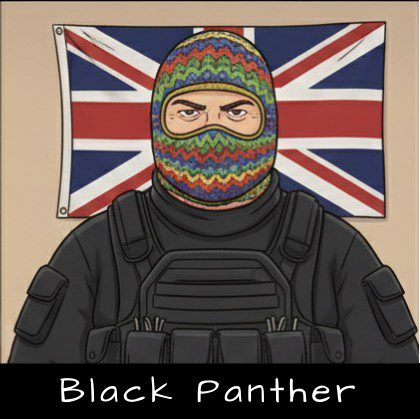
In my previous role, comms were a matter of life and death. Now I have a Garmin inReach clipped to my tactical vest at all times. I have tested it three times: twice in the garden, once from the car park at B&Q. All successful. Base Camp is logged as an emergency contact. She doesn’t know this. For the street, a £30 pair of walkie talkies does the job. For the hills, the satellite. Carry on.
Personal Locator Beacons: SOS With No Subscription
A personal locator beacon (PLB) is a different kind of device from a satellite messenger. It does one job: when you activate it, it sends a 406 MHz distress signal with your position through Cospas-Sarsat, the international search and rescue satellite system. There’s no plan to pay. You buy it once.
Register a personal locator beacon free with the UK Beacon Registry, run by the Maritime and Coastguard Agency, so rescuers can see who owns it and who to contact. Registration is a legal requirement for beacons carried on UK boats, and well worth doing for any beacon.
The trade-off is that a personal locator beacon can’t send anything else. No “I’m OK”, no messages, no location sharing with family. It’s a last-resort rescue button. That makes it a great fit for hillwalkers and sailors who only want SOS, and a poor fit for keeping in touch with family during a long power cut. Check the battery replacement date on any beacon you buy.
What About Your Phone? iPhone Satellite SOS and Pixel
Some phones can now reach the emergency services by satellite with no signal at all:
- iPhone: Emergency SOS via satellite has worked in the UK since December 2022, starting with the iPhone 14 range
- Google Pixel: Satellite SOS works in the UK on the Pixel 9 and later, except the Pixel 9a. Dial 999 with no signal and the option appears
- Other Android phones, including Samsung: check with your network, as UK support isn’t confirmed yet
iPhone satellite SOS and Pixel Satellite SOS are a genuinely useful backstop, and worth knowing how to use before you need them. But they’re for emergencies only, and they only work while your phone has charge. They can’t send your mum a daily “I’m OK”, and they’re no use three days into a power cut with a flat battery. That’s where a satellite messenger earns its place.

🐔 Chicken Licken
Did You Know?
Did you know plenty of newer phones can already text 999 by satellite? But only while the battery lasts. Three days into a winter power cut, with no way to charge it, that clever feature is a very expensive paperweight. That’s why I keep something in the drawer that runs on AAA batteries. I’ve been saying this for years.
Which One Do You Need?
- You live in a town with decent signal: sort the basics first (a battery radio, a power bank, walkie talkies for the street). Your phone’s satellite SOS may be all the satellite you need.
- You want to keep in touch both ways when the masts are down: a two-way satellite messenger like the Garmin inReach Mini 2.
- You want an older relative to check in every day, with an SOS button and nothing to charge: the SPOT Gen 4.
- You only want a rescue button for the hills or the boat, with no subscription: a personal locator beacon.
- You drive remote roads in winter: any of the three, kept in the car and charged (or with spare batteries).
Frequently Asked Questions
Do I need a satellite messenger if my phone has satellite SOS?
Phone satellite SOS is a good backstop for a real emergency, but it only works while your phone has charge, and it’s for emergencies only. A satellite messenger can also send everyday “I’m OK” messages and location updates, and the SPOT Gen 4 runs on AAA batteries, so it still works when the power’s been off for days.
SPOT vs inReach: which is better?
It depends on whether you need replies. The Garmin inReach Mini 2 is two-way, so you can have a conversation by satellite. The SPOT Gen 4 is one-way and simpler: preset messages, a HELP button and SOS, on AAA batteries. Both need a service plan; current prices are on Garmin’s and SPOT’s websites.
Does a personal locator beacon need a subscription?
No. You buy a personal locator beacon once. It sends a 406 MHz distress signal through the international Cospas-Sarsat satellite system, with no plan to pay. Register it free with the UK Beacon Registry so rescuers know whose beacon it is.
Will a satellite messenger work indoors?
Not reliably. A satellite messenger needs a view of the sky, so take it outside or put it on a windowsill with a clear view upwards. The same goes for phone satellite SOS and personal locator beacons.
What happens when I press SOS?
On a Garmin inReach, your location goes to Garmin Response, which can message you back and coordinates help with the emergency services. On a SPOT, it goes to FocusPoint International, which passes it to the right responders. A personal locator beacon alert goes through Cospas-Sarsat to rescue coordination, using your UK Beacon Registry details.
Can I pause a satellite messenger plan?
Garmin lets you suspend an inReach plan for up to 12 months at no cost. SPOT’s Flex plans are designed for seasonal use and can be suspended. Check each provider’s terms before you sign up.
Build Your Resilience
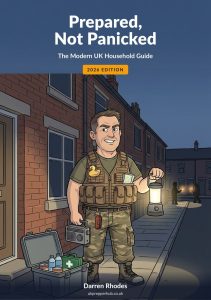
The whole plan, in one book
Prepared, Not Panicked (2026 edition) pulls our guides together into one plan for UK households. PDF, £4.99.
See inside the book →Further Reading: Related Guides
- Off Grid Communications
- Emergency Radio Guide
- PMR446 Walkie Talkie Guide
- How to Prepare for a Power Cut
- Winter Driving Tips
All our guides can be found listed on our resilience hub.
Gear We've Tested & Reviewed
UK Prepper Articles
All our articles can be found on our UK Prepper Articles page.


