
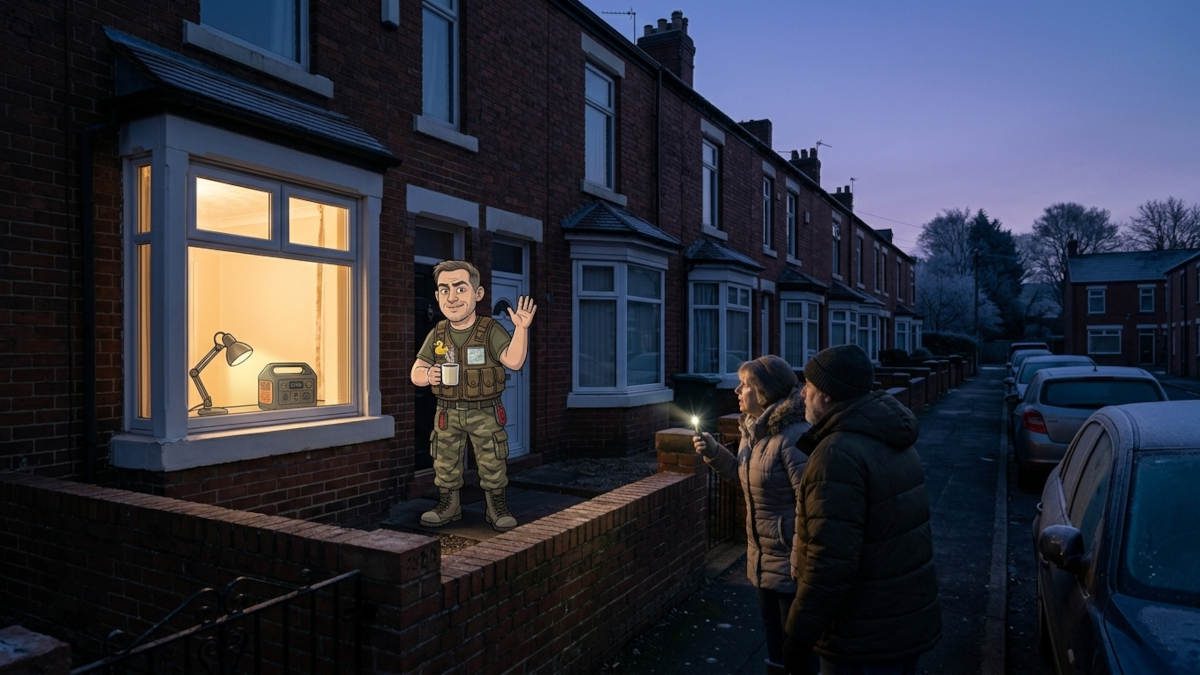
A power cut is the emergency most UK households will actually live through, usually in winter, usually at the worst possible moment. Lights, heating, the fridge, the router and the phone charger all go at once. A bit of preparation turns that from a crisis into an inconvenience.
This part of the Resilience Hub covers keeping the lights on, keeping warm when the heating stops, keeping phones charged and coping with extreme heat, from a £10 torch up to a full portable power station.
Get Ready for a Power Cut
Start with the basics: know who to call, know how to turn your utilities off safely, and keep everything you need in one box you can find in the dark.
Complete Guide
How to Prepare for a Power Cut
The 12 things to sort before the lights go out: lighting, heating, food, water and keeping phones charged, plus what to do in the first few minutes.
Complete Guide
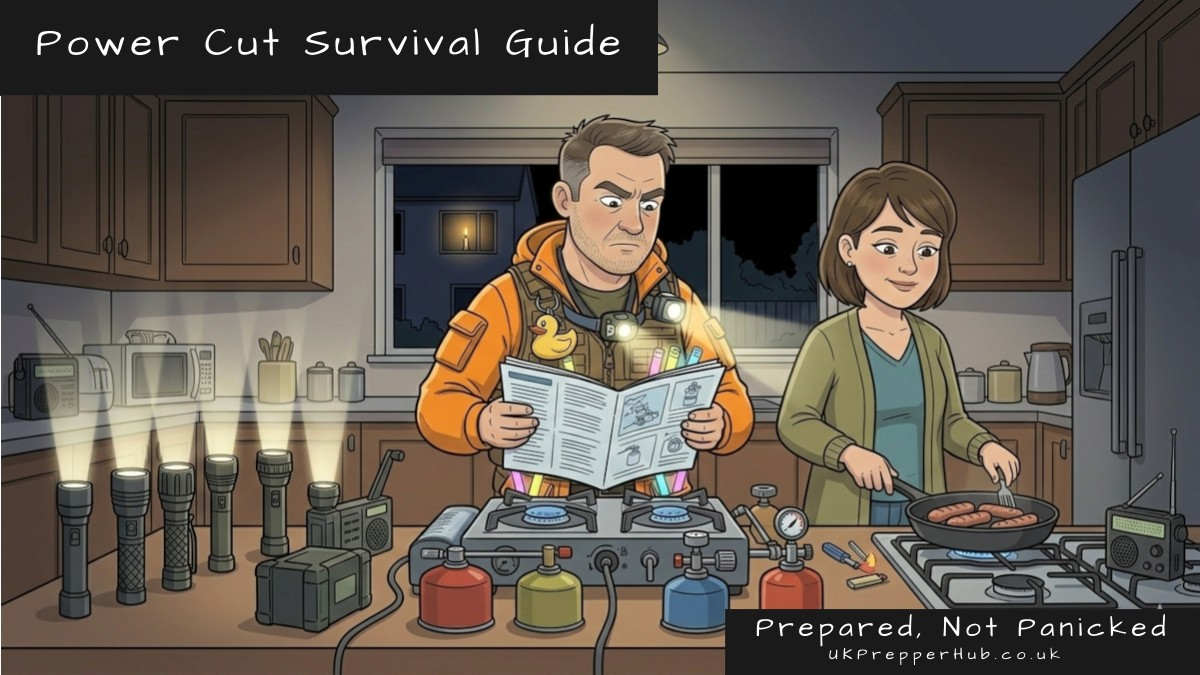
How to Make a Blackout Box
Most households aren’t prepared for even a short power cut, and the stress comes from small, avoidable problems like lack of light, heat, or a way to cook. This guide shows you exactly how to fix that with a simple, practical setup so a blackout becomes manageable rather than disruptive.
Read the Full Guide: How to Make a Blackout Box →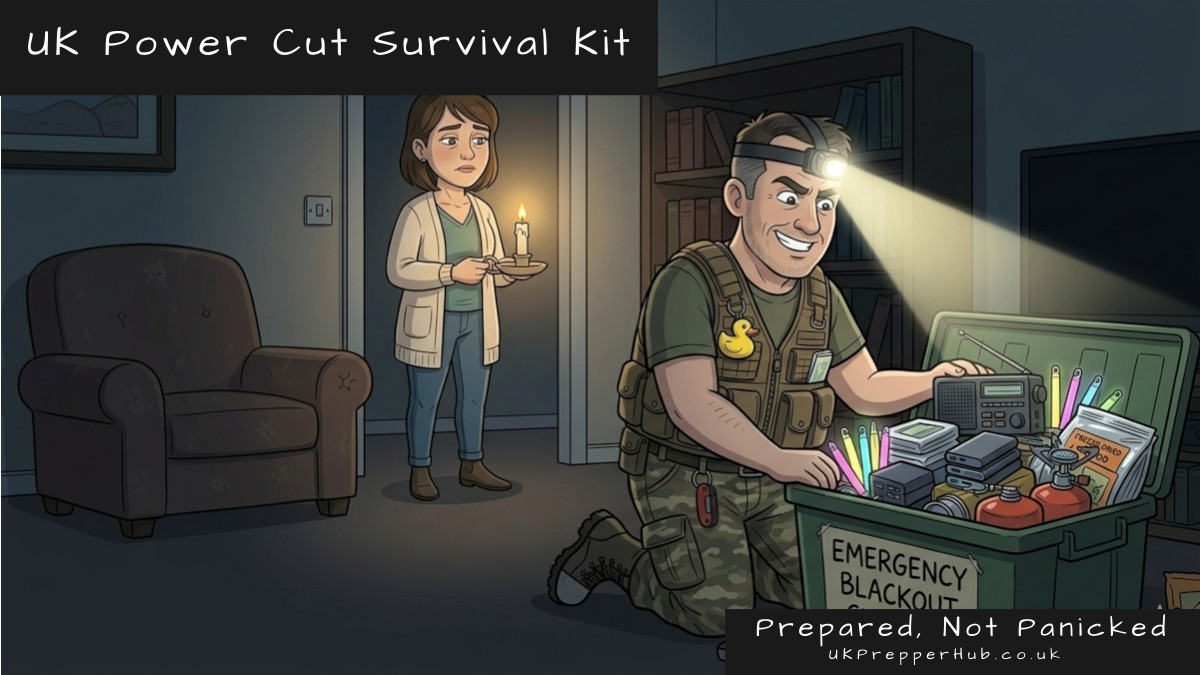
Complete Guide
Emergency Utility Shutdown
When something goes wrong in the home — flooding, fire risk, storm damage, or a major leak — knowing when to shut off your utilities is just as important as knowing how.
Complete Guide
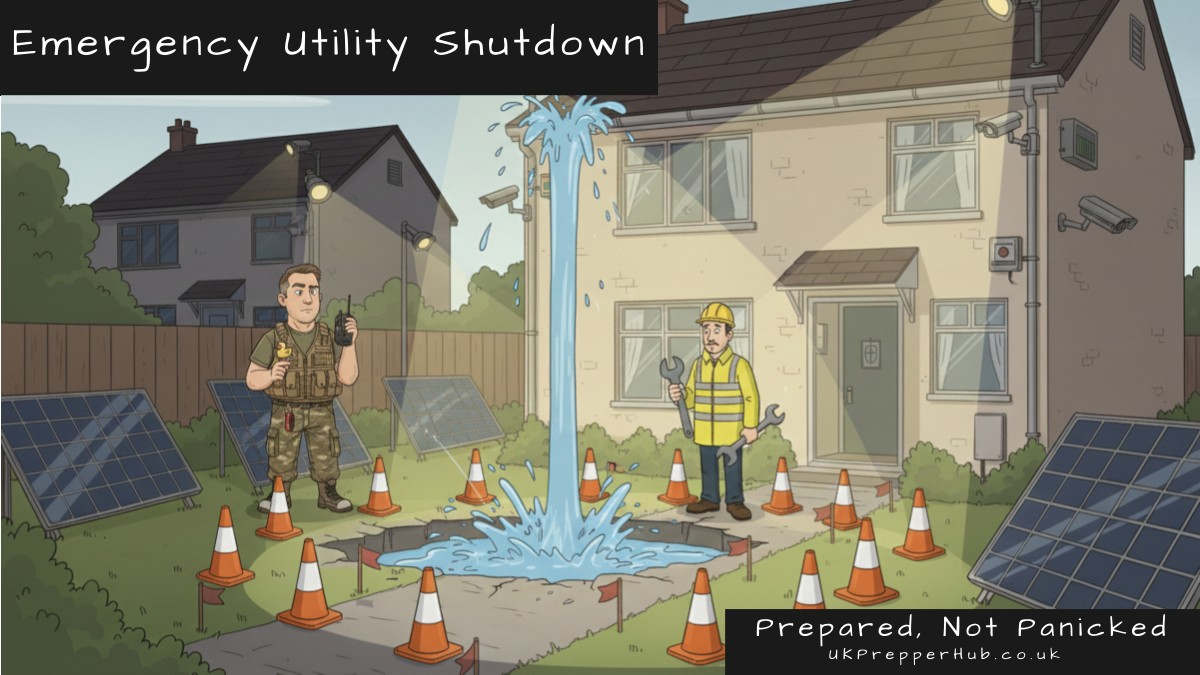
Fuel Storage at Home
Most people have never read the rules on keeping petrol, diesel and gas bottles at home. This guide covers the petrol limit, which containers are legal, how long petrol and diesel last in a can, and where it’s safe to store them.
Read the Full Guide: Fuel Storage at Home →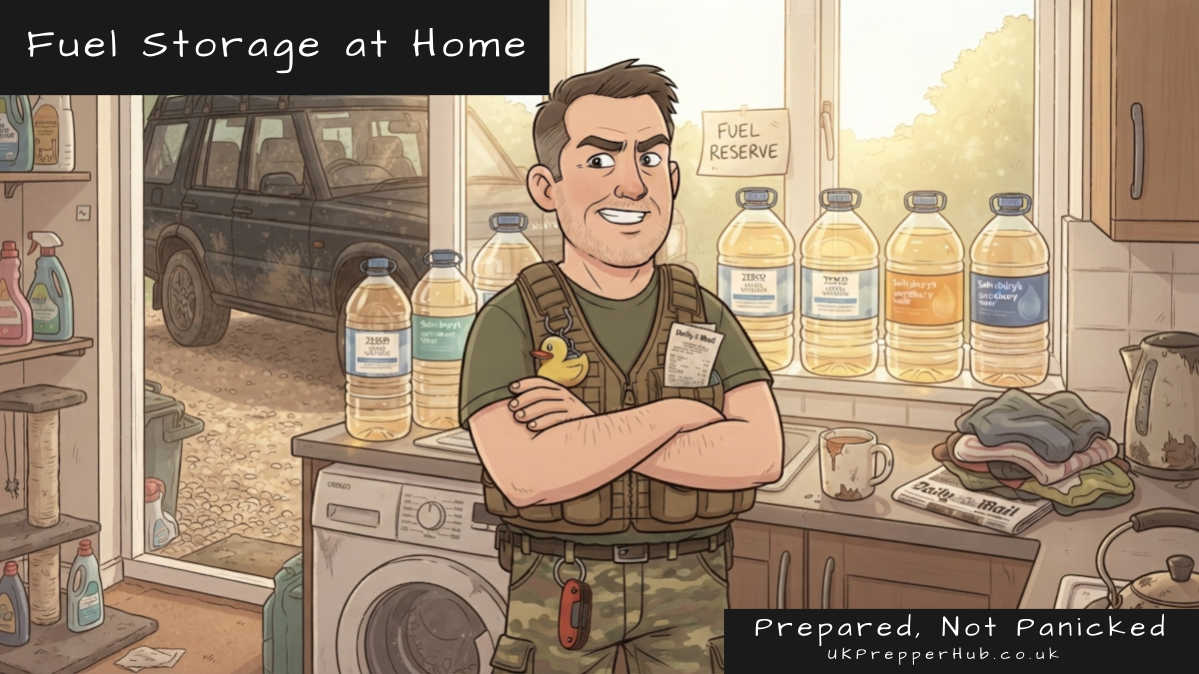

📋 Clarissa
I’ve Made A Checklist
Here’s my checklist for power cuts, so everything’s ready before the lights go out. Print it now, because you won’t be printing anything once they have.
Download: Power Cut Checklist →Light and Batteries
Good light makes everything else in a power cut easier and safer. Battery-powered torches and lanterns beat candles every time, and the right batteries mean they actually work when you reach for them.
Complete Guide
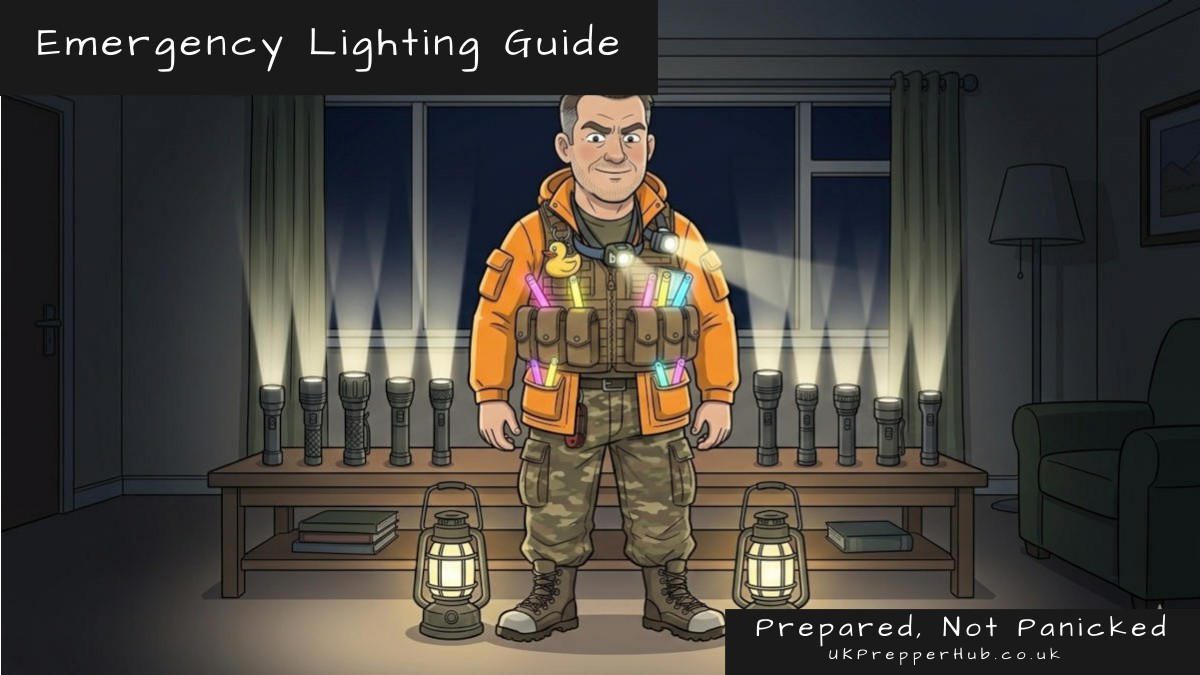
Emergency Lighting Guide
From LED lanterns to child-safe glow sticks. Strategic ways to illuminate your home without the fire risks of candles.
Complete Guide
Rechargeable vs Alkaline Batteries
Rechargeable batteries seem like the sensible choice — until you can’t charge them. This guide makes the case for alkaline AA and AAA as the backbone of any emergency kit.
Read the Full Guide: Rechargeable vs Alkaline Batteries →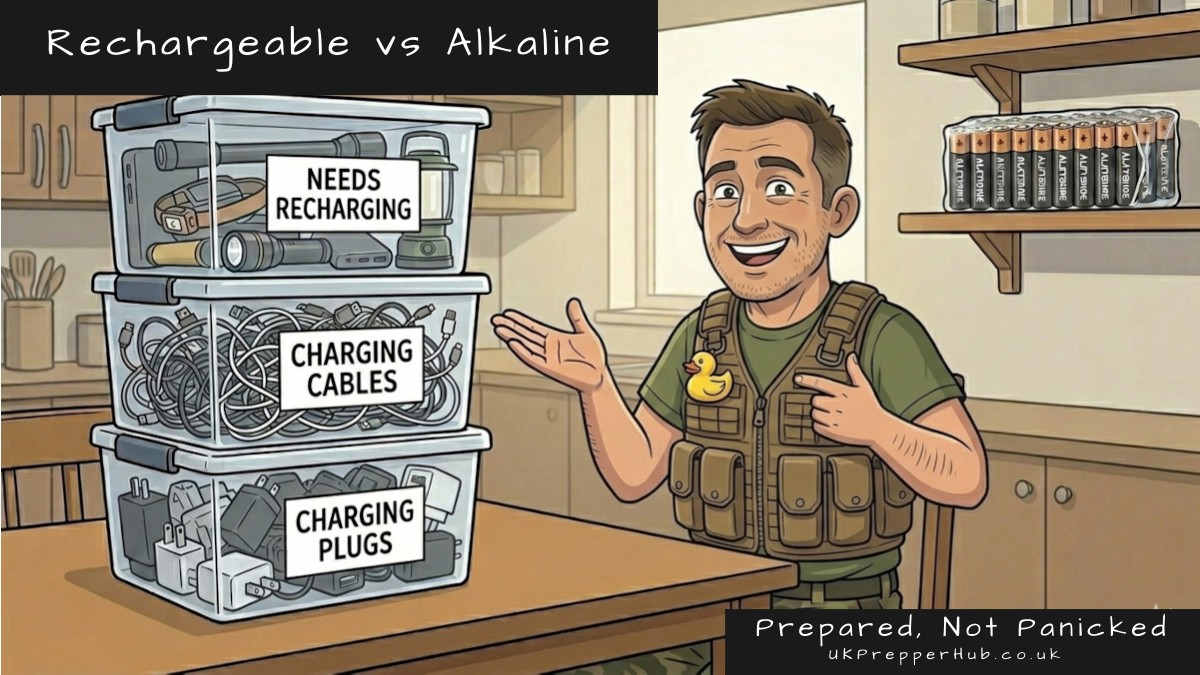
Backup Power
Keeping a phone charged is the priority in most power cuts. A power bank covers that for days; a portable power station, with or without a solar panel, can run lights, a router or medical equipment for much longer.
Complete Guide
Power Bank for Power Cuts
Your small electronic devices, like your phone, are your lifeline in a power cut — but only if they’re charged. This guide covers how much capacity you actually need, what size works in a grab bag, and the one habit that stops your power bank being useless when you need it most.
Read the Full Guide: Power Bank for Power Cuts →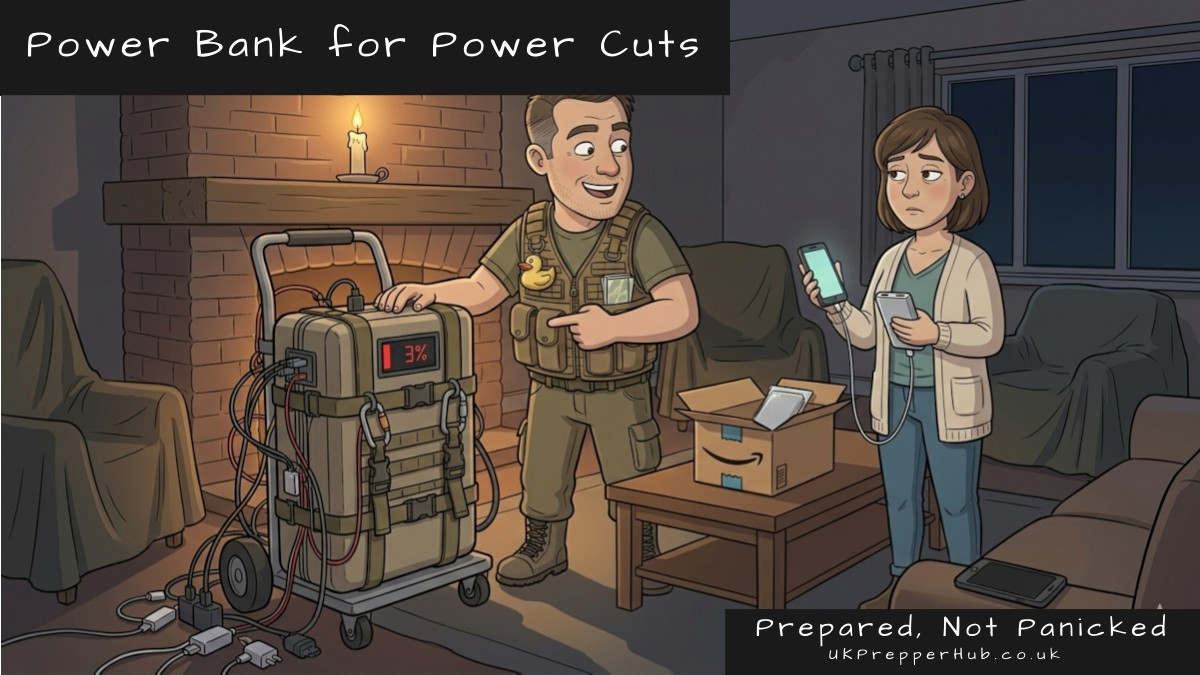
Complete Guide
Portable Power Stations for Power Cuts
Not a power bank and not a generator. This guide explains watts and watt-hours in plain English, what a 300Wh unit will run against a 1kWh one, LiFePO4 against lithium-ion, and what solar charging really gives you in the UK.
Read the Full Guide: Portable Power Stations for Power Cuts →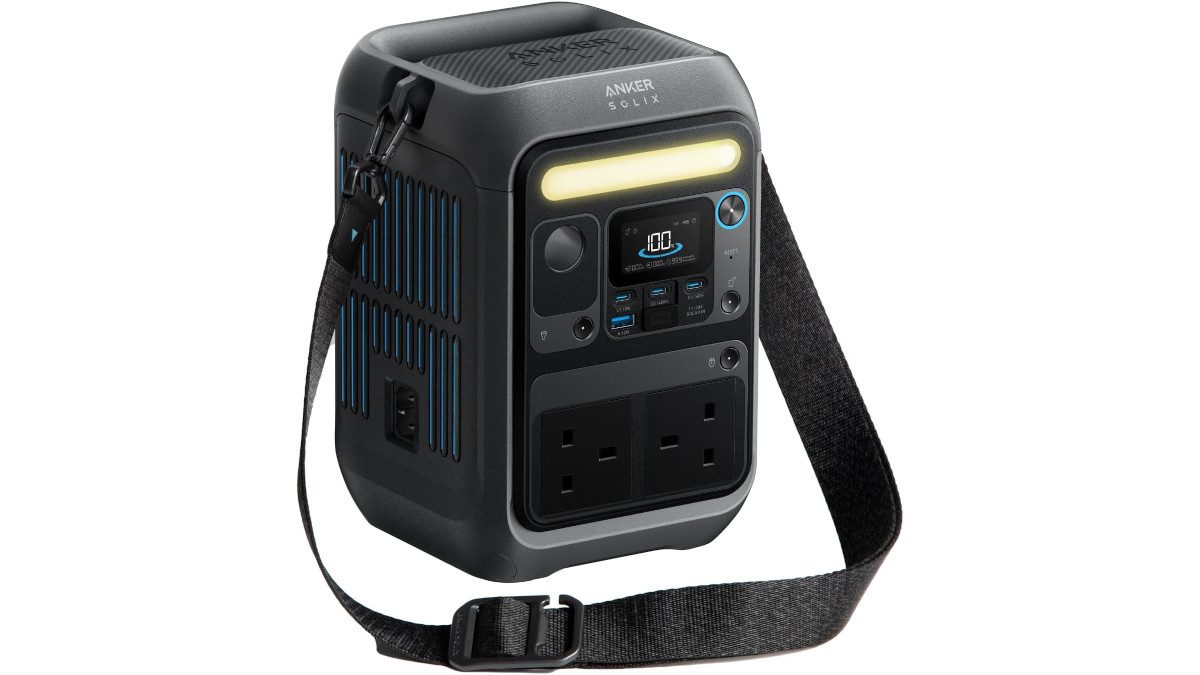
Complete Guide
Charging A Portable Power Station With a Solar Panel
Already own a Jackery, EcoFlow, or Anker power station? This guide matches the exact Renogy solar panel to your unit’s solar input ceiling — so charging isn’t a guessing game, and you’re never stuck when the mains goes down.
Read the Full Guide: Charging A Portable Power Station With a Solar Panel →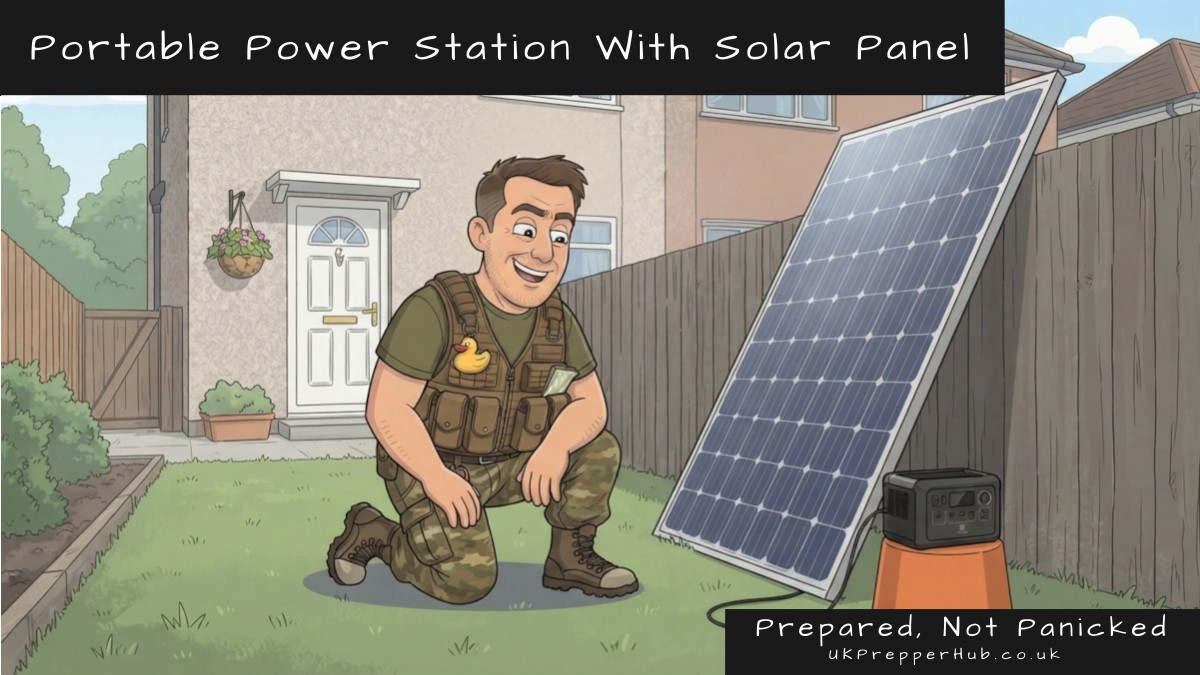
Keeping Warm Without Heating
Most UK central heating needs mains electricity even when it burns gas, so a winter power cut usually means no heating. Holding on to the warmth you have, and adding heat safely, is what matters.
Complete Guide
Heating Without Electricity
A power cut usually takes the gas boiler down too. What still works, which emergency heaters are safe indoors, and what to have ready before winter.

Complete Guide
Keep Warm Without Heating
When a cold snap hits and the boiler gives up, the house loses heat fast. How to keep warm without heating, fix a frozen condensate pipe, protect your pipes, and spot hypothermia in someone vulnerable before it gets serious.
Read the Full Guide: Keep Warm Without Heating →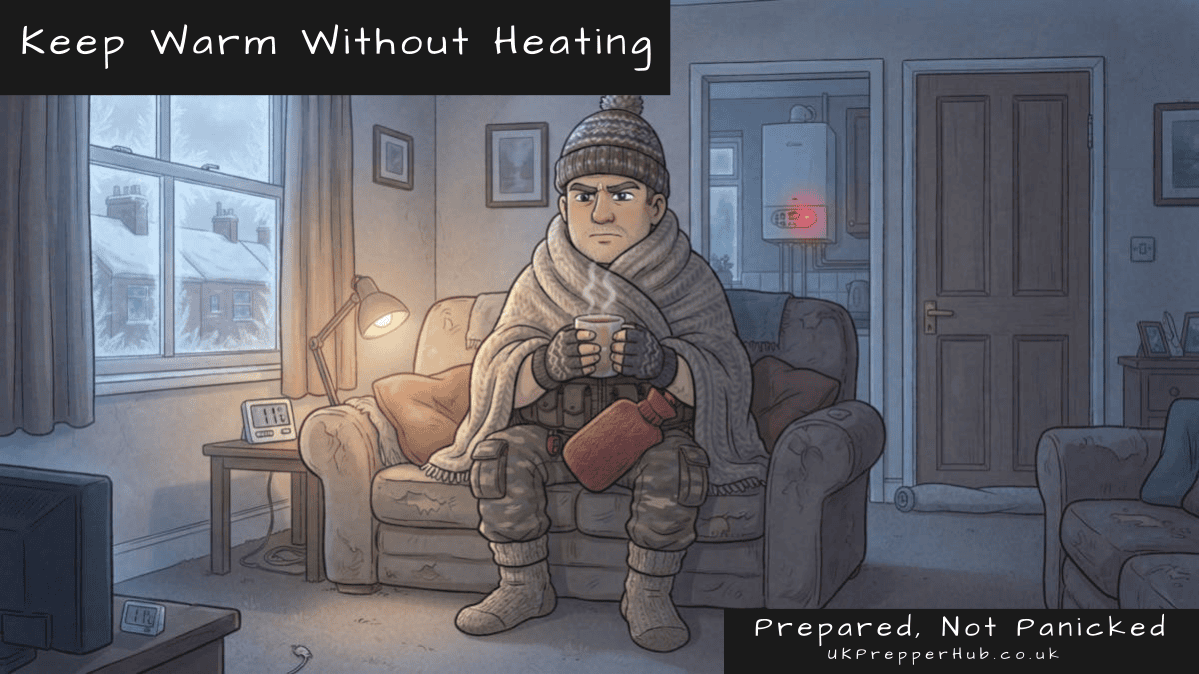
Coping in a Heatwave
Heat is the UK weather risk people take least seriously, and a summer power cut makes it worse because fans stop and food spoils faster.
Complete Guide
Heatwave Survival UK
UK homes are built to keep heat in — not let it out. This guide covers recognising heatstroke, staying cool without air conditioning, and protecting the people around you most at risk.
Read the Full Guide: Heatwave Survival UK →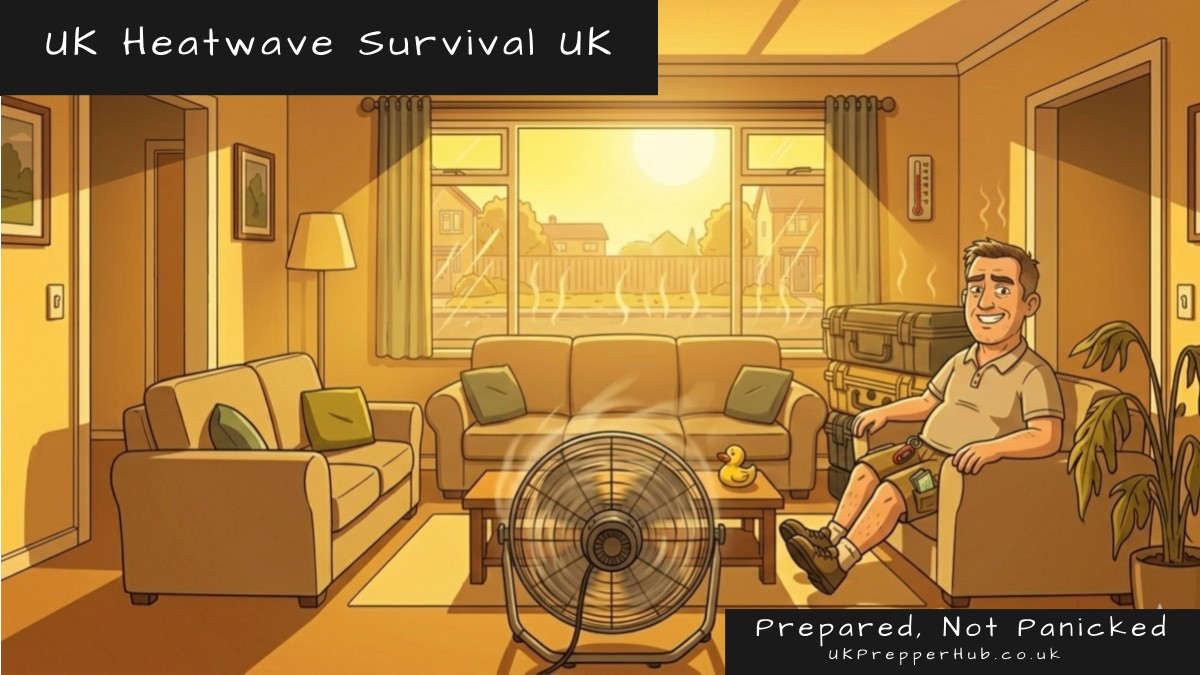
Complete Guide
Heatwave Power Cut Guide
A summer power cut is more dangerous than a winter one — heat builds fast and food spoils faster. This guide covers staying cool, protecting medications, keeping food safe, and knowing when to get out.
Read the Full Guide: Heatwave Power Cut Guide →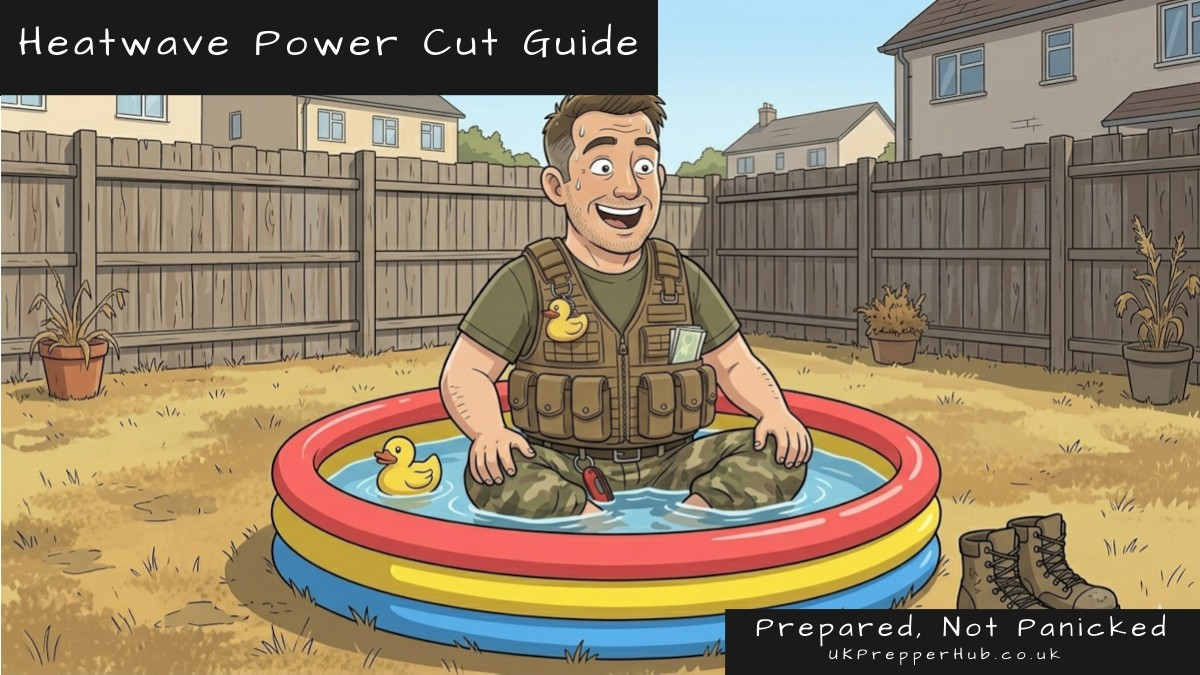
More From the Resilience Hub
- Protect Your Home: planning, flood, storm, fire and security
- Stay Informed: emergency radio and off-grid communications
- Water and Food: water storage, emergency pantry and cooking without power
- Health, Hygiene and Pets: first aid, medication, sanitation and pets
- On the Road: winter car, get home bag and backup transport
- Back to the Resilience Hub: every topic in one place


